
Last updated October 30, 2026
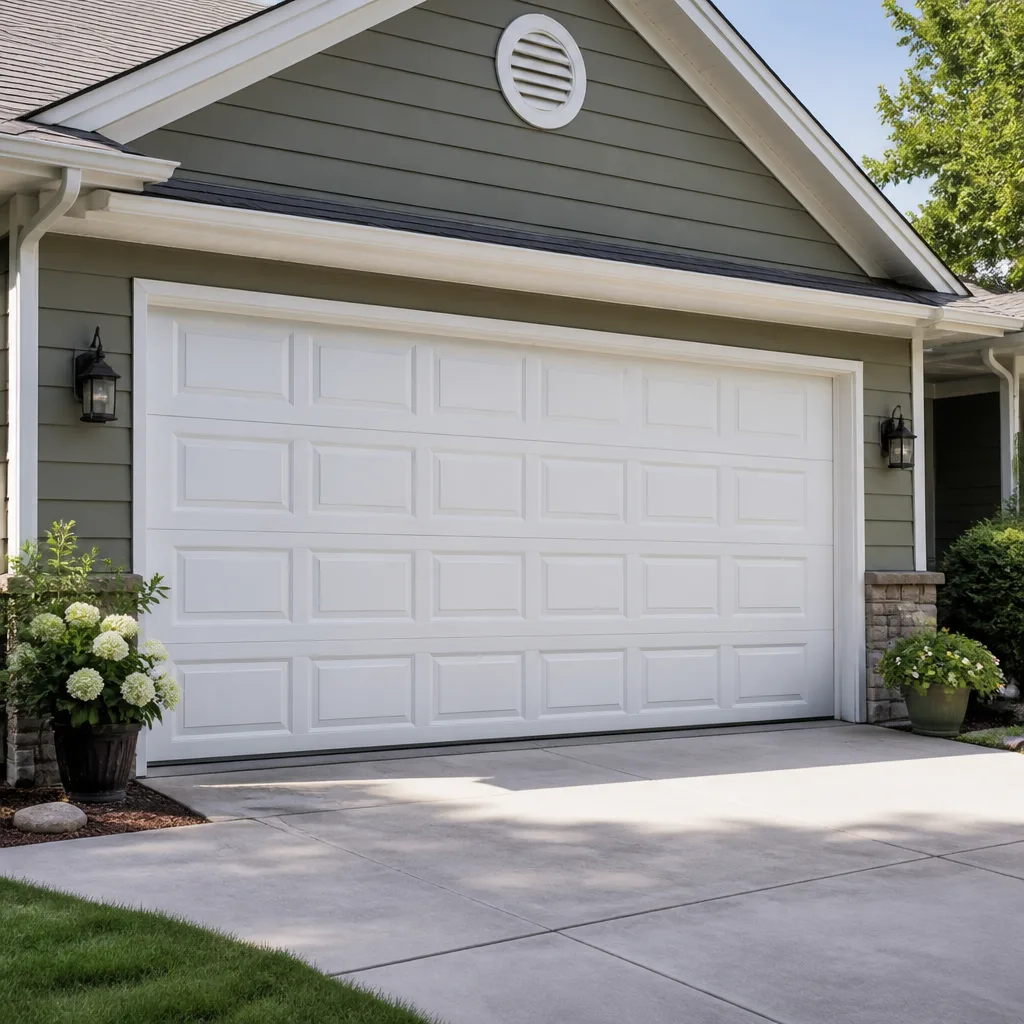 Raised-panel steel
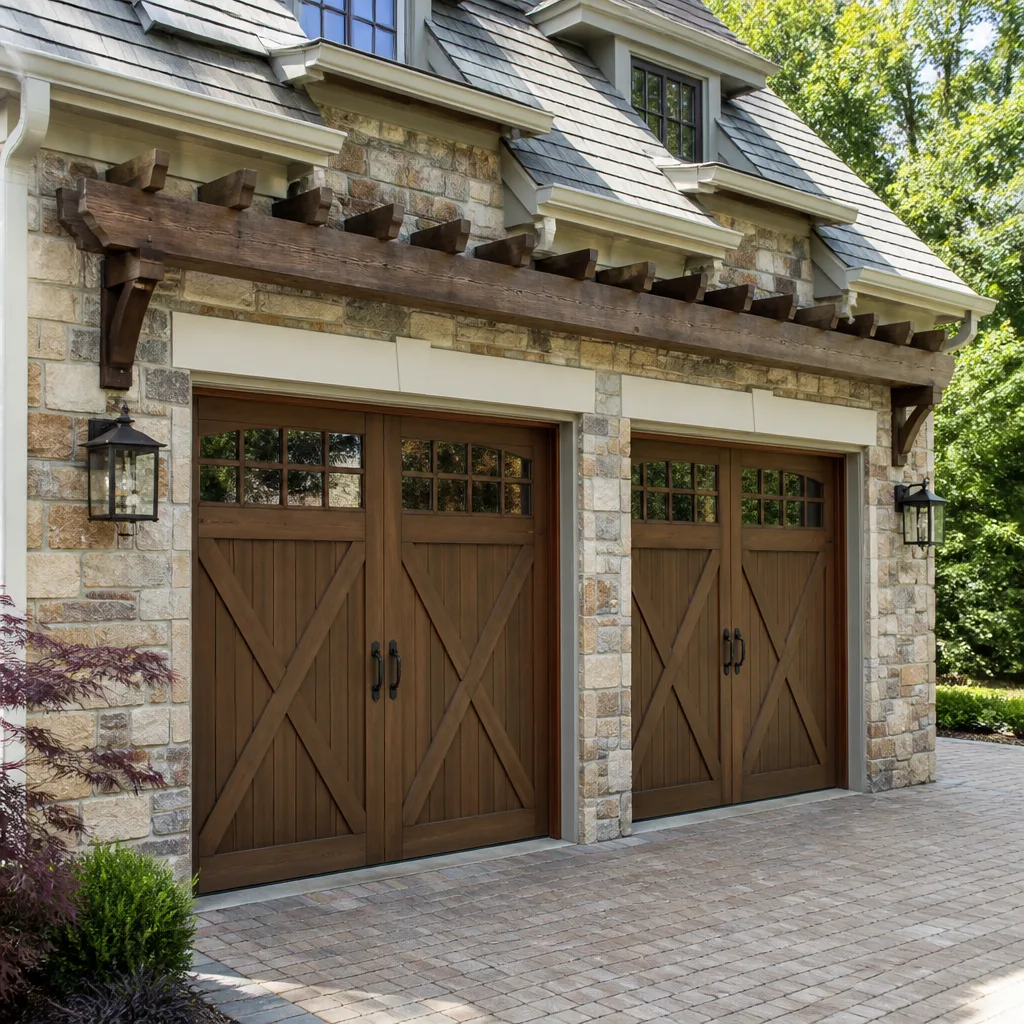 Carriage house
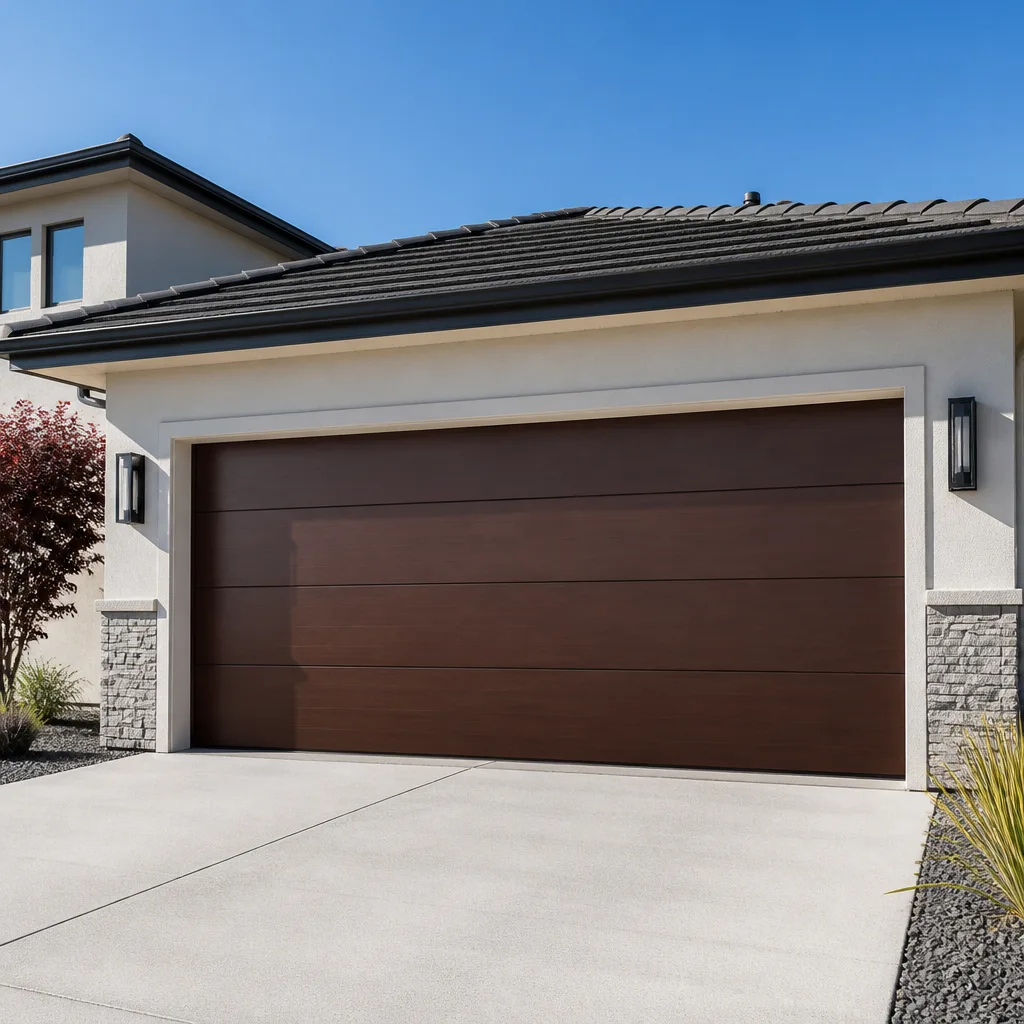 Modern flush
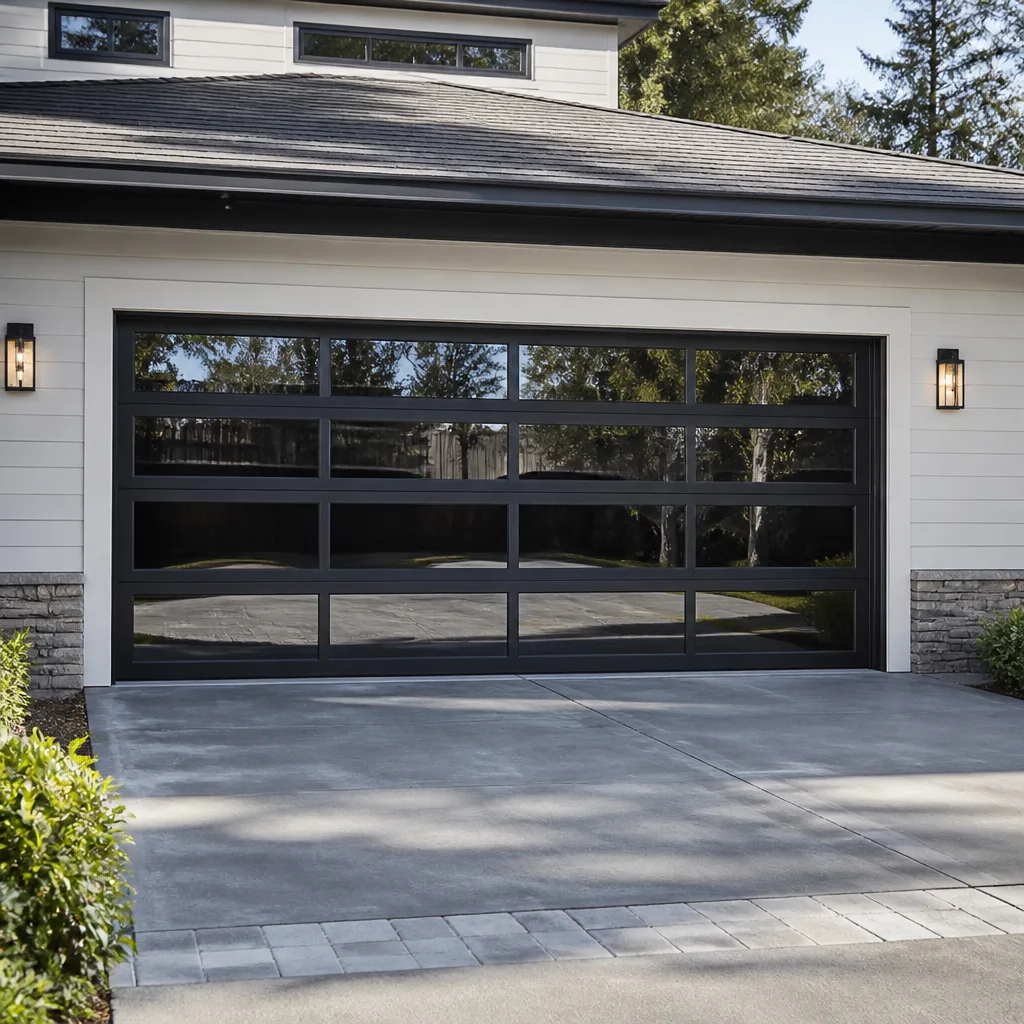 Full-view glass
 LiftMaster openers
 Chamberlain openers
Full 25-point door and opener safety check with every visit - springs, cables, rollers, tracks, and your LiftMaster or Chamberlain opener included
You get a price before we start. It does not change when the truck arrives.
Get your free estimateGarage Door Repair Maintenance Checklist for Sarasota Homeowners
Here’s a counterintuitive fact we’ve learned from thousands of service calls across Sarasota: the most common maintenance mistake isn’t neglecting your garage door. It’s lubricating it incorrectly. Homeowners grab a can of WD-40 or generic petroleum spray, coat the tracks and springs in good faith, and unknowingly create a sticky film that traps salt particulate and sand blown in from the Gulf. Within months, that well-intentioned lubrication has accelerated the exact corrosion it was meant to prevent. This guide walks you through a maintenance sequence built around what actually fails first in Sarasota’s coastal climate, not what’s easiest to check on a generic list.
Styles & brands we work with
Quick Answer
A proper garage door maintenance checklist for Sarasota focuses on salt-air corrosion prevention, humidity-resistant lubrication, and post-storm safety checks. Perform a visual and functional inspection every three months, lubricate moving parts twice yearly with a silicone-based or lithium-based product (never WD-40), and schedule a professional spring and cable inspection annually. The highest-priority items are the torsion springs, bottom seal, and auto-reverse system, because these fail first in coastal Florida conditions.
Table of Contents
- Salt-Air Corrosion: The Inspection Points Most Checklists Miss
- Lubrication in High Humidity: What Actually Works in Sarasota
- Bottom Seals and Weather Stripping: The Afternoon Storm Pattern
- Spring Tension Indicators: What to Measure and When to Call
- Post-Storm Inspection Protocol for Sarasota Wind Events
- Monthly Functional Checks: Balance, Auto-Reverse, and Noise
- A Seasonal Maintenance Calendar for Sarasota Homeowners
- Common Mistakes to Avoid
- When to Call a Professional
- Frequently Asked Questions
- The Bottom Line
1. Salt-Air Corrosion: The Inspection Points Most Checklists Miss
If you live west of Tamiami Trail, your garage door hardware endures something doors in Atlanta or Orlando never face: airborne salt. The Gulf breeze carries microscopic salt particles that settle on every metal surface, and when combined with Sarasota’s 75% average relative humidity, the result is a continuous corrosion cycle that never really stops. Standard checklists mention rust. They rarely mention where rust forms first in a coastal environment.
Primary Corrosion Points in Sarasota
- Hinge pins and roller stems: These are ground zero. The constant movement creates microscopic wear in protective coatings, exposing raw metal to salt-laden moisture. Inspect the center hinge first; it carries the most stress.
- Track brackets at the wall mount: Water runs down the track during sideways rain events common in summer afternoons and pools at the bracket. Look for rust bloom where the bracket meets the wall.
- Bottom roller brackets on the door’s lower panel: Splash-back from rain hitting the driveway creates a salty mist that rises and settles on the lowest hardware. This area rusts visibly while upper components still look new.
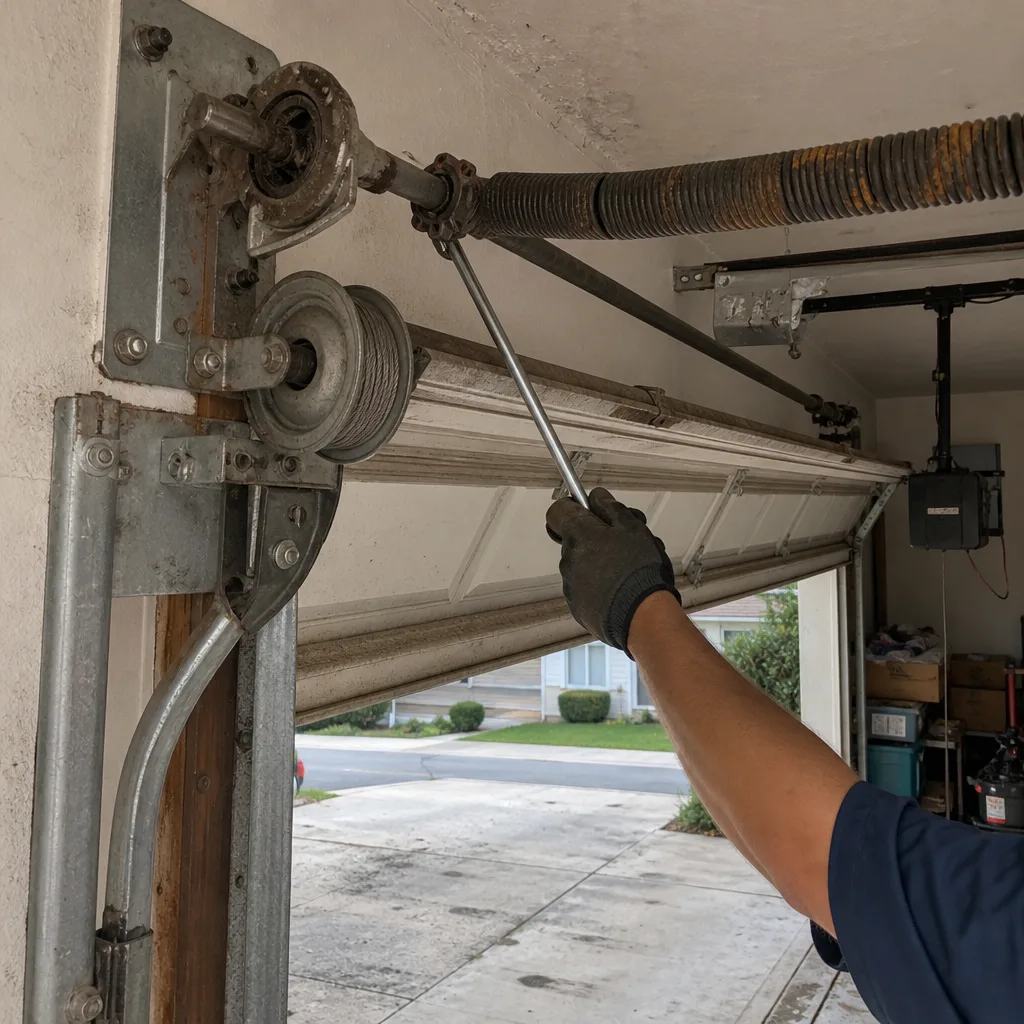
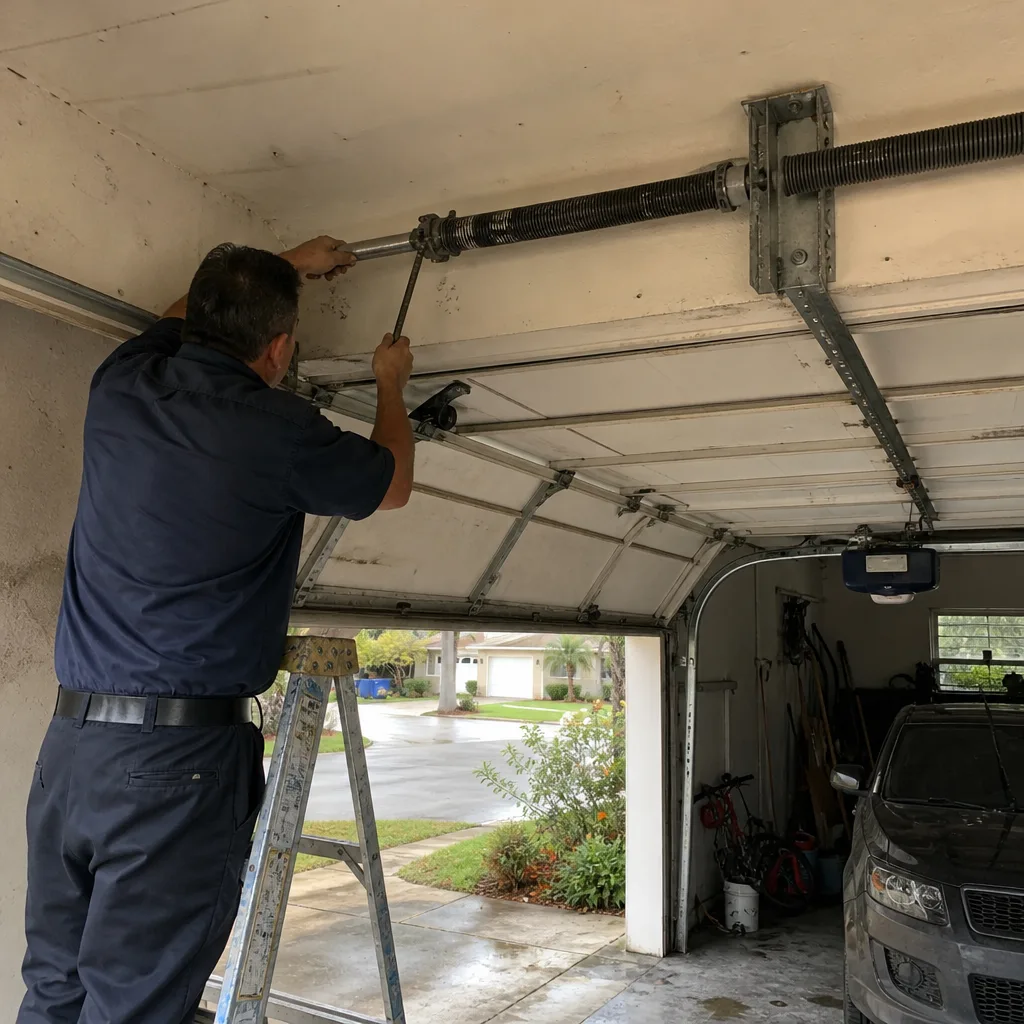
- Spring anchor brackets and winding cones: These carry constant tension. Rust here is not cosmetic. Pitting on a torsion spring cone is an early warning sign that the spring is nearing the end of its service life.
We service Wayne Dalton, LiftMaster, and Raynor systems throughout Sarasota County, and the corrosion pattern is consistent across all brands. Higher-grade hardware slows the process, but no metal is immune to a coastal salt environment. What matters is catching rust before it compromises structural integrity. Surface rust on a hinge is manageable. Deep pitting on a spring cone is not.
Monthly Corrosion Check (Takes 5 Minutes)
- Close the door fully and stand inside the garage.
- Run your eye along both vertical tracks, bottom to top, looking for rust staining or white salt residue.
- Check each of the four hinge plates on every panel joint.
- Look specifically at the bottom two roller brackets on both sides.
- Inspect the torsion spring above the door, focusing on the winding cones at each end.
- If you see white powdery deposits, wipe them with a dry cloth. Do not use water; that reactivates the salt.
For a door that shows significant corrosion or has hardware you can’t identify, having a trained eye assess it matters. Our Garage Door Repair in Sarasota technicians see hundreds of coastal doors annually and can tell the difference between cosmetic surface rust and component failure in progress.
2. Lubrication in High Humidity: What Actually Works in Sarasota
Lubricating a garage door in Sarasota is not the same as lubricating one in Arizona. Here, the product you use determines whether you’re protecting metal or quietly destroying it. Petroleum-based sprays, including WD-40 and many generic household lubricants, are solvent-heavy. They evaporate quickly in high heat, leaving behind a thin oily residue that attracts and holds salt particles and fine sand. That residue becomes an abrasive paste. The door is now grinding itself down every time it cycles.
What to Use Instead
- Silicone spray with PTFE: Dries to a clean film that does not attract dust or salt. Best for tracks where anything sticky creates drag.
- White lithium grease in a spray can: Best for pivot points like hinge pins and roller ball bearings. It clings, resists water, and does not run in garage heat.
- Garage-door-specific lubricant: Brands like 3-IN-ONE Professional Garage Door Lube and Blaster Garage Door Lubricant are formulated for this exact application and perform well in humidity.
What to Avoid
- WD-40: A solvent, not a lubricant. It strips existing lubricant and leaves a salt-attracting film. One of the most common causes of accelerated roller wear we see in Sarasota.
- Motor oil or 10W-30: Too heavy. It attracts dirt and turns into sludge in Florida heat.
- Graphite powder: In dry climates it works. In Sarasota humidity, it clumps and creates paste.
- Grease on the track itself: The track is not a bearing surface for the roller. Grease on track surfaces catches sand and creates a grinding channel.
Twice-Yearly Lubrication Sequence
- Close the door completely.
- Wipe each hinge pin and roller stem with a dry rag to remove old lubricant and salt deposits.
- Apply white lithium grease to each hinge pivot point, working the door manually one foot up and down to distribute it.
- Spray silicone lubricant into each roller bearing if the rollers have exposed ball bearings. Do not spray the track.
- Lightly coat the torsion spring with garage-door lubricant along its entire length. This slows surface rust by sealing the metal from humidity.
- Open and close the door twice to distribute lubricant evenly.
If your door is installed with a LiftMaster or Craftsman opener, this lubricant schedule keeps the door moving easily enough that the opener’s motor and gearbox are not working against avoidable resistance. A door that moves smoothly extends opener life by years, and we cover that system specifically in our Garage Door Opener Repair in Sarasota service.
3. Bottom Seals and Weather Stripping: The Afternoon Storm Pattern
Sarasota’s summer rain doesn’t fall straight down. The afternoon storms roll in from the east, drive rain sideways, and push water under garage doors in a pattern that catches most homeowners off guard. The first sign is not a flood. It’s a dark watermark along the bottom six inches of drywall by the door, or a musty smell that comes and goes after storms. The bottom seal is usually the culprit.
How to Check the Bottom Seal
- Close the door fully and look along the bottom edge from inside the garage. If you see daylight anywhere along the seal, water is getting in when wind drives rain horizontally.
- Run your hand along the seal. It should be pliable, not cracked or flattened. A seal that has hardened and lost its U-shape is doing nothing.
- Check under the door where it meets the floor. A shiny black strip that is missing chunks or sits unevenly means the seal needs replacement.
- Look for tell-tale water lines on the concrete slab just inside the door. Even a clean, dry line indicates water has pooled there previously.
- Visible cracks, tears, or flattening that means the seal no longer makes contact with the floor.
- Daylight visible under the closed door.
- The seal is stiff and no longer compresses when you press it.
- You’ve had two or more instances of water pooling inside after storms.
- The rubber has discolored from black to gray or chalky white, which indicates UV breakdown and loss of pliability.
- Visible gap in the spring coil: A torsion spring should be one continuous coil. If you see a gap where the coil appears to have separated into two pieces, the spring has already broken and needs replacement.
- Rust along the full length: Surface rust is normal over time, but deep rust with visible pitting or flaking weakens the wire. A pitted spring is a break waiting to happen.
- Door drops quickly when released: Disconnect the opener (using the red release cord) with the door halfway up. The door should hold its position or drift slowly. If it drops, spring tension is failing. This is a diagnostic check only; reconnect the opener immediately after.
- Uneven movement: If one side of the door rises faster than the other, or the door appears to twist during operation, one of the two springs may be weakening before the other.
- Loud bang from the garage: A torsion spring breaking sounds like a gunshot. If you heard it, the spring is broken. The door will not open evenly, and attempts to force it will damage the opener and cables.
- Visual track inspection: Stand inside the garage and look down both vertical tracks. They should be parallel and straight. Any bowing, twisting, or separation from the wall indicates the door took a wind hit that exceeded its design.
- Hardware tightness check: With the door closed, grip each track bracket and attempt to move it by hand. None should wiggle. Use a socket wrench to snug any loose lag bolts, but do not over-tighten bracket bolts into the wall, which can strip the anchor.
- Roller alignment: Each roller should sit fully inside the track channel. A roller that is partially out or riding on the edge means the door panel shifted. This requires realignment before further operation.
- Auto-reverse force test: Place a 2×4 flat on the ground in the door’s path. Close the door using the opener. The door should hit the wood and reverse direction within two seconds. If it doesn’t, the opener’s force sensitivity needs adjustment. In Sarasota’s storm season, this test matters even if the door performed fine before the storm, because pressure changes and debris impacts can alter sensor calibration.
- Photo-eye alignment: Check that both photo-eye sensors (the small black boxes on each side near the floor) have a solid, non-blinking light. If one blinks, the beam is misaligned, likely from vibration during the storm.
- Balance check: Disconnect the opener and lift the door manually to halfway. If it stays in place, the springs are balanced. If it falls, the storm may have accelerated existing spring fatigue.
- Weather seal check: Wind-driven rain finds every gap. Inspect the bottom seal and side weather stripping for tears or displacement caused by debris.
- Pull the red release cord to disconnect the door from the opener.
- Lift the door by hand until it’s halfway up.
- Release it. The door should stay in place or drift no more than a few inches either way.
- If it drops quickly or feels unusually heavy, the springs are losing tension and need professional attention.
- Reconnect the opener by activating it until the carriage re-engages.
- Place a 2×4 flat on the floor in the center of the door’s path.
- Close the door using the opener button or remote.
- Watch the door’s leading edge. It should contact the board and immediately reverse.
- If the door presses down hard on the board before reversing, or fails to reverse at all, call a technician. The force sensitivity setting is off, and this is a child-safety issue.
- Grinding or metallic scraping: Typically a roller bearing failing or a dry hinge. Lubricate and reassess. If it persists after 24 hours, the roller likely needs replacement.
- Squealing while the door moves: Dry rollers or hinges. Apply silicone or lithium lubricant as described in Section 2.
- Rattling or chattering: Loose hardware, often the track brackets or hinge screws. Tighten all visible fasteners.
- A steady hum from the opener with no door movement: The opener is running but the door isn’t engaging. This could be a stripped gear, a broken carriage, or a disconnected release cord. Do not keep pressing the button.
- A snap or bang followed by the door dropping: A cable broke or a spring let go. Stop using the door immediately and call for service.
- November: Full lubrication service. Silicone on rollers, lithium on hinges, garage-door lube on springs. This is the best time because lower humidity means lubricant cures properly and doesn’t attract salt particulate as quickly.
- December: Weather-stripping inspection. With cooler, drier air, shrinking and cracking become visible. Replace any seal that shows gaps.
- January: Balance and auto-reverse testing. Make this an annual New Year’s habit.
- February: Track alignment check. The dry-season ground can shift slightly, particularly in areas with sandy soil, and tracks can move out of parallel.
- March: Spring inspection. Have a professional check spring condition before the heavy-use summer begins.
- April: Pre-storm preparation. Test the opener battery backup (if equipped), check that the release cord works, and verify the door is braced or reinforced if you’re in a wind zone.
- May: Bottom seal check and replacement if needed. Get this done before the afternoon storms become daily.
- June: Corrosion inspection, focusing on hinges, brackets, and roller stems. Wipe salt deposits. Touch up any surface rust with rust-inhibiting paint.
- July: Lubrication refresh. The early wet season is the peak for humidity-related wear. A mid-summer lubrication extends hardware life.
- August: Auto-reverse and photo-eye test. Storms have likely knocked the sensors slightly out of alignment.
- September: Post-peak-storm inspection. Run through the full post-storm protocol from Section 5, even if you didn’t experience a direct hit.
- October: Hardware tightening. End of wet season means accumulated vibration and moisture expansion have loosened fasteners. Snug everything up before the dry season begins.
- Lubricating the track with petroleum spray. The track should never have lubricant on it. The rollers ride on bearings, not on the track surface. Spraying the track collects salt and sand, creating a grinding channel that wears out rollers and makes the door noisy.
- Using WD-40 on springs and hinges. WD-40 is a solvent, not a lubricant. It evaporates and leaves a film that attracts salt particulate in Sarasota’s coastal air, accelerating the corrosion it was meant to prevent.
- Ignoring rust on spring hardware. Surface rust on hinges is cosmetic. Pitting on a torsion spring or winding cone is structural. Once pitting appears, the spring is compromised and should be evaluated by a professional.
- Attempting to adjust torsion springs without training. No maintenance checklist should include spring adjustment. The tension in a wound spring is enough to cause catastrophic injury. This is one component where DIY ends badly.
- Skipping the auto-reverse test because “it worked last month.” Sarasota storms can shift photo-eye sensors and alter force settings. A door that reversed correctly in April may not in August. Test monthly, especially during storm season.
- Replacing the bottom seal with a generic product. Seals are sized to specific door brands and retainer channel profiles. A Raynor door uses a different seal than a Clopay door. Using the wrong profile means the seal doesn’t seat properly and water still finds its way in.
- Assuming hurricane-rated doors need no post-storm inspection. A reinforced door may survive a storm, but the hardware, tracks, and opener force settings can still shift. Always run the post-storm protocol from Section 5.
Sarasota-Specific Moisture Pattern
What makes the moisture intrusion pattern unique to Sarasota is the combination of intense afternoon rain, wind-driven lateral water, and a high water table. When the garage floor sits at or slightly below grade, hydrostatic pressure pushes moisture up through the concrete even when it isn’t raining. That means the bottom seal is not optional here. It’s the primary barrier against both top-down storm water and bottom-up ground moisture. A faulty seal in a Florida garage leads to elevated indoor humidity, which affects everything stored inside, from tools to cardboard boxes to the car itself.
When to Replace the Bottom Seal
We keep bottom seals for all major door brands on our trucks, including Amarr and Clopay profiles common in Sarasota neighborhoods. A seal replacement is a quick repair, but the sizing must match the door’s specific retainer channel. If you’re unsure which seal profile your door uses, a quick call to us is the fastest way to avoid buying the wrong part twice.
4. Spring Tension Indicators: What to Measure and When to Call
Garage door torsion springs are the single most dangerous component on the door. In Sarasota, the combination of constant humidity (which accelerates surface rust) and frequent daily cycling (the average Florida door opens four to six times a day) means springs wear faster here than in cooler, drier regions. A typical torsion spring is rated for 10,000 cycles. In Sarasota, most homeowners reach that threshold in six to eight years.
Safety warning: Never attempt to adjust, replace, or even closely inspect a torsion spring without professional training. The spring is under enough tension to cause severe injury or death if it releases unexpectedly. The indicators below are observation-based checks you can perform from a safe distance. Leave any adjustment or replacement to a qualified technician.
Visual and Functional Indicators
What Tolerance is Acceptable?
Here’s a measurement-based check you can do safely: with the door closed, look at the gap between each spring coil. On a healthy spring, the coils are tight with almost no visible gap. As the spring ages and loses tension, the coils begin to separate slightly. A gap of 1/16 inch or less between coils is within normal range. A gap of 1/8 inch or more, especially if accompanied by rust, suggests the spring is nearing failure.
Spring replacement is not a DIY project. We carry a full range of spring sizes for Wayne Dalton, Clopay, Amarr, and every other major door brand found in Sarasota homes. For a professional assessment, contact us through our Garage Door Installation in Sarasota page or call (855) 341-5769 directly.
5. Post-Storm Inspection Protocol for Sarasota Wind Events
Every Sarasota homeowner knows the routine: watch the cone, check the shutters, top off the car, and wait. But after the storm passes, almost no one thinks to inspect the garage door itself. That’s a gap. High winds push against a 16-foot-wide door with enormous force, and even a door that survives undamaged may have shifted components, loosened hardware, or thrown off the auto-reverse sensitivity. After any storm with sustained winds over 40 mph, or any event that brought flying debris, run through this sequence.
Post-Storm Checklist
Hurricane-rated garage doors are a separate category of protection, and if your home is in a wind-borne debris zone (most of Sarasota County), you may want to discuss upgrade options. But even a standard door that survived the storm benefits from this post-event protocol. Catching a shifted roller early prevents a derailment later, which is a much bigger repair.
6. Monthly Functional Checks: Balance, Auto-Reverse, and Noise
You don’t need to be a mechanic to catch most garage door problems early. What you need is a monthly five-minute routine that establishes a baseline for what your door sounds like and how it moves. When something changes, you’ll notice it. The three categories that matter most are balance, safety response, and unusual noise.
Balance Test
Do this test once a month. It takes 30 seconds.
Auto-Reverse Test
This test matters more in Sarasota than in many areas because of how often garage doors serve as the primary entry point. In neighborhoods like Palmer Ranch and Lakewood Ranch, the garage door is the most-used door in the house. A malfunctioning auto-reverse is not acceptable.
Noise Interpretation
A garage door that sounds different from one week to the next is telling you something. Most homeowners only call when the door stops working entirely. A technician who hears the door one week earlier can often prevent the no-open emergency entirely.
7. A Seasonal Maintenance Calendar for Sarasota Homeowners
Sarasota has two real seasons: hot-and-dry (November through April) and hot-and-wet (May through October). Your maintenance schedule should follow this split. Adjusting your routine to the climate, rather than a generic quarterly calendar, means you’re addressing the right failure modes at the right time.
Dry Season (November through April)
Wet Season (May through October)
This calendar covers the same ground as a standard checklist but in an order that reflects what Sarasota’s environment actually does to a door. The most important months are May (before rains intensify) and September (after the peak of storm season). If you only do two deep maintenance sessions a year, make it those two.
8. Common Mistakes to Avoid
9. When to Call a Professional
Some issues are DIY-friendly: wiping salt residue, tightening visible bolts, lubricating hinges, testing the auto-reverse. Others are not. If you see a visible gap in a torsion spring, hear a loud bang, notice the door dropping rapidly during a balance test, or see a roller that’s partially out of its track, stop using the door and call a technician. The same applies if your opener runs but the door doesn’t move, which often indicates a stripped gear or broken carriage. These are not conditions that improve with continued use. Each cycle adds stress to components that are already failing.
Platinum Garage Door Service offers free estimates in Sarasota. We work on your brand, not just ours, which means the technician arrives ready to diagnose the system you actually own rather than the one we’d prefer to sell. Call (855) 341-5769 and we’ll assess the door, explain what’s wrong, and quote a repair before any work begins. Repair first, replace only when necessary.
10. Frequently Asked Questions
Twice a year is the minimum in Sarasota’s climate: once in November at the start of the dry season and once in July during peak humidity. Use a silicone spray or garage-door-specific lubricant on rollers and springs, and white lithium grease on hinge pins. Never use WD-40. If your door faces west toward the Gulf, you may need to lubricate three times a year due to higher salt exposure. Call (855) 341-5769 for a professional lubrication service if you’re unsure which products to use.
A standard maintenance visit in Sarasota, including lubrication, hardware tightening, balance testing, and a full safety inspection, typically runs $85 to $150 depending on the door’s age and condition. Parts like bottom seals and rollers are additional if replacement is needed. The cost of skipping maintenance, by comparison, is usually a $200 to $500 spring replacement or a $150 to $400 track repair. The math favors the maintenance visit almost every time. Contact us for a free estimate at (855) 341-5769.
Most homeowners can handle the safe, observation-based tasks: visual corrosion checks, lubrication, cleaning photo-eye lenses, and running the balance and auto-reverse tests. What you should not attempt is anything involving the torsion springs, cables, or track realignment. Those components are under tension and can cause severe injury. A good middle ground is a professional inspection once a year with DIY maintenance in between. Our Garage Door Repair in Sarasota team can handle the high-risk work while you stay on top of the monthly checks.
Look for a visible gap in the spring coil, deep rust or pitting, or a door that drops quickly when you disconnect the opener and release it at the halfway point. A gap of 1/8 inch or more between coils, combined with any of these other symptoms, indicates the spring is near the end of its life. Spring replacement is not a DIY job. Call (855) 341-5769 and a technician will assess the spring condition and quote a replacement before any work starts.
That musty smell is almost always a bottom seal or weather-stripping failure allowing storm water or ground moisture into the garage. In Sarasota’s summer rainy season, water is driven against the door sideways by afternoon storms, and a seal that has flattened or cracked lets that water through. The moisture then soaks into the concrete and any stored items, creating the odor. Replace the bottom seal and, if needed, the side weather stripping. If the problem persists, check for gaps around the door frame itself.
Yes, and this is where many homeowners fall short. The opener’s drive system, whether chain, belt, or screw, has its own maintenance needs. Chain drives need periodic tension checks. Belt drives need inspection for cracks or fraying. All openers need the force sensitivity and photo-eye alignment checked, especially after Sarasota storms. LiftMaster MyQ and Craftsman smart openers also need firmware updates and Wi-Fi connectivity checks. Our Garage Door Opener Repair in Sarasota service covers opener-specific diagnostics from the spring to the smartphone app.
11. The Bottom Line
Sarasota’s climate attacks garage doors in a specific sequence: salt air compromises metal, humidity breaks down lubricants, storm-driven rain exploits failing seals, and constant daily cycling wears springs faster than national averages. A generic maintenance checklist misses all of this. The right approach is a seasonal routine built around corrosion prevention, humidity-appropriate lubrication, seal integrity before rainy season, and post-storm safety testing. Run the monthly checks yourself, do deep maintenance twice a year, and have a professional inspect the springs annually. The cost of maintenance is a fraction of repair, and the peace of mind comes from knowing your door will open when you need it to.
Written by the team at Platinum Garage Door Service, serving Sarasota since 2015.
See the difference
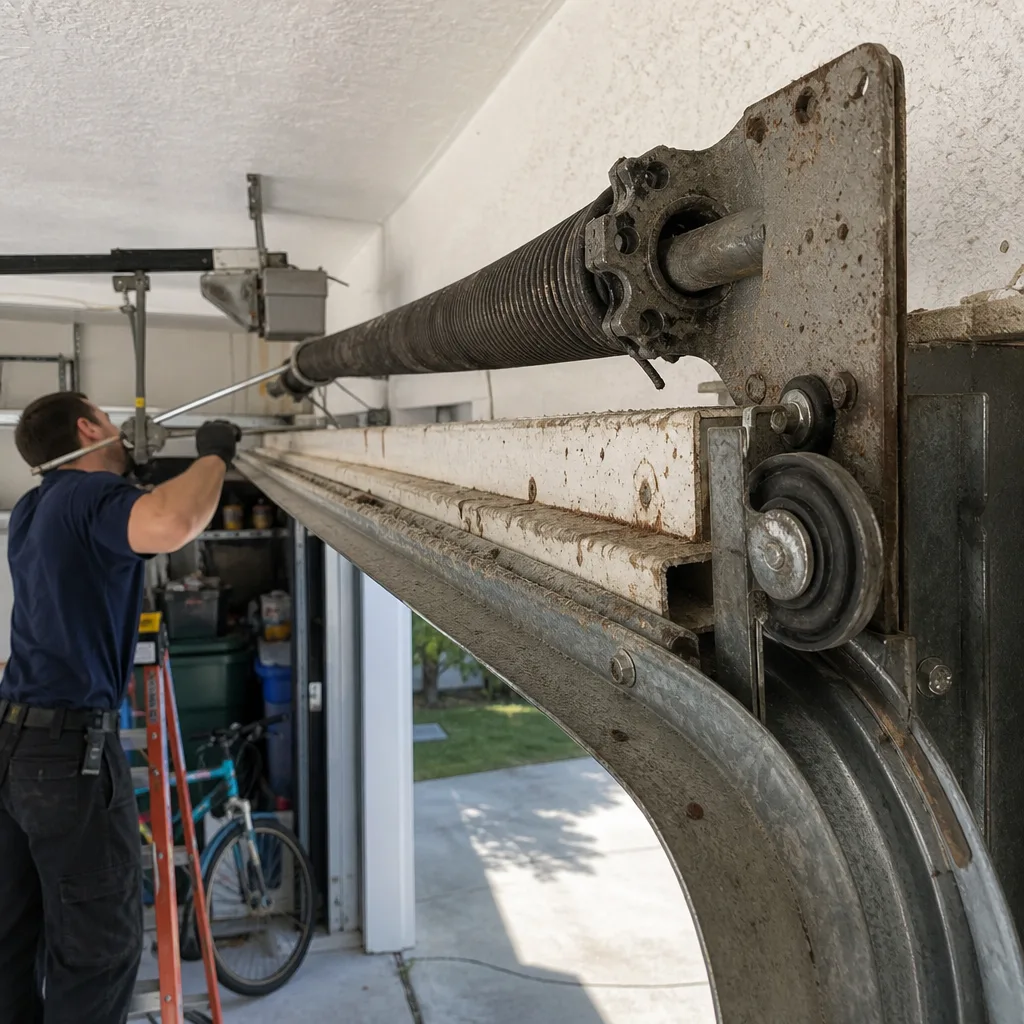 Before
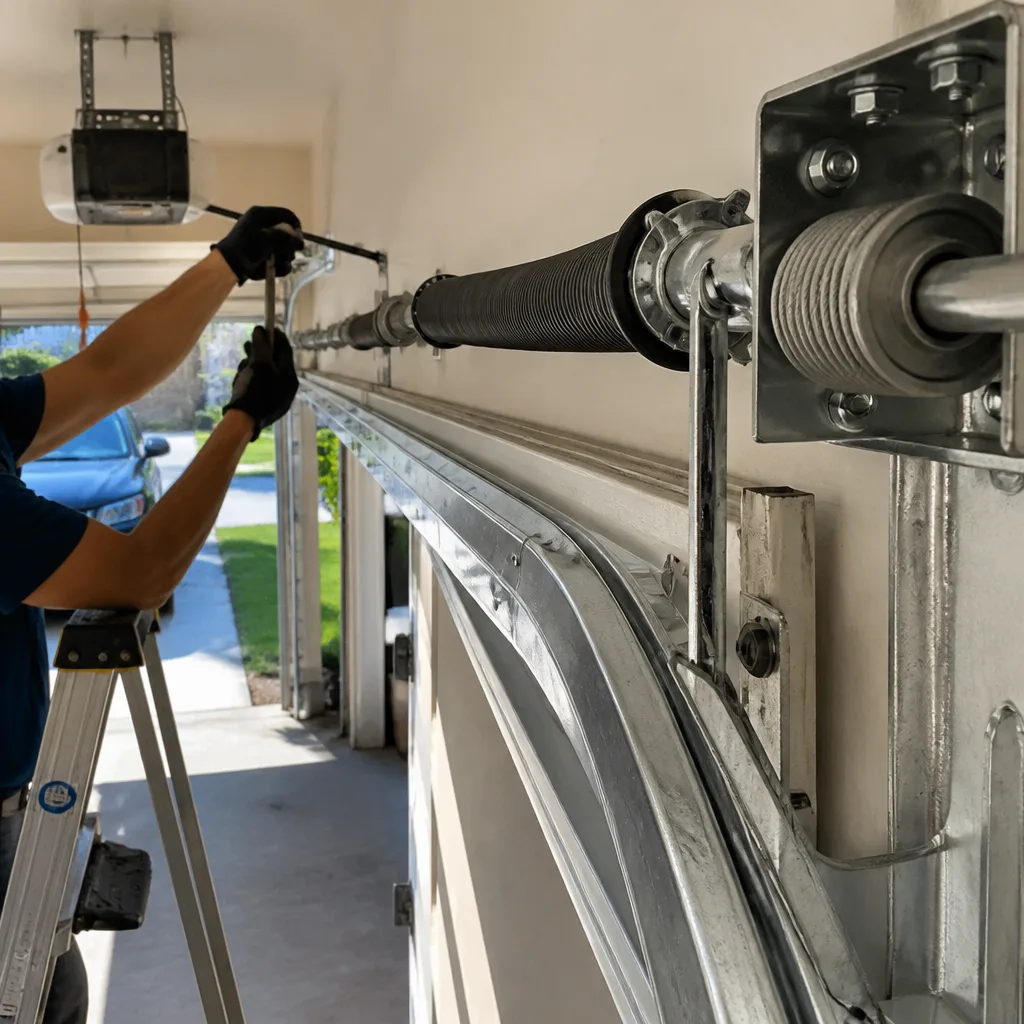 After
 Before
 After
 Before
 After