
Last updated October 30, 2026
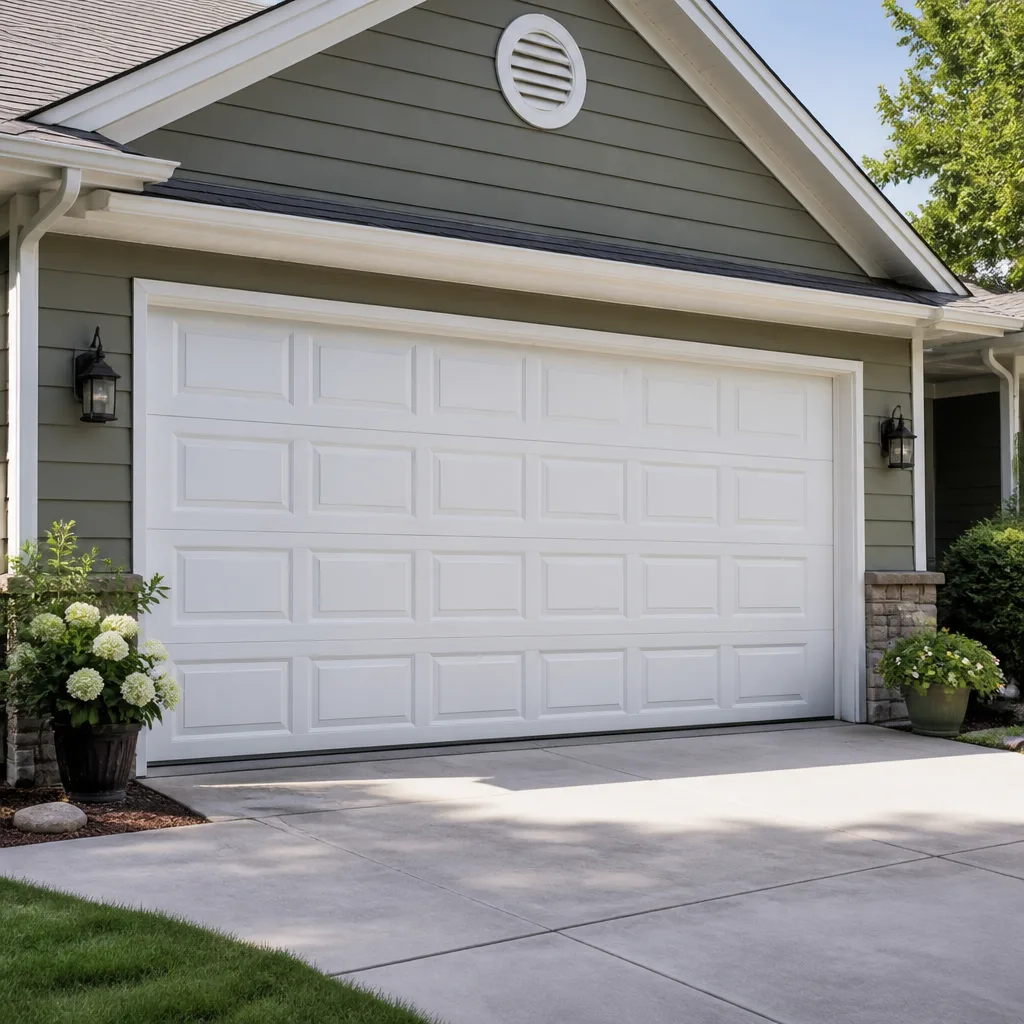 Raised-panel steel
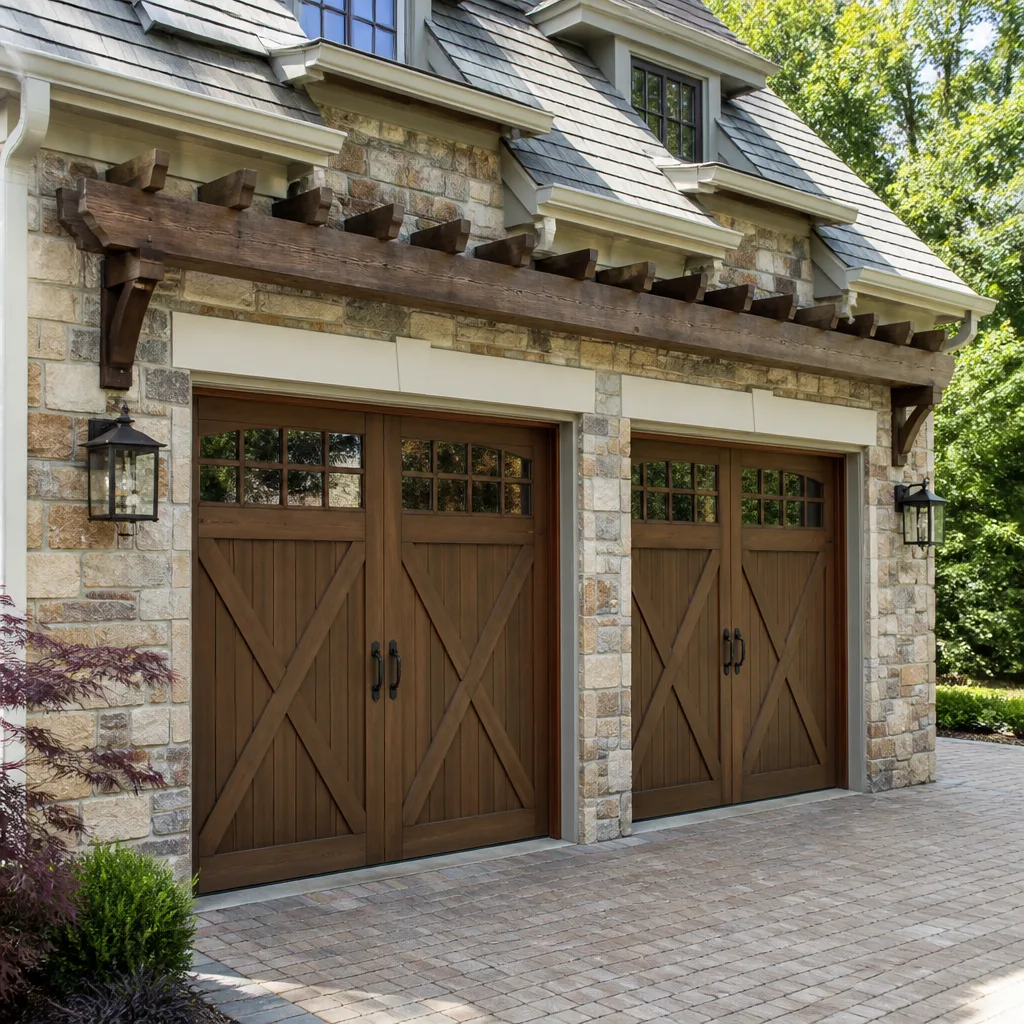 Carriage house
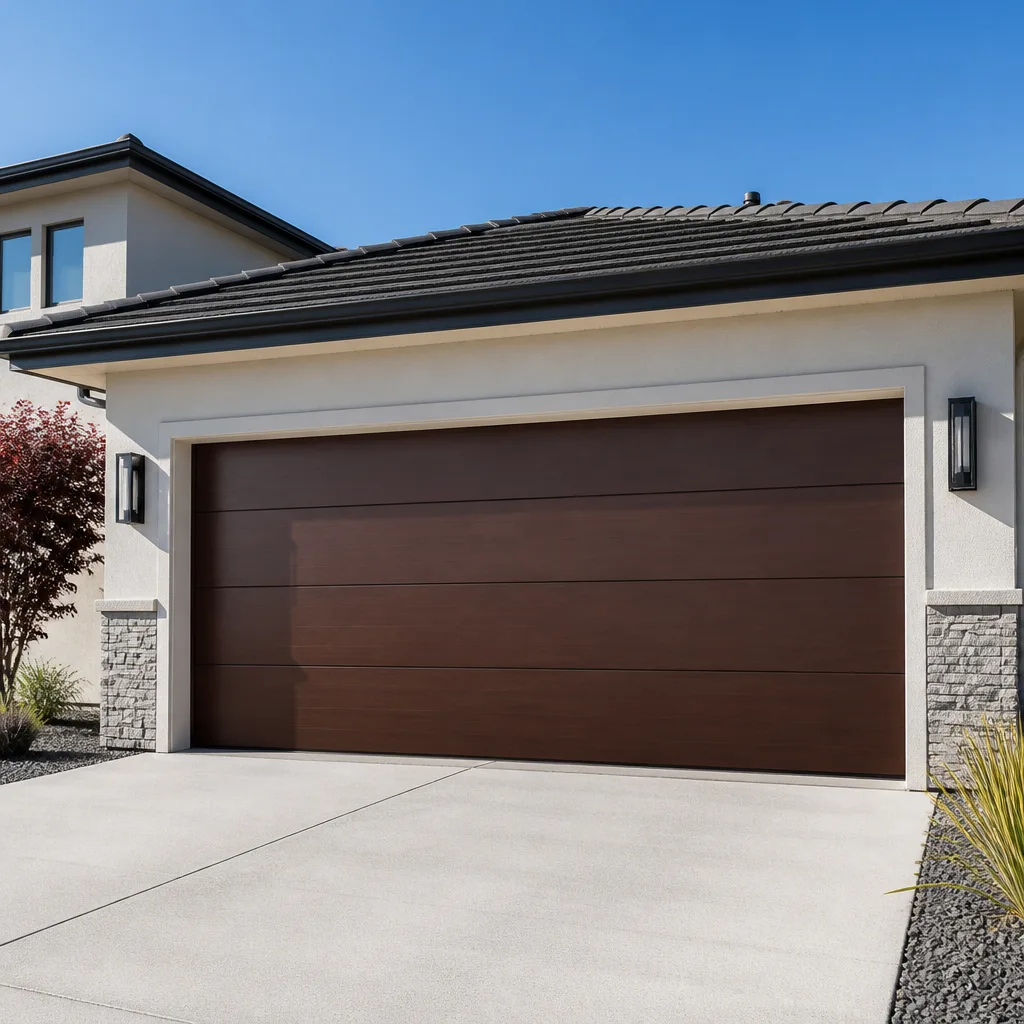 Modern flush
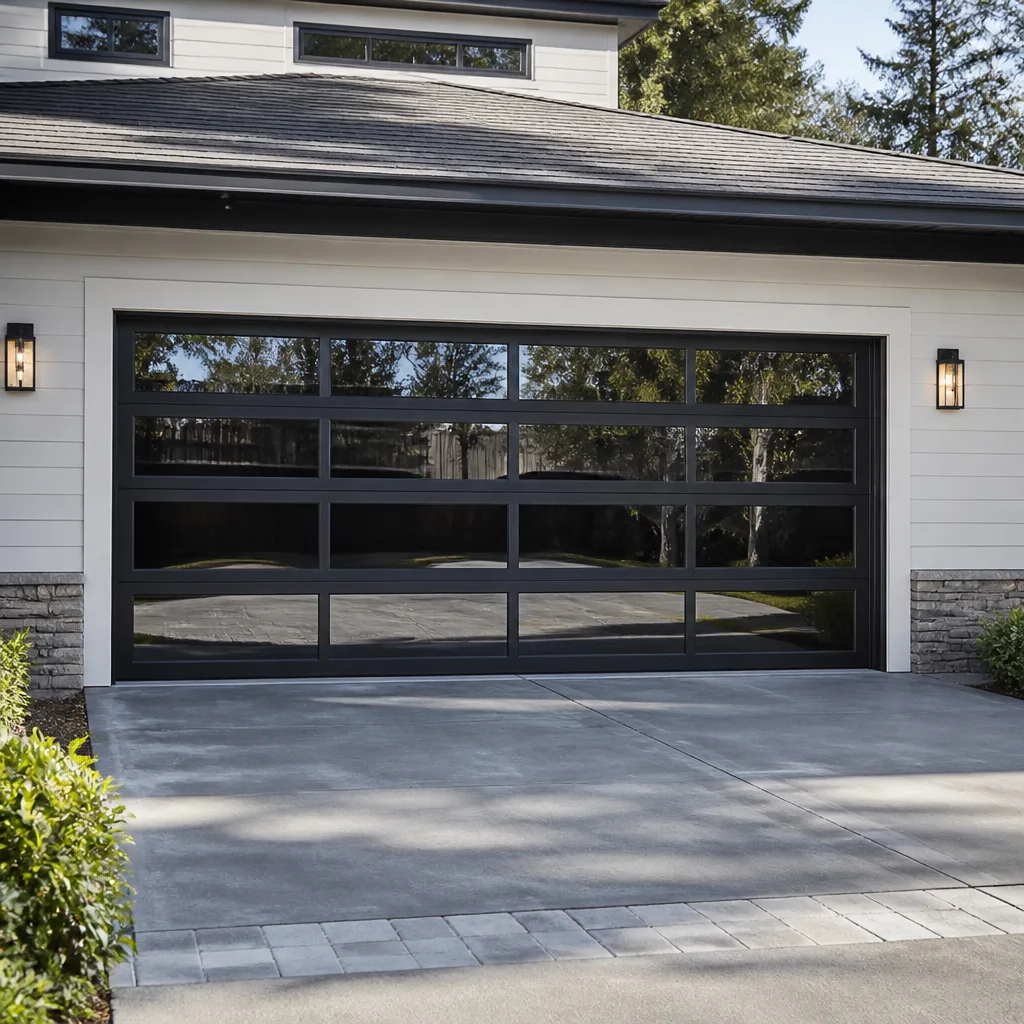 Full-view glass
 LiftMaster openers
 Chamberlain openers
Full 25-point door and opener safety check with every visit - springs, cables, rollers, tracks, and your LiftMaster or Chamberlain opener included
You get a price before we start. It does not change when the truck arrives.
Get your free estimateGarage Door Warning Signs: A Sarasota Homeowner’s Reference Guide
Most garage door warning sign guides read like a list of symptoms you’d notice anyway: it’s loud, it’s slow, it shakes. Useful, but shallow. Here’s what actually matters in Sarasota: a garage door that reverses unexpectedly isn’t just annoying. In Florida’s humidity, that reversal is often the first symptom of a corroded sensor bracket that will fail completely within weeks. The symptom and the cause are almost never in the same location on the door. This guide walks you through what each warning sign indicates mechanically, so you know whether you’re looking at a $30 adjustment or a safety-critical spring failure that means stop using the door immediately. This is the reference we wish every Sarasota homeowner had before calling us.
Quick Answer
The most serious garage door warning signs in Sarasota are a door that hangs unevenly, a spring with a visible gap or separation, and cables that show rust streaking or fraying at the bottom bracket. Any of these means the door can fail catastrophically, and you should stop using it and call a professional. Most other signs, like slow operation, reversing, or increased noise, typically indicate worn rollers, sensor misalignment, or humidity-related opener issues that are repairable same-day for under $200 in most Sarasota homes. For a deeper look at year-round prevention, see our Seasonal Garage Door Care for Sarasota: Year-Round Homeowner’s Guide.
Styles & brands we work with
Table of Contents
- Visual Signs You Can Spot from the Ground in 60 Seconds
- Spring Failure: The Difference Between Nearing End-of-Life and Dangerous
- What the Door Is Telling You: Sound Diagnostics for Sarasota Homes
- Uneven Movement: Reading the Door’s Geometry to Find the Real Problem
- Humidity-Driven Failures: Sarasota’s Coastal-Specific Warning Signs
- Opener Behavior Changes and What They Actually Mean
- Stop Using It Now vs. Schedule a Repair: A Decision Framework
- Common Mistakes to Avoid
- When to Call a Professional
- Frequently Asked Questions
Visual Signs You Can Spot from the Ground in 60 Seconds
You don’t need to be a technician to diagnose the early stages of most garage door problems. You need to know where to look. The following inspection takes under a minute and catches the majority of issues before they become emergencies. Do this with the door closed, from inside the garage.
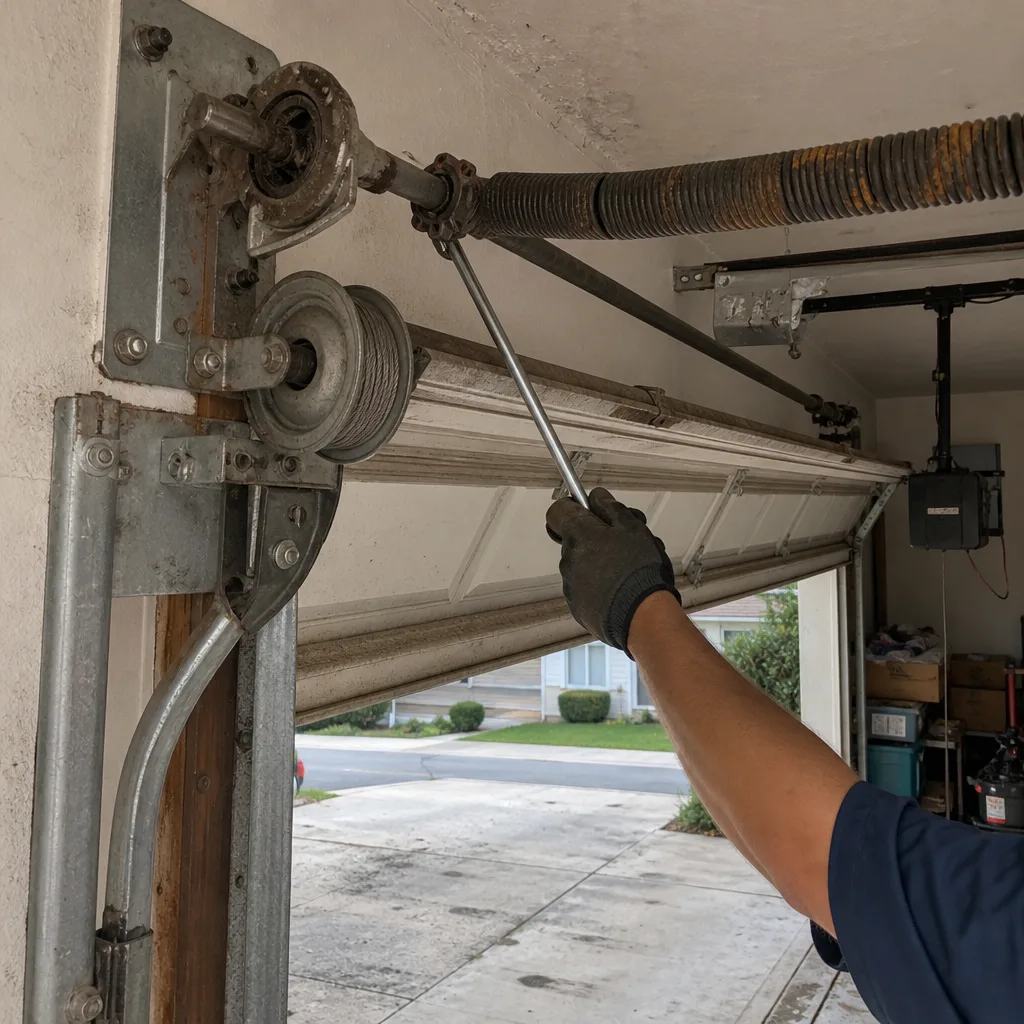
- Check the spring above the door. Look for a gap in the coils. A torsion spring should be one continuous coil. A separation wider than the thickness of a quarter means the spring is fatiguing and under partial tension. This is the single most important visual check in your entire garage.
- Trace the cables on both sides. Look at the bottom three inches of each cable where it meets the bottom bracket. Rust streaking, loose strands, or a cable that looks kinked where it enters the bracket are all red flags. Sarasota’s salt air accelerates cable corrosion at this stress point faster than anywhere else on the door.
- Look at the roller stems. Every roller should sit centered in its track. A roller that rides against the inside edge of the track means that hinge is wearing unevenly. A roller that’s missing entirely on an upper section is an emergency that should stop the door from being operated.
- Check the bottom weather seal. Look for daylight under the seal, especially in the corners. Gaps here mean moisture, pests, and hot air are getting in, and the door may have shifted on its hinges.
- Glance at the track fasteners. Loose bolts backing out of the vertical track where it meets the wall are a sign the door is banging against the track during operation, not just being noisy. And when one of those bolts fails, the track can bend and seize a roller.
None of these checks require touching anything under tension. If you spot a problem during any step, stop there. Operating a door with a visible spring gap or fraying cable is one of the most dangerous things a homeowner can do in a garage. On most Sarasota homes we service, we find at least one of these issues during a first inspection – which is why garage door repair in Sarasota so often starts with a call about one different problem entirely. The homeowner called about the opener, the inspection found the cable.
Spring Failure: The Difference Between Nearing End-of-Life and Dangerous
Springs are the most dangerous component of any garage door system. They store enough energy to lift a 150- to 300-pound door, and when a spring under tension fails, it releases that energy in a fraction of a second. The distinction between a spring that’s simply old and one that’s dangerous to operate is the single most important diagnostic skill in garage door work.
Here’s how to tell them apart.
A spring nearing the end of its life: The door feels heavy when you lift it manually after pulling the release cord. It starts to sag on one side. Operation is slow, and the opener sounds like it’s working harder. A visual inspection may show the spring coils starting to separate slightly at the center. The fix here is scheduled replacement. A spring in this condition will likely fail within weeks to months, but it’s not an emergency today. On a typical Sarasota single-car door, replacement is manageable and routine.
A spring that’s already dangerous: The spring has a visible gap of an inch or more between coils, or you can see that it has snapped cleanly (usually with a loud bang you would have heard from anywhere in the house). One side of the door hangs lower than the other when closed. The door opens only a few inches and then stops, making the opener grind. If you see any of these, stop using the door immediately. A broken spring means the remaining cable and bracket take the full weight of the door, and a secondary failure is much more likely. In our experience, Sarasota homeowners who keep operating a door with a broken spring are the ones who end up with a door off its track or a cable snapped through a section panel.
One more audio tell: a spring that creaks loudly during the first few inches of travel, then quiets down, is telling you the coil is binding internally. That’s the sound of a spring that could snap within the next few cycles. We’ve had customers in neighborhoods like Palmer Ranch and Lakewood Ranch call about a “squeaky door” that was actually a spring on borrowed time.
What the Door Is Telling You: Sound Diagnostics for Sarasota Homes
Garage doors make a lot of sounds, and almost none of them are entirely normal. Here’s what the most common ones mean, mapped to their mechanical causes.
- A sharp bang from the center of the door while opening or closing: This is almost always a spring. It may be a single coil snapping under load, or it may be the sound of spring tension releasing all at once. Either way, it’s the loudest warning a garage door gives you. Treat it as an immediate stop.
- A rhythmic grinding or scraping from the side tracks: This is a roller that’s worn through its bearing and is now turning metal-on-metal against the track. It’s loud enough to hear from inside the house. Left alone, the roller will eventually seize and the door will jam at that point, usually while you’re trying to leave for work.
- A low rumble that changes pitch as the door travels: The door is shifting on its mounting hardware. Loose bolts at the hinge plates or where the track brackets meet the wall translate into a rumble that sounds like the whole system is vibrating. Tightening these early prevents the track from being knocked out of alignment.
- A single “pop” followed by the door dropping an inch or two: A cable has slipped a groove on the drum or the bottom bracket has loosened. This isn’t a spring issue, but it places uneven load on the door, and it will shred a cable within a week if it isn’t corrected.
- A high-pitched squeal from the opener unit itself: This is the opener’s internal gear wearing, not the door. It’s a call for garage door opener repair in Sarasota, not door repair. But note: we often see openers squealing because they’re overworking against a door that’s gotten heavier due to spring fatigue. The opener is the messenger, not always the culprit.
The takeaway: sounds are directional. A sound from the side tracks points to rollers or track. A sound from above the door points to springs or cables. A sound from the motor housing points to the opener. If you can identify where a sound is coming from before you call, you’ll save a technician a diagnostic step, and in Sarasota with our humidity expanding and contracting metal components, you’ll be right more often than not.
Uneven Movement: Reading the Door’s Geometry to Find the Real Problem
A door that doesn’t rise evenly is the clearest signal something is mechanically failing, but the location of the unevenness tells you exactly which component is at fault. This is diagnostic logic, not guesswork.
The door rises, then dips slightly on one side before leveling off: This is a cable tension imbalance. The cable on the affected side has stretched or the drum has rotated slightly on the torsion tube. The fix is a cable re-tension or drum adjustment, not a spring replacement, and it needs to be corrected before the misalignment starts scoring the track.
The door shudders and moves in small jumps rather than a smooth arc: This points to a roller that’s binding on a specific section, usually at the joint between two panels. The roller is either worn flat on one side or the hinge plate has bent enough to cock the roller at an angle. In Sarasota’s humidity, metal hinges that sit in unconditioned garages are especially prone to this. The hinge itself expands and contracts with temperature swings, and after enough cycles, the geometry shifts permanently.
The door has a visible gap between the bottom of the door and the floor on one side when closed: Check whether the gap shifts when you press down on the door. If it flexes and touches the floor, you have a cable tension issue. If it doesn’t move, the track has been knocked out of level, likely from a bolt that’s backed out or a bottom bracket that’s loose.
The door leans inward or outward at the top when half open: This is a track problem, almost always caused by the horizontal track at the back of the garage sagging. The door is riding out of its track plane because the track itself has moved. In older Sarasota homes, we see this on garages with original builders-grade track that’s been patched and re-drilled over the years. The fix is re-leveling the horizontal track and replacing any bent sections.
Diagnosing uneven movement correctly matters because a cable issue and a track issue are radically different repairs. A cable repair is often completed the same day with parts in hand. A track that’s pulled out of alignment may require a full garage door installation in Sarasota review if the track is old enough that it’s fatigued.
Humidity-Driven Failures: Sarasota’s Coastal-Specific Warning Signs
Sarasota’s climate does specific things to garage doors that inland Florida and northern states never see. If you live within a few miles of the coast, salt air is in your garage, and it’s working on your hardware every day. Here are the humidity- and salt-specific warning signs we look for on every Sarasota call.
Rust streaking on hardware tells you which component is failing first. Rust runs downhill, so the location of the streak points to the source. A rust streak running down from a hinge bolt means that hinge is corroding from the inside, and the roller bearing will be next. A rust streak from the bottom bracket means the cable anchor point is weakening. Rust on the spring means the coating has worn through and the coil is developing stress points. You don’t have to know which component to call, but if you see streaking, note where it starts. That’s the answer.
White powdery residue on aluminum hardware. This is galvanic corrosion, and it happens where aluminum track meets steel bolts in the presence of salt air. The aluminum sacrifices itself, leaving a white crust around the bolt. The bolt then loosens because the metal around it is eroding. This is why loose track bolts are so common on Sarasota coastal homes.
Weather seal hardening and cracking. In Florida’s UV, the bottom and side seals on a garage door degrade in about three to five years. A seal that’s cracked or brittle lets humid air into the garage constantly, which then condenses on the door hardware even when it’s not raining. That’s a slow, constant drip of moisture onto your track, hinges, and springs. If you see condensation beading on the inside of your garage door on a humid morning, the seal has already failed, even if it looks fine.
Remote range loss that follows a heavy rain. This is a particularly common Sarasota phenomenon: the opener works fine, then after a heavy rain or a week of high humidity, the remote only works within ten feet of the door. The issue is usually a corroded connection at the wall button or a sensor terminal that’s accumulated moisture. It reads like a remote problem, but the cause is environmental.
At Platinum Garage Door Service, we work on whatever brand you already have. That’s the whole point. We carry parts and knowledge for Genie, Clopay, Amarr, and Wayne Dalton systems, among others, because a Sarasota door’s humidity problems look the same whether it’s a premium Clopay door or a builder-grade Wayne Dalton. The brand doesn’t change the physics of salt air. It changes the specific parts and tolerances, and that’s where certified multi-brand service matters. If you’re weighing options, our Choosing the Right Garage Door Brand: A Buyer’s Guide for Sarasota breaks down what to look for. A tech who only works on one brand is guessing on yours. We’re not.
Opener Behavior Changes and What They Actually Mean
Opener problems are usually blamed on the opener, but the truth is that in most Sarasota homes, the opener is just the loudest component of a system that’s struggling upstream. Here’s how to map opener behavior changes to their actual causes.
The door reverses before it fully closes, or reverses after touching the floor. This is the classic sensor issue, but in Sarasota humidity, the cause is often less the sensor alignment than the sensor bracket itself. The bracket holding the safety eye has rusted enough that the sensor tilts slightly downward, catching the reflection differently. The classic quick fix is to straighten the sensor, but if the bracket is corroded, straightening it is temporary. The fix is a new bracket, not just an alignment. In newer homes around Bee Ridge, we’ll also see sensor wiring that’s gotten damp inside the wall, causing intermittent reversal that comes and goes with the weather.
The remote only works when you’re in the driveway. This can be a battery, but it can also be a failing receiver board in the opener, especially on older Genie and Craftsman units where the receiver is exposed to Florida humidity through the opener’s plastic housing. Rule of thumb: replace the remote battery first. If range is still poor, the receiver is the likely culprit. If it’s an opener over ten years old, repair may not be the smart money.
The opener runs, but the door doesn’t move. On Chamberlain and LiftMaster units, this is usually the plastic drive gear, which strips out as a deliberate mechanical fuse. It’s designed to fail before the motor burns out. The part is inexpensive, but the repair requires opener disassembly. On belt-drive models, this same symptom can be a tensioner failure. On older screw-drive openers, which are common in homes built in the 1990s and 2000s around Fruitville and Kensington Park, this is the traveler stripping out on the screw. Each requires a different diagnostic path, which is why we service openers from the motor to the wall button rather than just swapping remotes.
The door closes most of the way, then reverses accompanied by a delayed grinding sound. The limit switch is set too far, and the opener is pressing the door into the floor. That pressing is what wears out the plastic gear prematurely. A simple travel-limit adjustment fixes it, and doing this before the gear strips saves you a real repair bill.
The wall button works but the keypad outside doesn’t. Keypads fail from direct sun and humidity exposure much faster than wall buttons. The keypad membrane cracks and lets moisture reach the circuit board. This is a simple part replacement, usually under $100 on most brands, and it doesn’t require replacing the opener. But a keypad that’s opened up to the elements should be replaced before it shorts and blows the opener’s logic board, which is a far more expensive repair.
From the spring to the smartphone app, we diagnose the whole system, not just the part that’s beeping. That’s why garage door opener repair is one of our most common calls in Sarasota: a homeowner chases a remote problem for a month, then we find the corroded bracket or stripped gear in an hour.
Stop Using It Now vs. Schedule a Repair: A Decision Framework
Not every garage door warning sign is an emergency, but some are. Here’s the framework we use with Sarasota homeowners on the phone, and it’s applicable to every brand from Amarr to Wayne Dalton.
Stop using the door immediately and call if you see or hear:
- A visible gap in the torsion spring or a spring that has snapped
- A cable that is frayed, kinked, or hanging loose from the bottom bracket
- A door that is visibly uneven by more than an inch when closed
- A loud bang followed by any change in how the door moves
- A door that has come off its track or is resting at an angle
- Any component that is smoking, sparking, or smells like burning
These are safety-critical failures. The door can drop, the spring can release, or the electrical component can cause a fire. Do not attempt to operate the door manually when a spring is broken; the door is now significantly heavier, and a person can be injured trying to hold it up.
Schedule a repair within the next week or two for:
- Rollers that are visibly worn or starting to squeal (but the door still moves smoothly)
- Weather seal replacement (noticeable but not causing standing water in the garage)
- Slow operation with no visible spring damage (this may be an opener issue or early spring fatigue)
- Remote range loss or keypad failure
- Sensor misalignment causing occasional reversal
- Loose track bolts that haven’t yet caused the door to bind
The distinction matters for cost, too. A spring that’s caught before it breaks is a planned replacement. A spring that breaks is often accompanied by secondary damage: a cable that’s snapped through a section, a bent track, or a dented panel. The spring replacement cost is the same. The secondary damage is what makes an emergency repair expensive. We see this pattern constantly in Sarasota: a homeowner notices the door feeling heavy for three weeks, waits, and then a spring lets go at 6:45 on a Monday morning with a car inside. The repair bill tripled in one second.
Common Mistakes to Avoid
- Spraying lubricant on the spring yourself. Lubricating a spring is part of regular maintenance, but many homeowners use the wrong product or apply it to the wrong area. Grease or heavy oil on the coils attracts Sarasota’s airborne salt and sand, creating an abrasive paste. The right lubricant is a dry silicone spray applied to the spring and roller bearings only. If you’re not sure what you’re spraying, skip it.
- Continuing to use the door after a single reverse or partial failure. A door that reverses unexpectedly may work fine for the next ten cycles, then fail completely when a sensor bracket finally gives way. Every reversal is a signal. Ignoring it and hoping it goes away is how small problems become door replacements.
- Replacing the opener when the spring is the problem. A broken spring makes the door too heavy for the opener to lift. If you replace the opener without addressing the spring, the new opener will burn out its gear the same way. Repair first, replace only when necessary. This is one of the most common mistakes we see from homeowners who called a company that only sells openers.
- Using the garage door as the primary entry door. In many Sarasota homes, the garage door cycles six to ten times a day, every day. That’s two to three times the usage the door’s springs and rollers are rated for. Every additional cycle wears the spring slightly. Building a habit of using the front door for short trips extends the life of every component.
- Ignoring rust streaks because the door “still works.” Rust on hardware in Sarasota is not cosmetic. A bottom bracket that’s rusted through will eventually release the cable, and that failure happens without warning. Streaking is the warning.
- Manually lifting the door to test it without understanding spring tension. If you pull the release cord on a door with a broken spring, the door will drop hard when you let go. People have lost fingers this way. Manual testing is only safe on a door that’s operating normally.
- Buying a replacement spring online and installing it yourself. Torsion springs are under enough tension to kill. Installation requires winding bars, not screwdrivers, and one slip can send a bar through a wall or a person. This is the one repair every homeowner should refuse to DIY, no exceptions. We train on eight major brands precisely because each spring system winds differently, and the difference matters.
When to Call a Professional
If you’ve spotted any of the stop-using-it signs above, call today. A broken spring is not something that can wait, and a cable that’s already fraying is hours from failure, not weeks. If you’re unsure whether a sign is urgent, describe it to a professional honestly and ask for a phone diagnosis. A good company will tell you whether to pull your car out first or whether you have time. At Platinum Garage Door Service, that’s what we do. We diagnose from the spring to the smartphone app, we work on your brand, not just ours, and we set a Platinum standard on every job, whether that’s a simple roller replacement or a full system rebuild. We offer free estimates in Sarasota. Call (855) 341-5769 and we’ll talk through what you’re seeing before anyone puts on a work boot.
Frequently Asked Questions
The most common warning signs in Sarasota are rust streaking on cables and brackets from salt air, slow operation from humidity-related spring fatigue, and sensor reversal from corroded brackets. These three account for the majority of repair calls we see from Palmer Ranch to Fruitville. If you see rust on hardware or the door feels heavier than it used to, call for an inspection before the next rain system moves through.
A spring that’s about to break typically shows coils starting to separate near the center, makes a creaking noise during the first few inches of travel, and causes the door to feel noticeably heavy when you lift it manually. A spring that’s already broken makes a loud bang and the door will not open more than a few inches. If you see coil separation, schedule replacement now. Call (855) 341-5769 for an exact quote; estimates are free.
Most repair issues, including spring replacement, cable re-tensioning, and roller replacement, can be completed same-day when parts are in stock. We carry parts and knowledge for the brands already in Sarasota homes, including Genie, Clopay, Amarr, and Wayne Dalton, so a single visit handles most jobs. Installation and replacement work is scheduled after a free measure and written quote.
Humidity causes sensor brackets to shift and corrode, which changes the angle of the safety eyes enough to trigger a false reversal. It can also be a limit switch that’s set too high, which causes the door to hit the floor and bounce back. The fix is usually a bracket replacement or a travel-limit adjustment, not a new opener. Both are inexpensive repairs.
It depends on the noise. A rhythmic scraping from the side tracks is a worn roller and is safe to use for a short window if the door moves smoothly. A creaking or popping from the spring above the door is not safe to ignore; that’s a spring under stress that can snap without warning. When in doubt, stop using the door and call for a phone diagnosis before the next cycle.
A new garage door in Sarasota typically runs $1,200 to $3,500 installed depending on size, insulation, and brand, with premium Clopay and Amarr models at the higher end. Opener replacement adds $300 to $600. The measure and written estimate are free, and the price is quoted and agreed before any work starts. Call (855) 341-5769 to schedule a free measure.
The Bottom Line
Your garage door talks. It creaks, it shudders, it leans, it strains, and every one of those signals maps to a specific mechanical cause that’s knowable before it fails. In Sarasota, the environment accelerates the conversation: salt air corrodes cables, humidity shifts sensor brackets, heat cycles fatigue springs. The homeowner who learns to read the signs catches a $30 roller before it becomes a $1,500 track replacement. The homeowner who ignores them ends up with a car trapped in the garage and a weekend emergency. You don’t need to be a technician. You just need to know what each signal means and when it’s time to stop using the door. That’s the whole reference guide in one sentence: see the sign, know what it means, act before the bang. And if you’d rather not learn the hard way, we’re one call away. From the spring to the smartphone app, Platinum Garage Door Service handles it all in Sarasota.
Written by the team at Platinum Garage Door Service, serving Sarasota since 2015. Browse more guides & resources.
See the difference
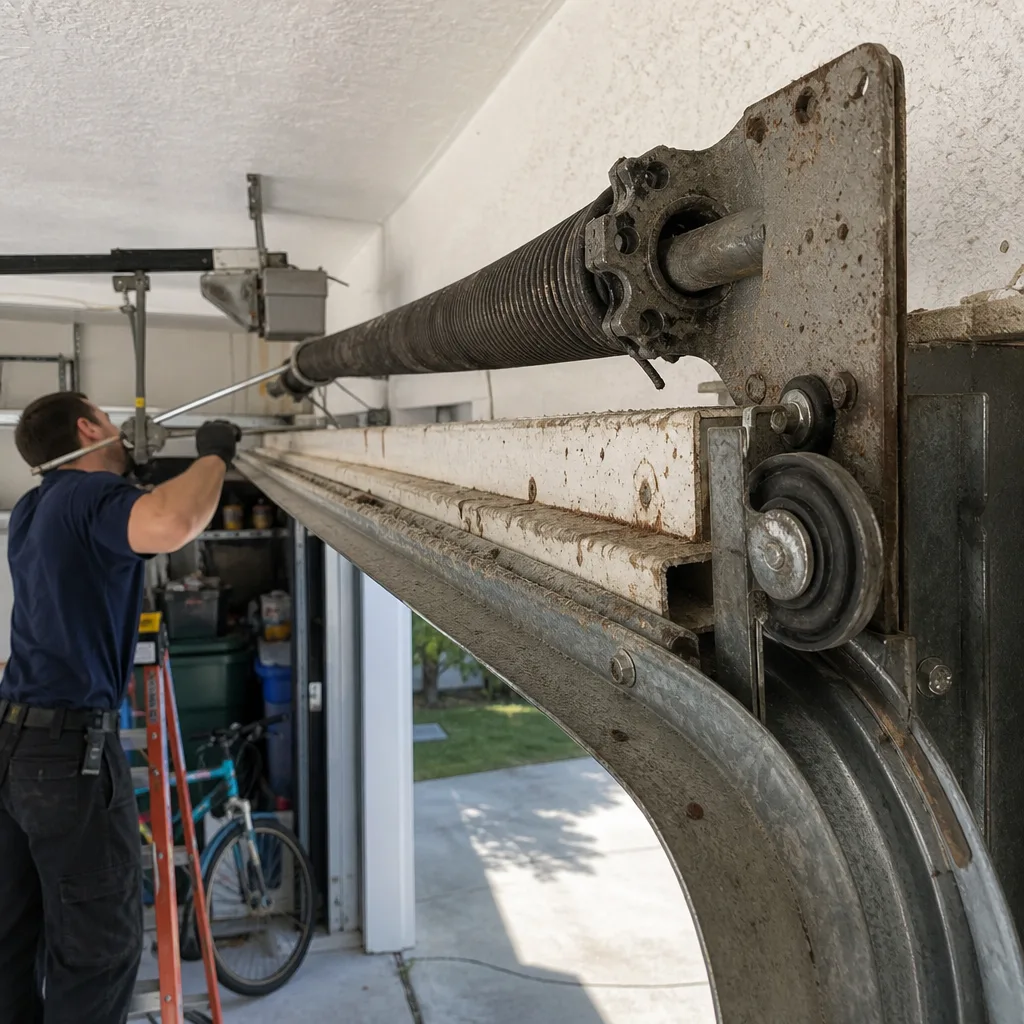 Before
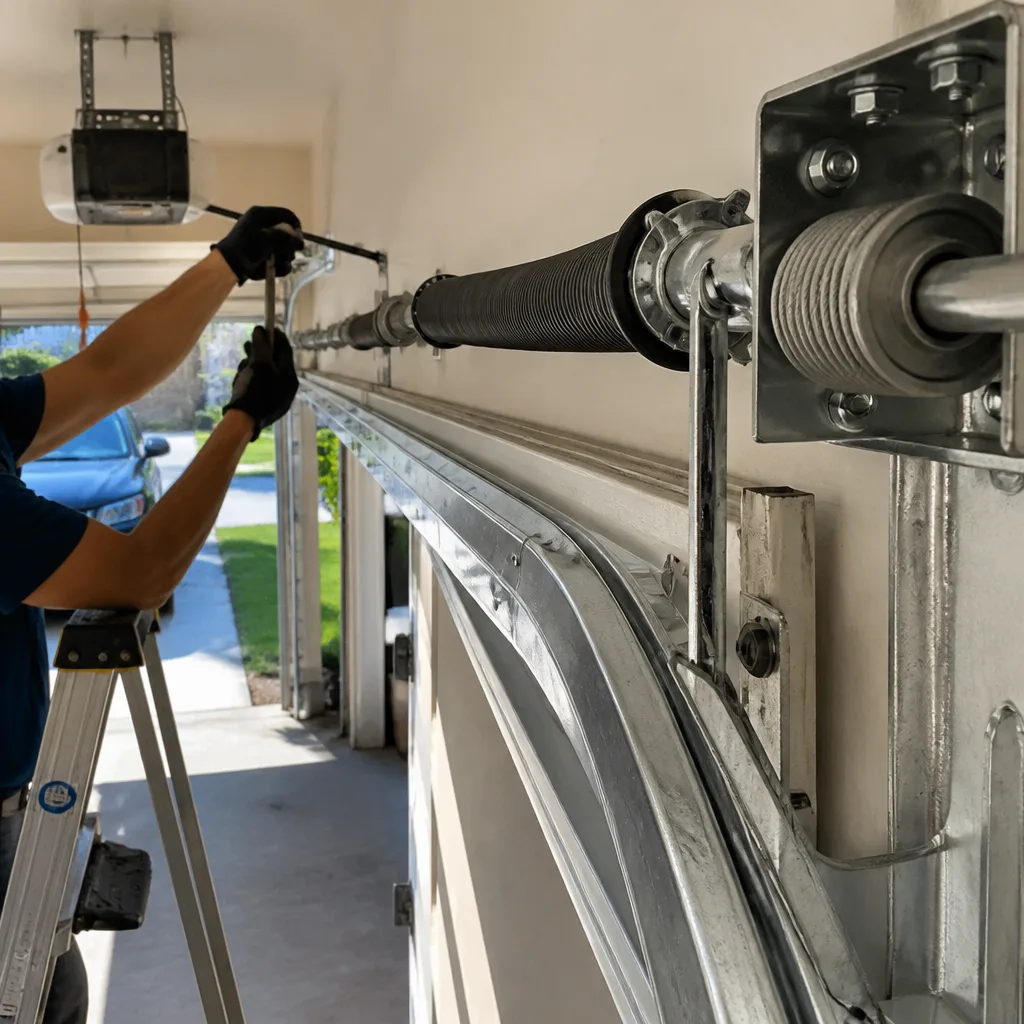 After
 Before
 After
 Before
 After