
Last updated October 30, 2026
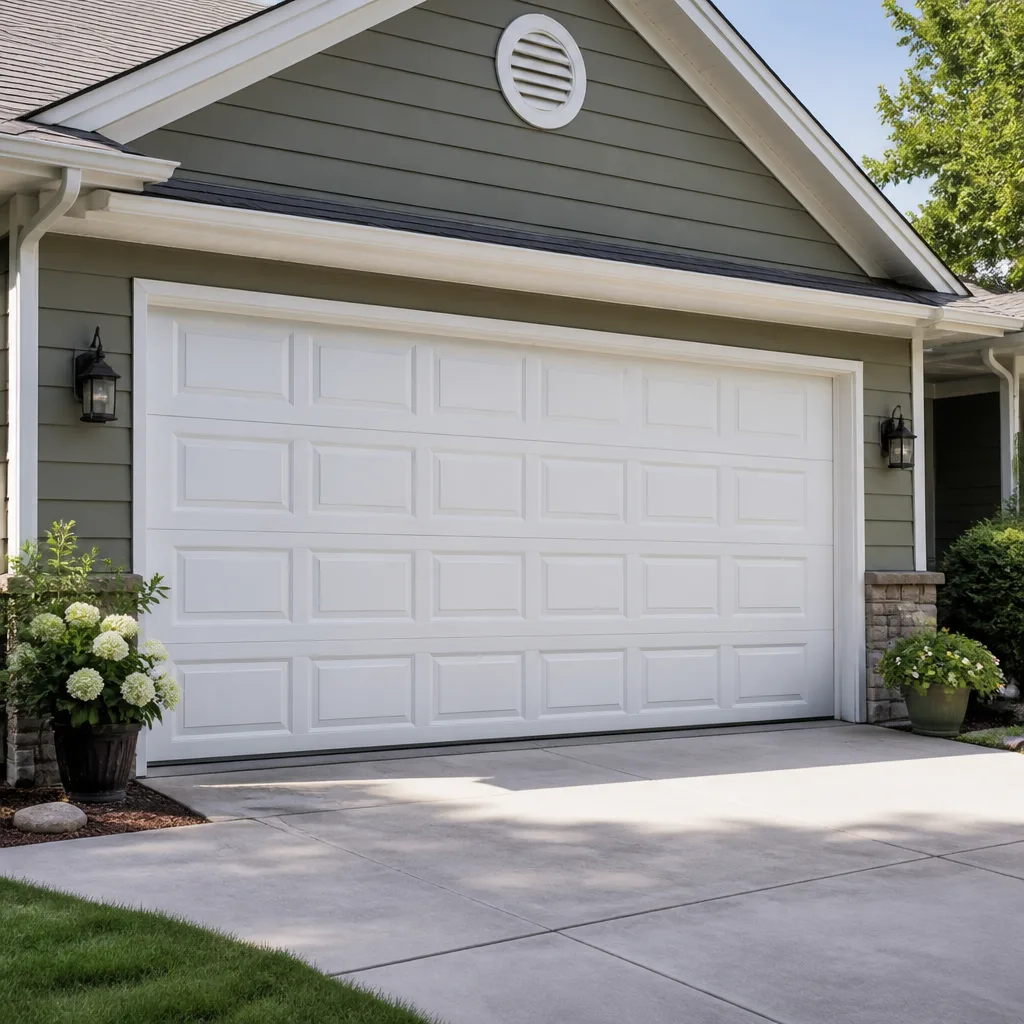 Raised-panel steel
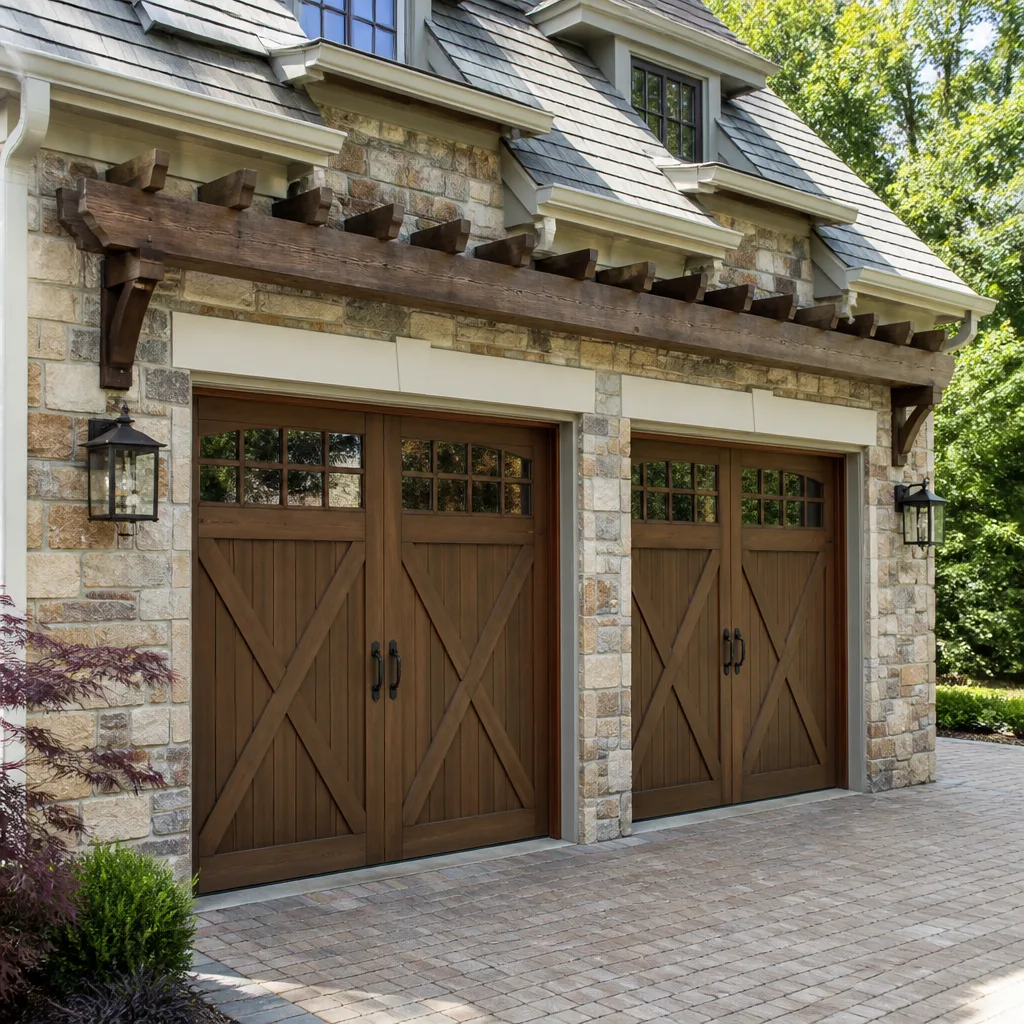 Carriage house
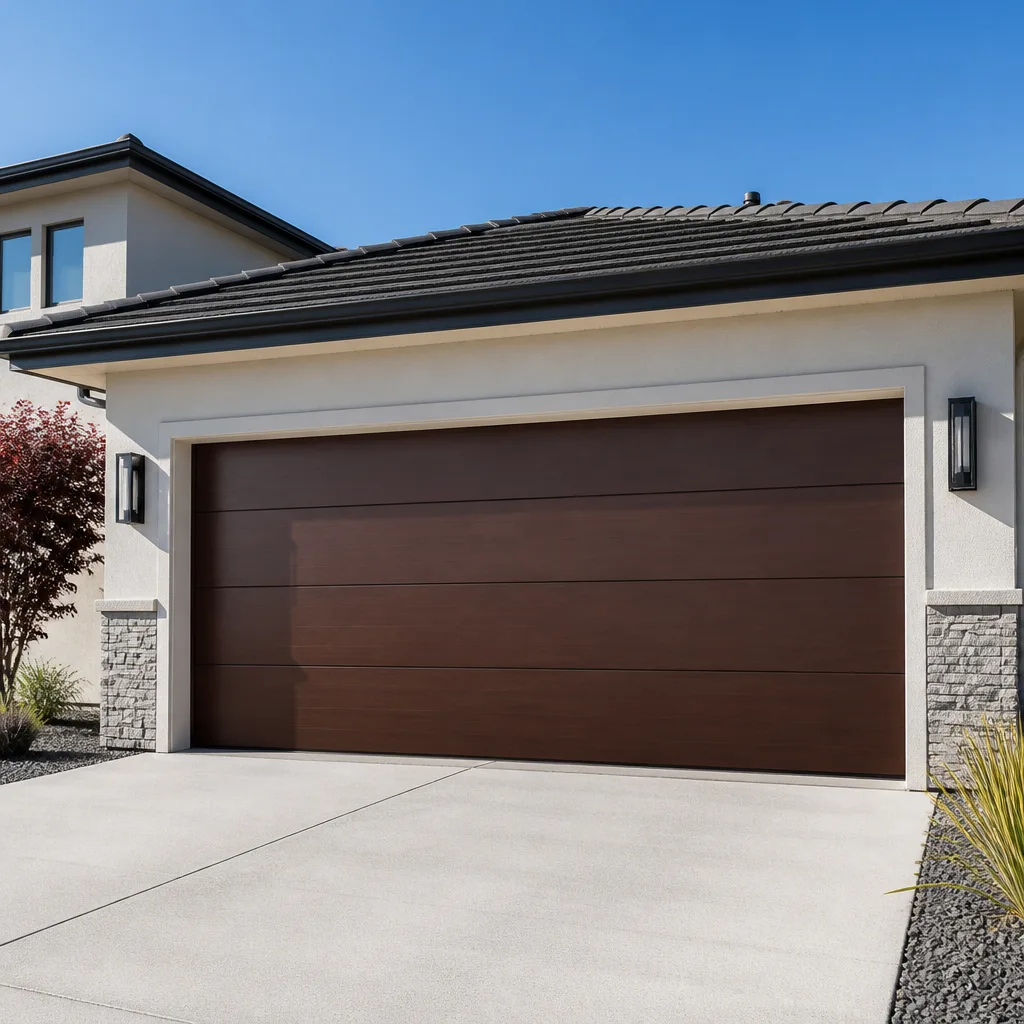 Modern flush
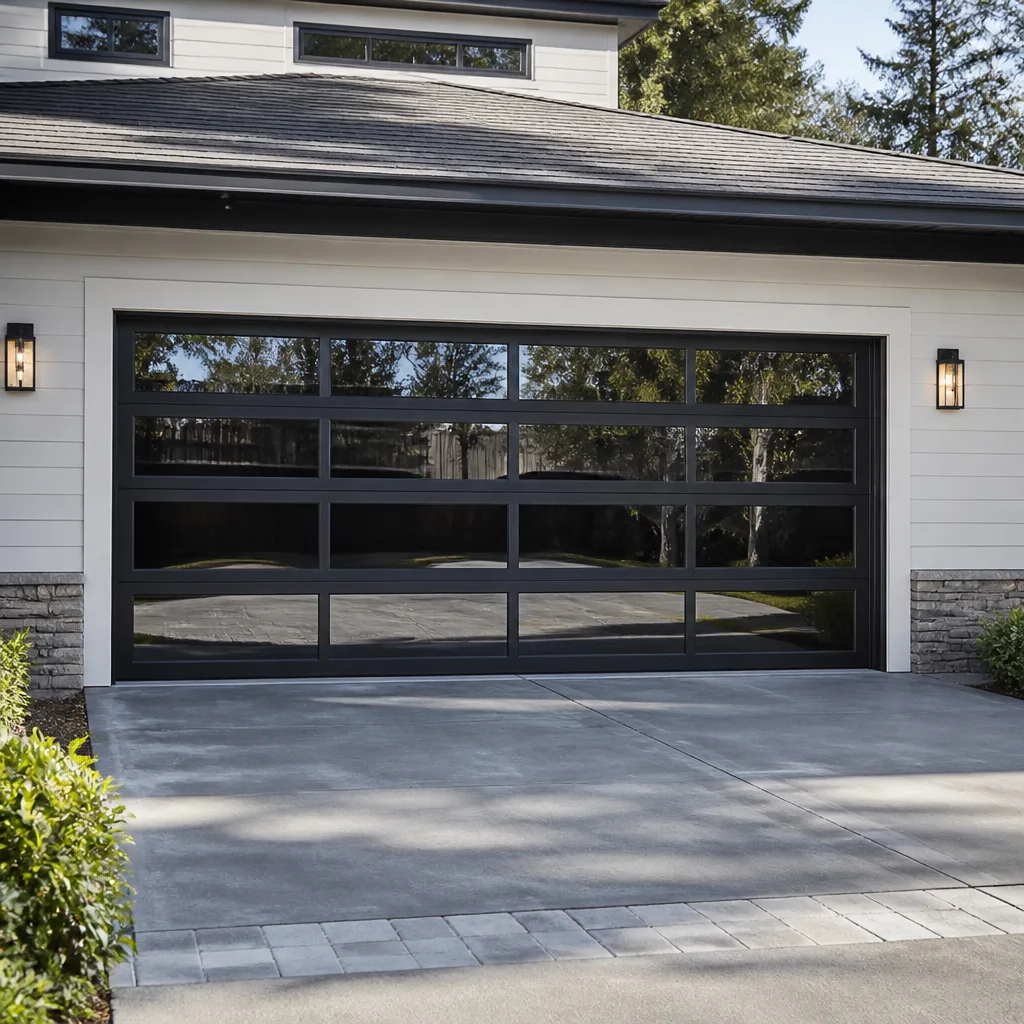 Full-view glass
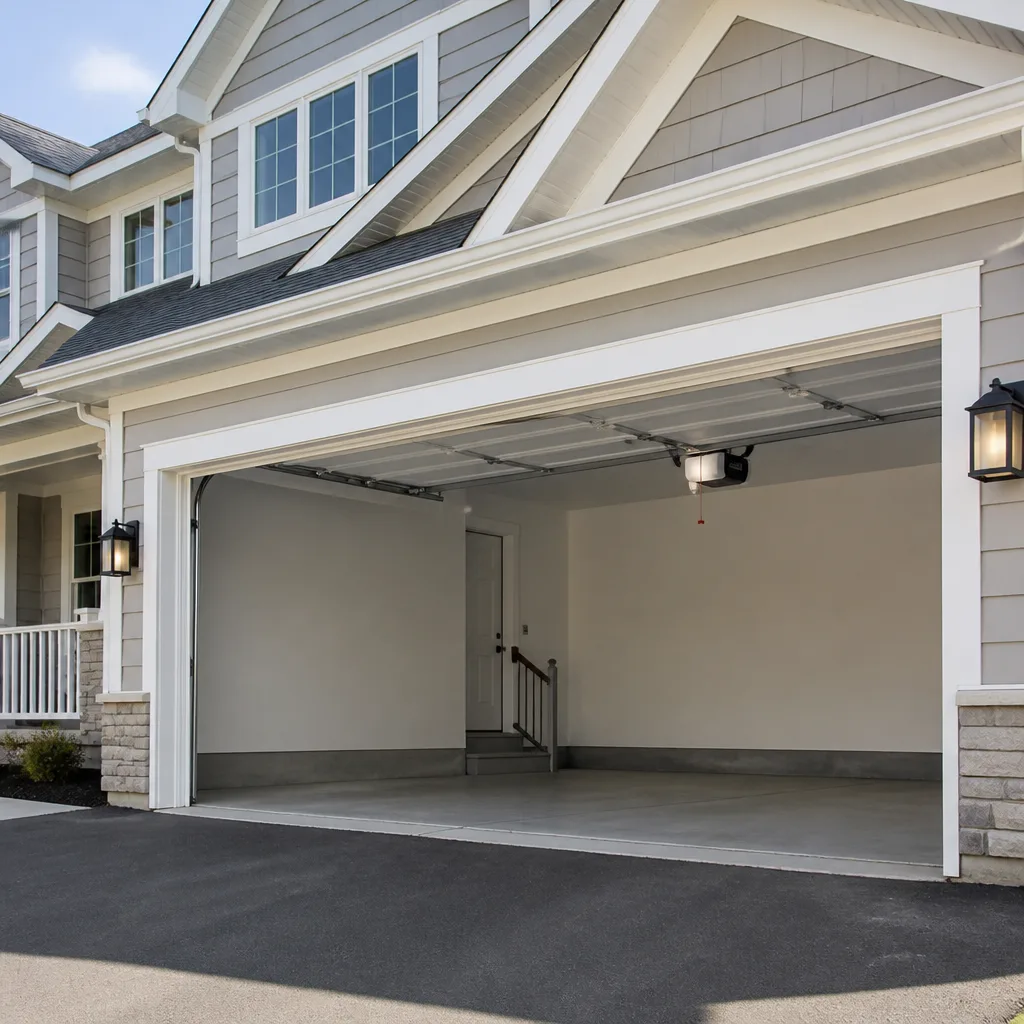 LiftMaster openers
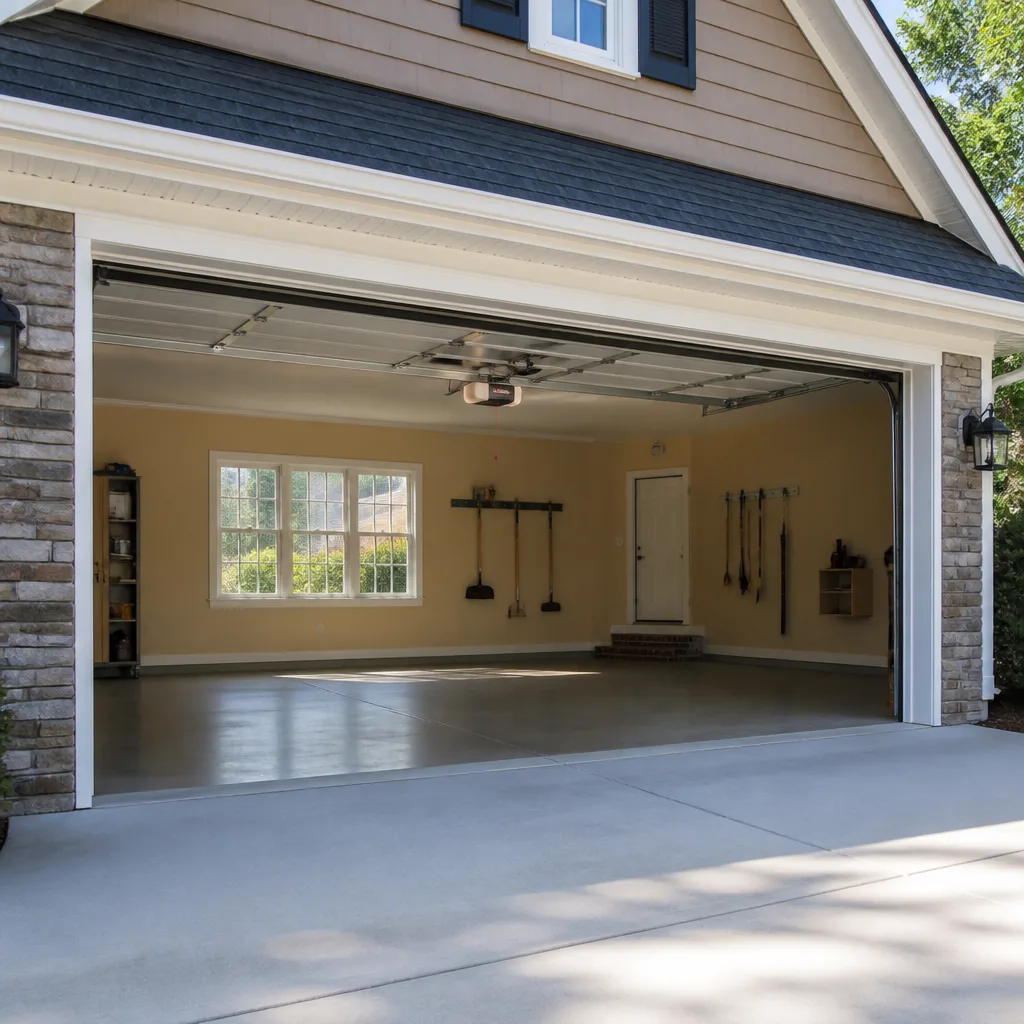 Chamberlain openers
Full 25-point door and opener safety check with every visit - springs, cables, rollers, tracks, and your LiftMaster or Chamberlain opener included
You get a price before we start. It does not change when the truck arrives.
Get your free estimateSeasonal Garage Door Care for Sarasota: Year-Round Homeowner’s Guide
Here’s what most seasonal maintenance guides get wrong about Sarasota: they’re written for places with four seasons. They talk about freezing temperatures, road salt corrosion, and spring thaw cycles. None of that applies here. What actually wears out a garage door in Sarasota is a two-cycle year: June through November brings hurricane-force wind loads and salt-saturated air, while January through March brings the snowbird compression period, when thousands of seasonal residents return and garage doors that sat idle for months suddenly cycle a dozen times a day. Miss those two windows and you’ll be replacing springs and rollers years earlier than you should. This guide covers the real Sarasota seasonal calendar, what to inspect before and after storm season, how to adjust lubrication for wet and dry months, and what fails first under heavy snowbird use. For additional help, see our The Complete Guide to Garage Door in Sarasota.
Styles & brands we work with
Quick Answer
Seasonal garage door care in Sarasota splits into two cycles, not four seasons. Before hurricane season (May), you should test balance, tighten all hardware, inspect rollers and cables for wear, and document the door’s condition for insurance purposes. During snowbird season (January through March), increase lubrication frequency, watch for spring fatigue from high cycle counts, and listen for opener strain. Homes within a mile of the Gulf need monthly salt-air cleaning of tracks and hardware; inland homes can stretch that to quarterly. Most of this takes 20 minutes and a few basic tools. What it prevents costs hundreds to fix.
Table of Contents
- Why Sarasota Has Two Seasons, Not Four
- Pre-Hurricane Inspection Protocol: What to Test in May
- Post-Storm Assessment: Structural Damage vs. Cosmetic Wear
- Snowbird Surge: Managing High Cycle Counts January Through March
- The Sarasota Lubrication Calendar: Wet Months vs. Dry Months
- Salt Air Cleaning Schedule: Gulf-Front Homes vs. Inland Zip Codes
- Common Mistakes to Avoid
- When to Call a Professional
- Frequently Asked Questions
- The Bottom Line
Why Sarasota Has Two Seasons, Not Four
Traditional garage door maintenance schedules assume a temperature swing that stresses metal through expansion and contraction. Sarasota’s temperature range, roughly 50 to 95 degrees across the year, simply doesn’t create that kind of stress. What it does create is a humidity swing between the dry winter months and the saturated summer months, and a wind-load event window that no four-season guide ever addresses.
Here’s the reality we see on service calls throughout Sarasota: a garage door that’s been perfectly reliable for nine months will suddenly bind in July because the wood frame swelled with summer humidity. A torsion spring that survived eight years will snap in February, not from cold, but from the sudden return to daily use after months of sitting still. The environmental stressor isn’t temperature, it’s moisture and complete inactivity followed by heavy use.
Understanding this changes how you maintain your door. You don’t need a fall “winterization” checklist. You need a pre-June storm-readiness inspection and a January high-cycle maintenance routine. If you follow those two anchors, the rest of the year takes care of itself with basic monthly checks.
We work on your brand, not just ours. Whether you have a Genie opener or a Clopay door or a Wayne Dalton system, the seasonal stress patterns in Sarasota are identical. If you’re selecting new equipment, our guide on Choosing the Right Garage Door Brand: A Buyer’s Guide for Sarasota can help. The maintenance protocol doesn’t change based on manufacturer, it changes based on where you live relative to the Gulf and whether your door gets used year-round or only during season.
Pre-Hurricane Inspection Protocol: What to Test in May
The optimal window for your pre-storm inspection in Sarasota is the first two weeks of May. That’s before the June 1 start of hurricane season and before afternoon thunderstorms become a daily event. Here’s the protocol we recommend, step by step.
- Test the balance manually. Pull the emergency release cord and lift the door by hand. It should move smoothly and stay put at waist height. If it drops or requires real effort to lift, your springs are wearing and the door will be far more vulnerable to wind damage if it’s not properly counterbalanced.
- Inspect all hinges, brackets, and track bolts. Use a socket wrench on every fastener you can reach. Garage doors cycle thousands of times per year and vibration loosens hardware. Loose hinges are how wind gets behind a door panel and peels it off.
- Check the weatherstripping along the bottom and sides. Gaps let wind-driven rain into the garage during tropical storms. If the rubber is cracked or pulling away, replace it before June. It’s a $20 fix that prevents water damage to whatever you store in the garage.
- Examine rollers for wear. Nylon rollers eventually crack. Steel rollers eventually lose their bearings. Either condition means the door will jam under load, which is the last thing you want when you’re trying to secure the house before evacuation.
- Test the auto-reverse on your opener. Place a piece of wood on the floor under the door and close it. The door should reverse on contact. This is a simple safety check, but it also confirms the opener’s force settings haven’t drifted.
- Document everything with photos. Walk around the door and photograph each panel, both tracks, the springs, and the opener. If a storm does cause damage, having dated pre-storm photos makes your insurance process dramatically easier. This is an often-overlooked step that costs nothing and can be worth thousands.
If any step in this inspection reveals a problem, address it before June. Waiting until a named storm is in the Gulf means waiting in line behind every other homeowner who ignored the same warning signs. For Sarasota homeowners who want an expert’s eyes on the system, our garage door repair service in Sarasota includes a full 25-point inspection with every visit, and May is the smart time to schedule it.
Post-Storm Assessment: Structural Damage vs. Cosmetic Wear
After a named storm or a significant wind event passes through Sarasota, most garage doors will show some kind of visible change. The critical skill is knowing the difference between cosmetic issues that can wait and structural problems that need immediate attention.
Cosmetic issues include light scratches from airborne debris, small dents on the exterior of panels that don’t affect the door’s operation, and minor paint chipping. These are annoying but benign. The door still functions, the panels still seat correctly in the tracks, and the balance hasn’t changed. You can live with these indefinitely or address them on your own schedule.
Structural issues are different, and they come in five forms we see most often after storms in Sarasota:
- Bowed or twisted panels. Wind load can flex a door panel past its design tolerance. Even if the panel returns to shape, the metal may have lost rigidity. The door will feel lighter when you lift it manually and may rattle during operation.
- Pulled or bent track sections. If the track is no longer perfectly parallel or has kinked, the rollers will bind and eventually derail. This is a safety issue, not a maintenance item.
- Shifted mounting brackets. The brackets that hold the horizontal track to the ceiling can shift under wind load. If the track now tilts or flexes when the door moves, hardware needs to be re-secured and re-aligned.
- Frayed or stretched cables. High winds can shock-load the lift cables. Look for broken strands or any change in cable tension from one side to the other. A cable under inconsistent tension is a failure waiting to happen.
- Changed spring tension. If the door was open during the storm, wind pressure can momentarily pull the door against the opener’s travel limits. Springs can stretch unevenly. You’ll notice this as a door that’s suddenly harder to lift or that hangs crooked when partially open.
Here’s our honest take on post-storm DIY: checking your door and documenting damage is something every homeowner should do. Attempting to fix a structural problem yourself is not. Garage door springs and cables are under enough tension to cause serious injury if they fail, and a storm-damaged system is more unpredictable than a normally worn one. If you see any of the structural signs above, call a professional. If you’re not sure what you’re looking at, we’ll assess the damage in Sarasota and tell you what actually needs fixing, not what’s easiest to sell you.
Snowbird Surge: Managing High Cycle Counts January Through March
Every January in Sarasota, the same thing happens: thousands of seasonal residents return from up north and start using their garage doors again. Here’s the maintenance reality most people don’t consider: garage door components are rated in cycles. A standard torsion spring is good for roughly 10,000 cycles. A nylon roller, depending on quality, lasts 10,000 to 20,000 cycles. Those numbers don’t care whether the cycles happen over five years of steady use or three years of intense snowbird-season use followed by months of inactivity. The wear is cumulative.
What we see in Sarasota is that snowbird-season doors fail in predictable patterns. The components that wear first under seasonal high-frequency use are:
- Torsion springs. If your door sits unused from April through December and then cycles ten times a day from January through March, that’s roughly 900 cycles in a single three-month season. Nine snowbird seasons puts you right at the fatigue limit of an average spring. This is why February and March are prime spring-failure months in Sarasota, especially at rental properties and seasonal condos along the barrier islands.
- Opener gears. LiftMaster, Chamberlain, Genie, and Craftsman openers all use a plastic drive gear inside the motor housing. That gear wears with every cycle, not with age. An opener on a door that cycles heavily for three months and then sits idle wears the gear just as fast as one used year-round. The difference is that the failure happens mid-season when you need it most.
- Hinge pins and bushings. High-frequency operation generates heat. Hinge pins wear elliptically, and once a hinge is loose, every subsequent cycle accelerates the wear. A door that’s slightly noisy in January will be significantly noisier by March.
The practical maintenance step for snowbird season: perform a basic tune-up in early January before the heaviest use window opens. Test balance, listen for grinding or squealing from the opener, tighten hinge bolts, and apply fresh lubricant to rollers, hinges, and springs. If you’re returning to a Sarasota home that’s been closed up since spring, run the door three or four times and listen for any change in sound or rhythm before you start the daily routine.
For seasonal residents who arrive and discover a door that won’t open or an opener that grinds on the first cycle, our opener repair service handles every major brand, including the smart-home systems from Genie and LiftMaster that sometimes lose Wi-Fi pairing after months of being powered down.
The Sarasota Lubrication Calendar: Wet Months vs. Dry Months
Lubrication is the single highest-value maintenance task for any garage door in Sarasota. It’s also the most commonly overdone or done incorrectly. Our guidance is straightforward: use a silicone-based or lithium-based spray lubricant, not WD-40, which is a solvent that will strip existing lubrication and leave metal surfaces vulnerable. Apply it to hinges, rollers (focus on the bearings, not the wheel surface), springs, and the opener rail. Wipe away excess. That’s the whole job.
The Sarasota-specific variable is frequency. The dry season, roughly November through April, allows you to lubricate quarterly and stay ahead of wear. The air carries less moisture, dust doesn’t stick as readily, and components retain lubrication longer. A January lube before the snowbird surge, followed by a March touch-up, is enough for the dry months.
Summer changes the equation. From June through October, Sarasota’s humidity runs high, and the air off the Gulf carries fine particulate salt. That combination means lubricant degrades faster and picks up abrasive grit more quickly. During wet season, we recommend monthly lubrication of rollers and hinges, and a visual check of springs every two weeks for surface rust formation. Springs that look dry or show a rusty haze are telling you that the cycle is accelerating.
One more Sarasota-specific note: condensation. When a garage door that’s been sitting in an air-conditioned garage opens into July humidity, the metal surfaces inside the track can sweat. That moisture mixes with whatever dust and salt is present to form a paste that works like grinding compound. If you live near the water and run your AC heavily, pay extra attention to track cleanliness during summer, even if you’re diligent about lubrication.
We stock lubricants and can apply them as part of any service call, but we’re also the first to tell you this is a job most homeowners can handle themselves. Where professional help becomes relevant is when lubrication doesn’t quiet a noisy door, which usually means roller bearings are already worn and it’s time for replacement rather than another coat of spray.
Salt Air Cleaning Schedule: Gulf-Front Homes vs. Inland Zip Codes
Salt air is the most underrated enemy of garage door hardware in Sarasota, and its impact falls on a predictable gradient based on distance from the Gulf. We’ve worked on doors on Longboat Key, Siesta Key, and Lido Key, and we’ve worked on doors in Lakewood Ranch and Palmer Ranch. The difference in hardware corrosion between barrier island homes and inland zip codes is dramatic. Not mild, dramatic.
Here’s the working distinction: homes within one mile of the Gulf, especially those on the barrier islands, need monthly cleaning of exposed metal surfaces during summer. That means the track assembly, hinges, spring coils, and any exposed bolts. Use a damp cloth first to remove salt residue, then a dry cloth, then apply fresh lubricant. The goal is to remove the salt film before it has time to react with humidity. It’s a fifteen-minute job.
Homes in the interior of Sarasota, east of I-75 or in neighborhoods like the Meadows or Bee Ridge, can stretch cleaning to quarterly without meaningful consequences. The salt concentration drops quickly once you’re away from the shoreline. What inland homes should watch instead is dust accumulation from the dry season, which bakes onto lubricated surfaces and creates its own abrasive compound.
For all locations, the telltale sign of salt damage is white or greenish corrosion forming on aluminum track brackets or on the spring coils themselves. If the springs show corrosion, especially at the connection points, they’re compromised and will fail prematurely. Surface rust on hinges is cosmetic and can be addressed. Corrosion pitting on springs or cables is structural. That’s the point where cleaning stops being enough and replacement becomes the safe call.
One note for homes with Amarr or Wayne Dalton doors: the hardware spec varies by line, and some of the higher-end models feature powder-coated hardware that resists salt far better than standard galvanized components. If you’re replacing hardware on a Gulf-front home in Sarasota, ask for a salt-rated option. It’s a modest upcharge that pays for itself in a single season less than a mile from the water.
Common Mistakes to Avoid
- Using WD-40 as a lubricant. It’s a solvent and degreaser, not a garage door lubricant. It will strip the existing lubricant off your rollers and springs and leave them drier than before. Use silicone spray or white lithium grease.
- Ignoring a door that’s slightly off-balance. A modest imbalance may not seem urgent, but it’s doubling the workload on the opener and accelerating spring fatigue. In Sarasota’s humidity, the problem compounds faster than it would in a dry climate.
- Skipping pre-storm documentation. Every year, homeowners in Sarasota deal with insurance claims with no dated photos proving the pre-storm condition of their property. Ten minutes with your phone in May can make the difference between a claim that settles and one that stalls.
- Lubricating the wrong parts. The nylon wheel surfaces of rollers don’t need lubricant, and spraying them just makes a mess that attracts dirt. Lubricate the bearings inside the roller, the hinge pivot points, and the spring coils.
- Assuming “no ac in the garage” solves the condensation problem. The metal inside the tracks can still reach the condensation point even in an unconditioned space, especially on humid nights. Track moisture management is about airflow and cleaning, not just temperature.
- Over-tightening opener force settings. When a door gets stiff in summer humidity, the temptation is to crank up the opener’s force dial so it doesn’t reverse. That’s how you burn out the gear inside the opener. Fix the stiffness at the source instead.
- Treating all parts of Sarasota as having the same maintenance needs. A door in Gulf Gate East has different salt exposure than a door in Lorraine Estates. Applying a single schedule ignores the most important variable in the Sarasota equation: distance from the water.
When to Call a Professional
Some garage door problems are maintenance issues. Others are genuine safety hazards. The line matters because garage door springs, cables, and wind-loaded panels can cause serious injuries when they fail, and the risk increases when a system has been through a storm or has been neglected for years.
Call a professional if: your door falls when you release it in manual mode, your cables look frayed or uneven, your springs are visibly stretched or corroded at connection points, your track is bent or no longer parallel, or the opener is making sounds it didn’t make last month and you can’t identify the source. Those are not lubrication problems. Those are component failures in progress.
You should also call a pro if you’ve been through a significant wind event and your door doesn’t sit flush in the opening, no matter how minor the gap looks. A door that’s out of true after a storm is structurally compromised, and the next cycle could be the one that fails. Platinum Garage Door Service works on every major brand, from new Clopay and Amarr installations to opener diagnostics on Genie and Chamberlain systems. We give straight answers and free estimates in Sarasota. Call (855) 341-5769.
Frequently Asked Questions
In Sarasota, lubricate your garage door monthly during the humid summer season, roughly June through October, and quarterly during the dry season from November through May. The summer schedule matters more if you live within a mile of the Gulf, where salt air accelerates lubricant breakdown. Use a silicone-based spray and apply it to hinges, roller bearings, spring coils, and the opener rail. Call (855) 341-5769 if lubrication doesn’t quiet the door, since that usually means the rollers themselves are worn.
Before hurricane season in Sarasota, test the door’s balance manually, tighten all hinge and track bolts, inspect the bottom weatherstripping for gaps, examine rollers for wear, test the opener’s auto-reverse function, and take dated photos of the entire system for insurance documentation. Do all of this in early May so you can schedule any needed repairs before June. Our garage door repair service in Sarasota includes a full inspection with every visit, and estimates are always free at (855) 341-5769. For a deeper look at common issues, read The Complete Garage Door Repair Guide for Sarasota Homeowners.
Structural damage after a Sarasota storm shows up as bowed or twisted panels, bent or shifted tracks, frayed cables, or a door that suddenly hangs crooked or falls when released manually. Cosmetic issues like light scratches or small dents don’t affect operation and can wait. If you’re not sure which category your damage falls into, have a professional assess it. We’ll tell you what actually needs fixing, not what’s easiest to sell. Call (855) 341-5769 for a free assessment.
Garage door springs break in February in Sarasota because that’s when snowbird season use peaks and the cumulative cycle count on the spring finally exceeds its fatigue limit. Springs are rated for roughly 10,000 cycles, and a door that cycles ten times daily from January through March adds about 900 cycles to the total each season. If your spring breaks mid-season, call a professional, never attempt the repair yourself. Springs under tension can cause serious injury. We handle spring replacement in Sarasota daily, with parts on the truck for every major brand.
Yes, salt air from the Gulf significantly damages garage door hardware in Sarasota, especially within a mile of the shoreline. Salt accelerates corrosion on tracks, hinges, springs, and cable hardware, shortening component life by several years compared to inland homes. Barrier island homeowners should clean metal surfaces monthly during summer and apply fresh lubricant after each cleaning. Homes east of I-75 can generally stretch this to quarterly. We carry salt-rated hardware options for Gulf-front replacement jobs.
Most routine maintenance on a garage door in Sarasota is DIY-friendly: lubrication, cleaning, tightening accessible bolts, testing balance, and inspecting for visible wear are all homeowner tasks. What requires a professional is any work involving springs, cables, or anything that connects to them, because those components are under dangerous tension. If you’re comfortable with basic tools and follow the schedule in this guide, you can handle 80 percent of seasonal maintenance yourself. For the other 20 percent, our team at Platinum Garage Door Service is a call away at (855) 341-5769.
The Bottom Line
Sarasota garage door maintenance really comes down to two annual anchors: get the door inspected and documented before hurricane season opens in June, and get it lubricated and tuned before snowbird season peaks in January. Everything else flows from those two points. Stay ahead of salt air if you live near the Gulf. Watch for spring and opener gear wear if your door cycles heavily during season. Replace weatherstripping before water gets inside the garage. And when something fails or looks structurally wrong, call a professional before attempting the fix. A working garage door is the difference between a house that’s protected and a house that’s exposed. For more guides & resources, visit our blog. In Sarasota, that’s not a metaphor. It’s the first line of defense in a storm.
Written by the team at Platinum Garage Door Service, serving Sarasota since 2015.
See the difference
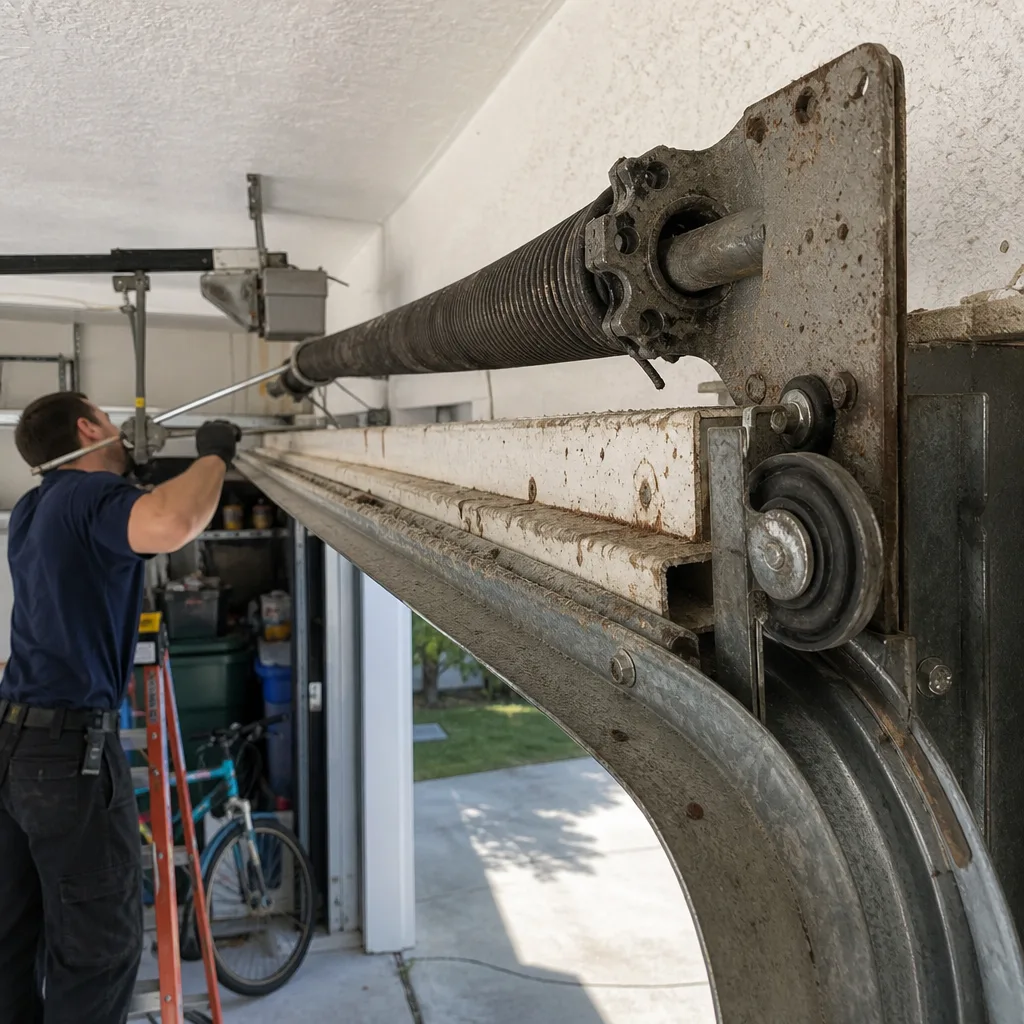 Before
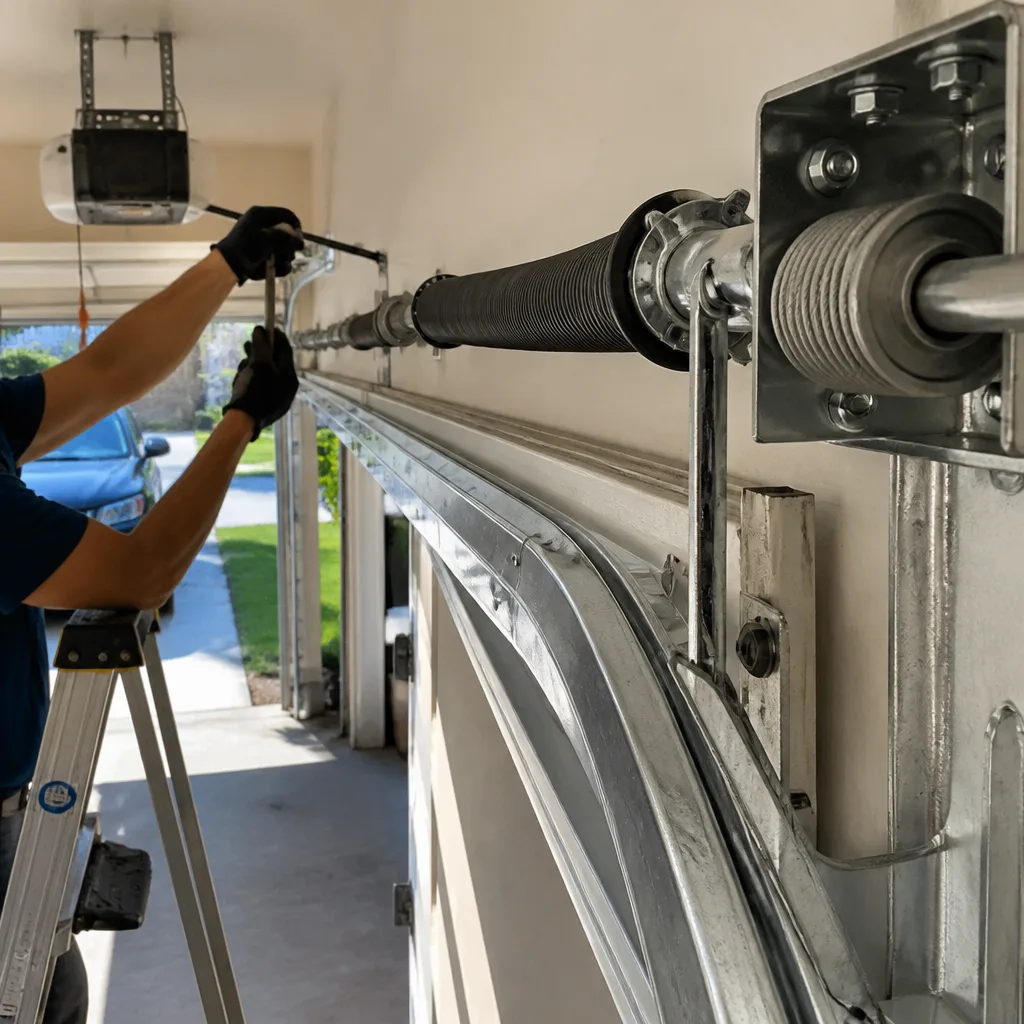 After
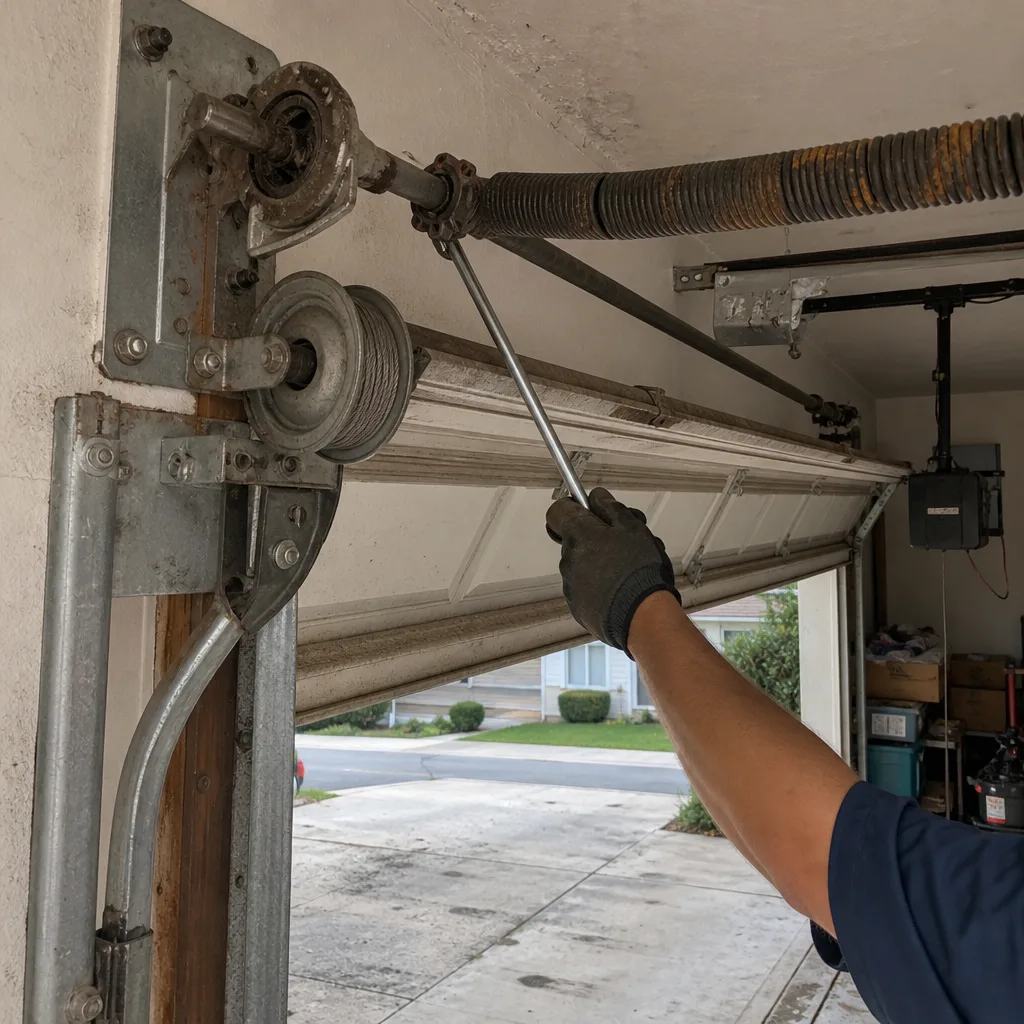 Before
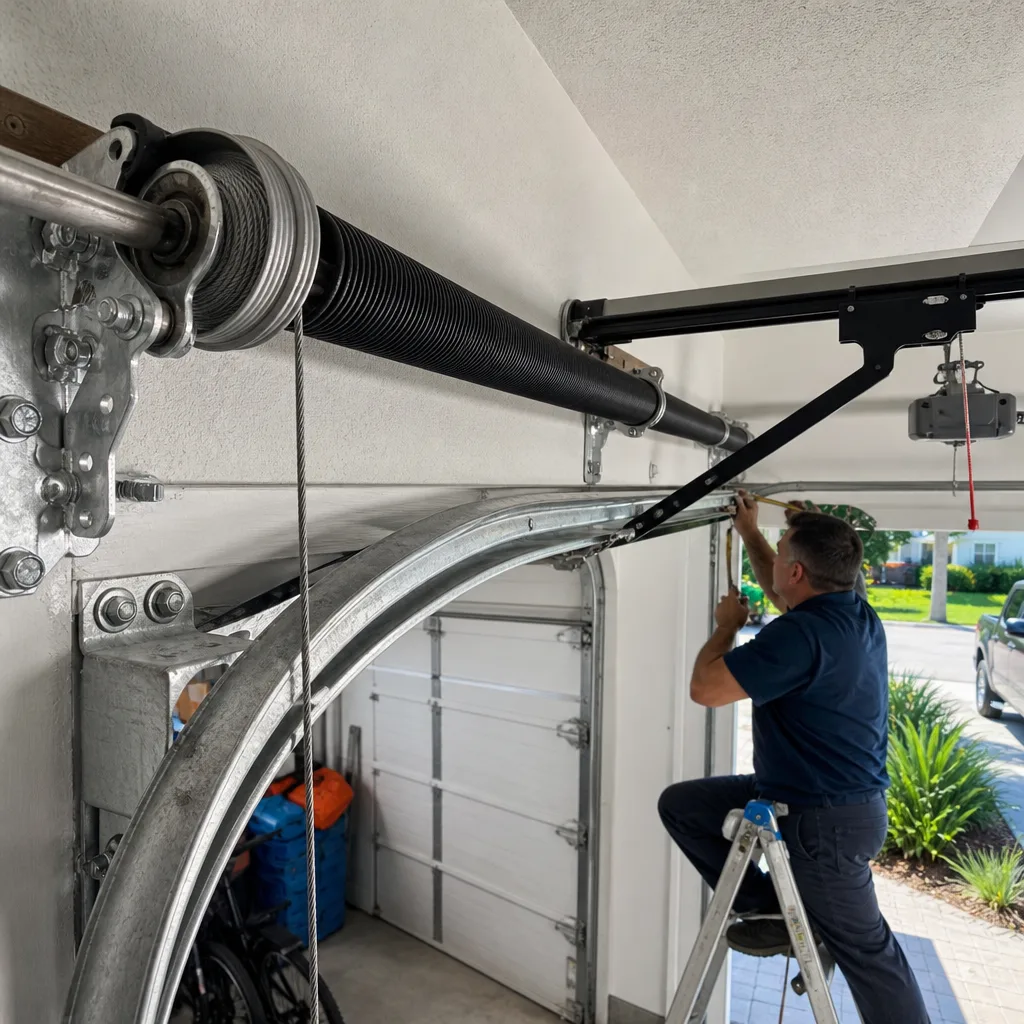 After
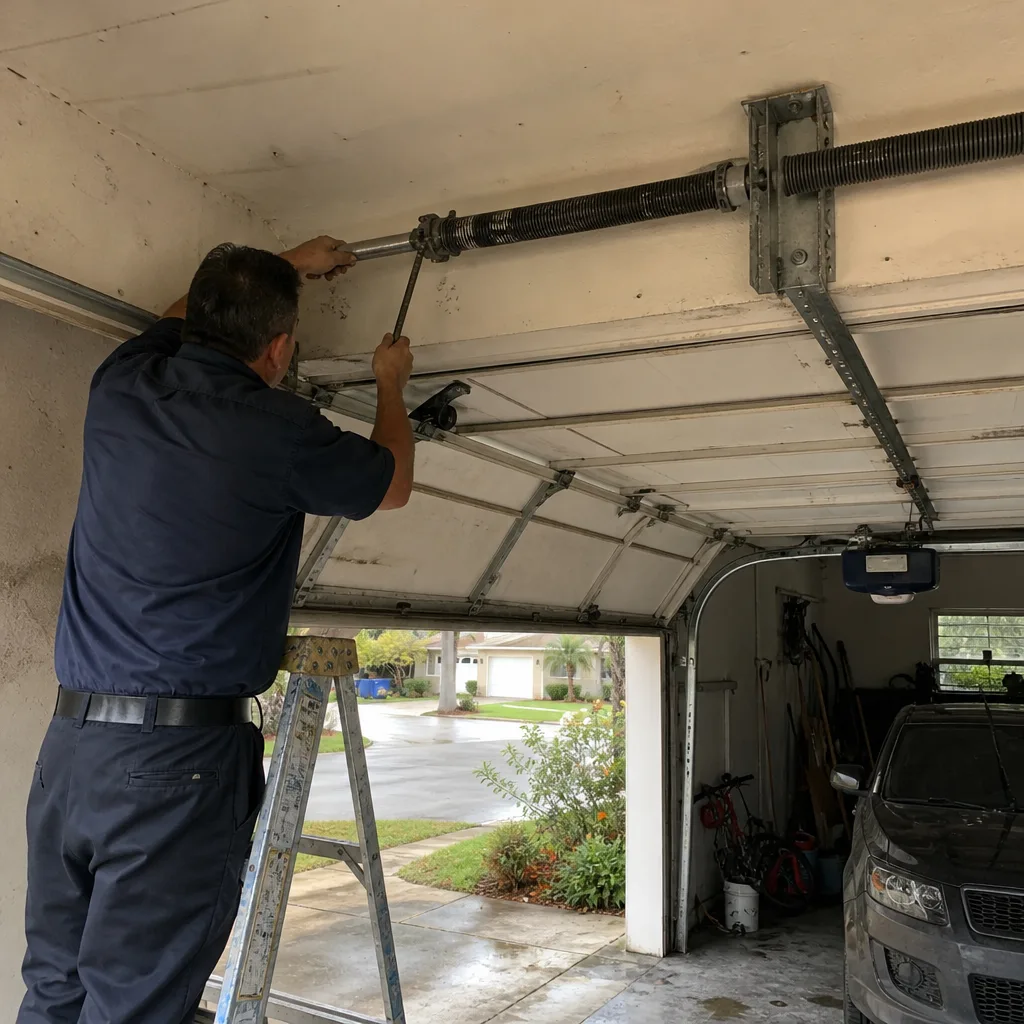 Before
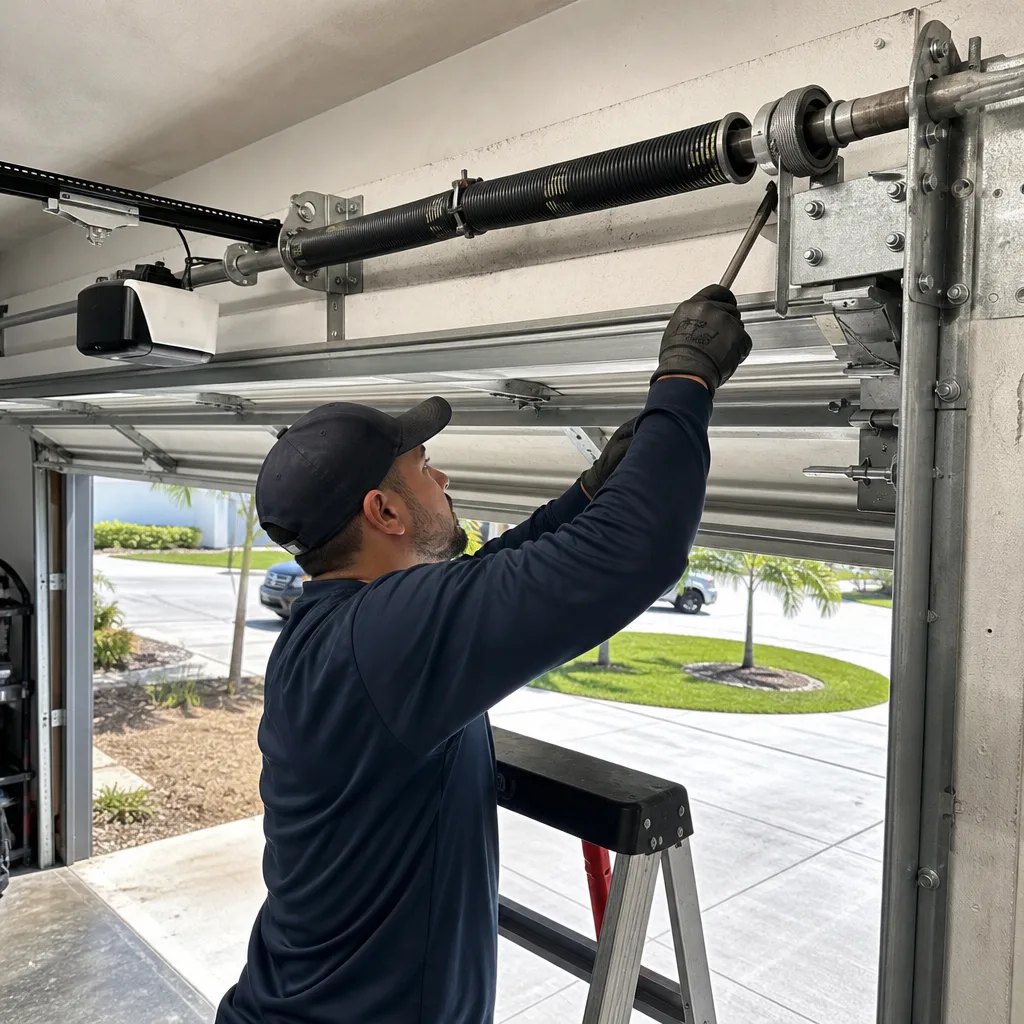 After