
Last updated October 30, 2026
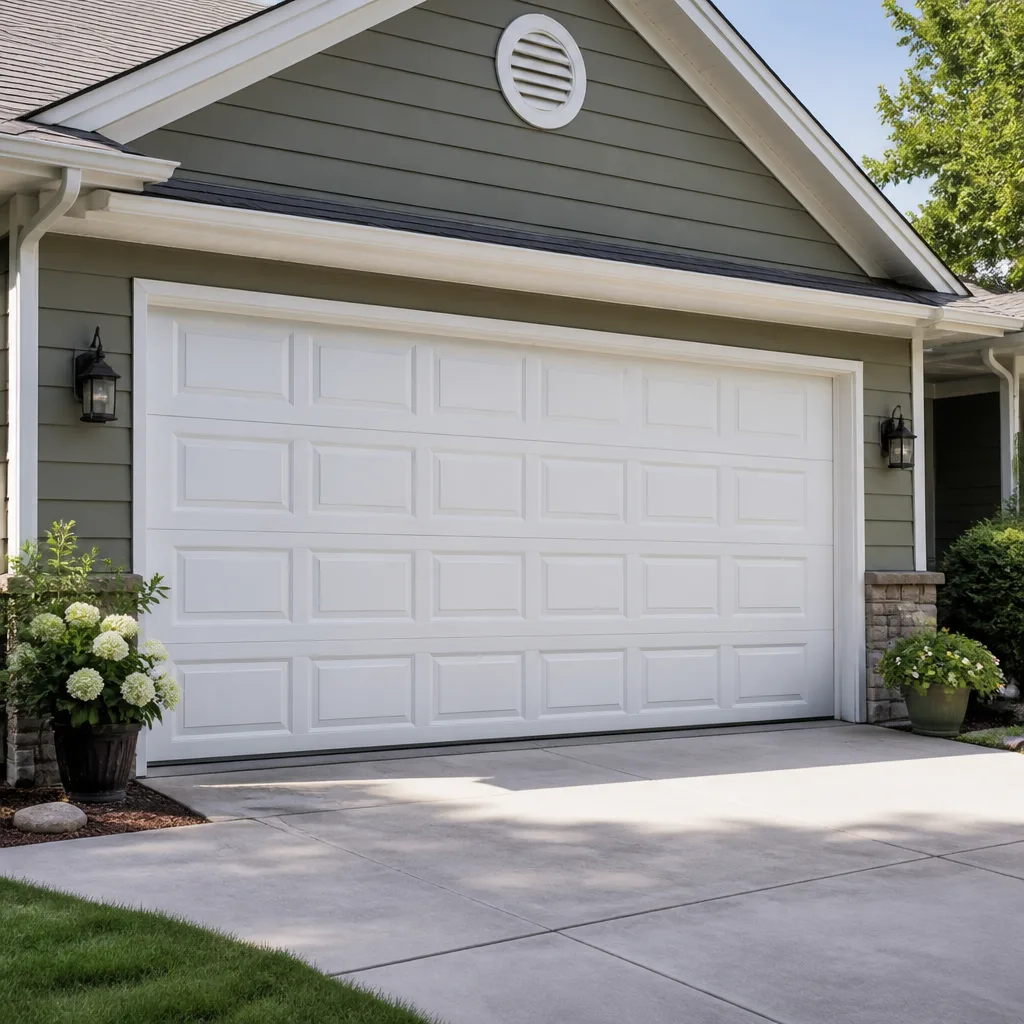 Raised-panel steel
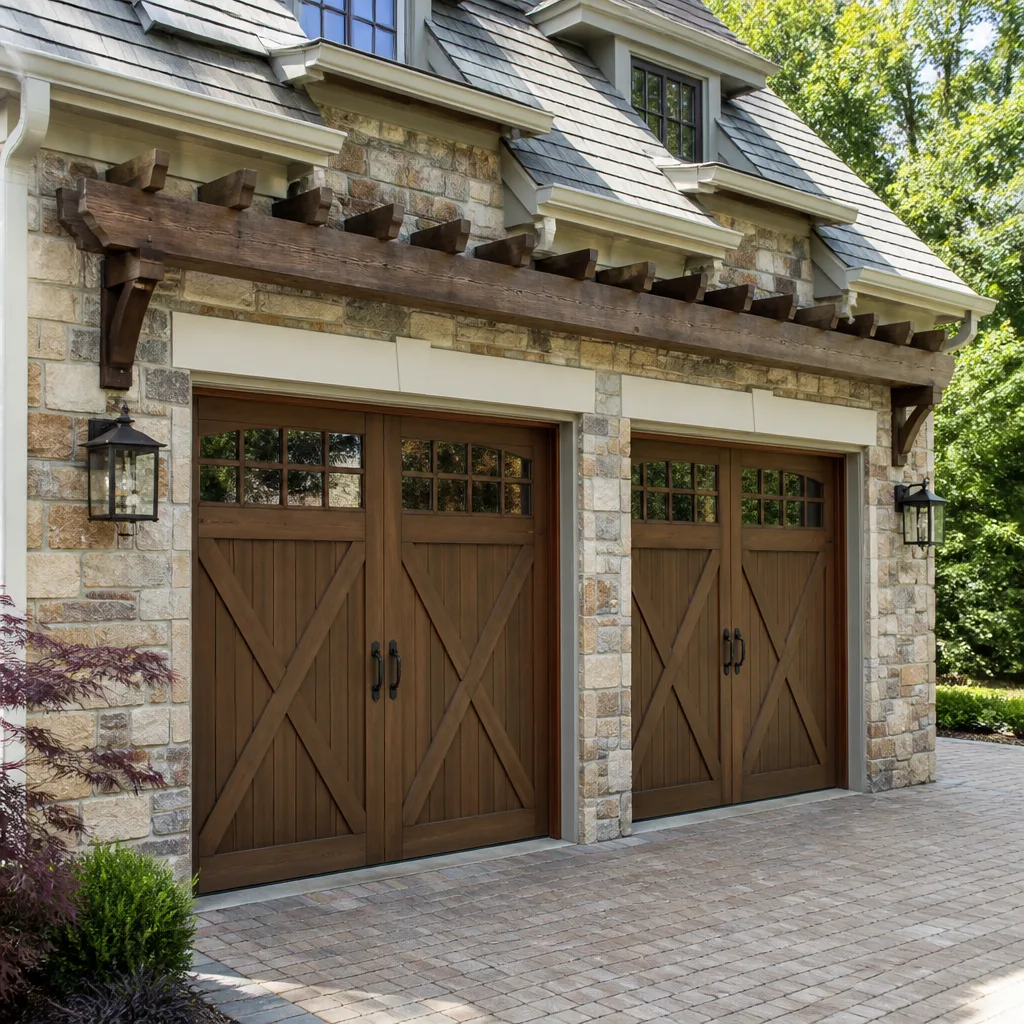 Carriage house
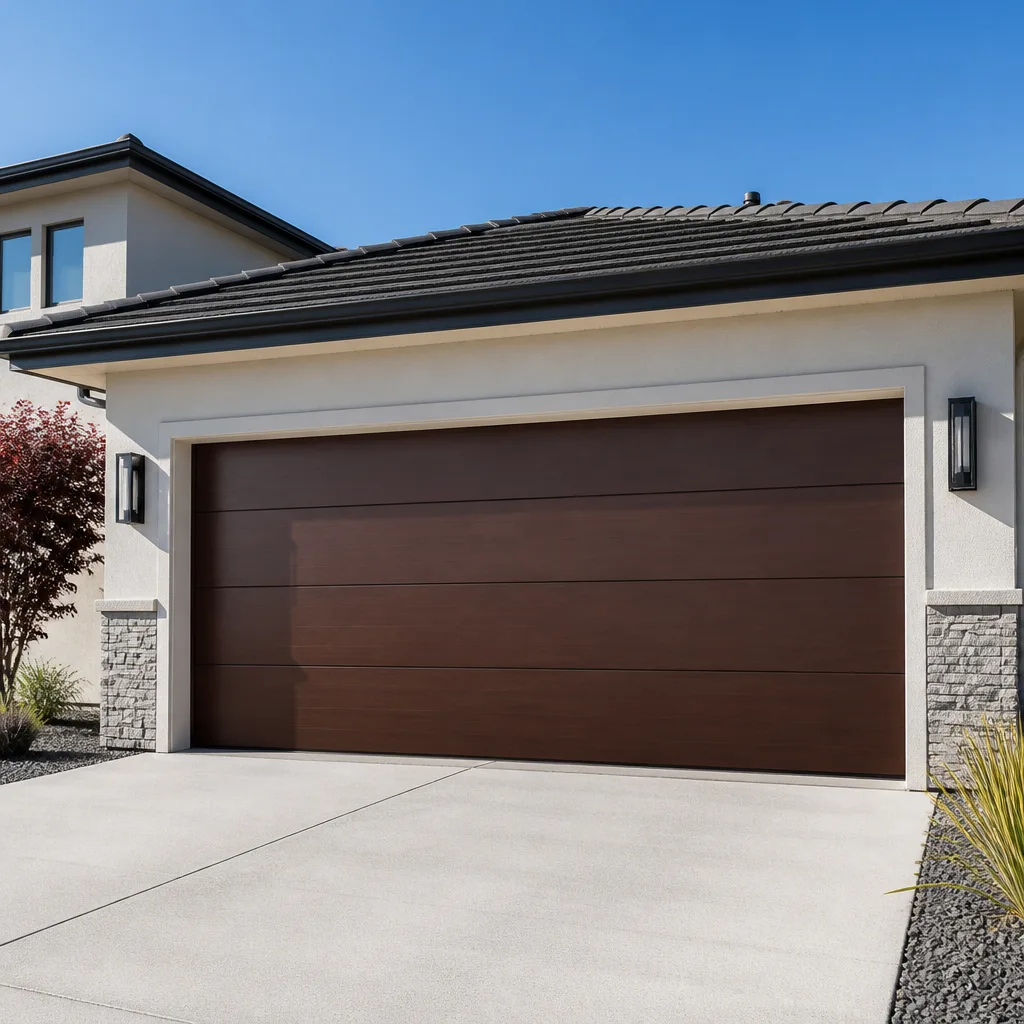 Modern flush
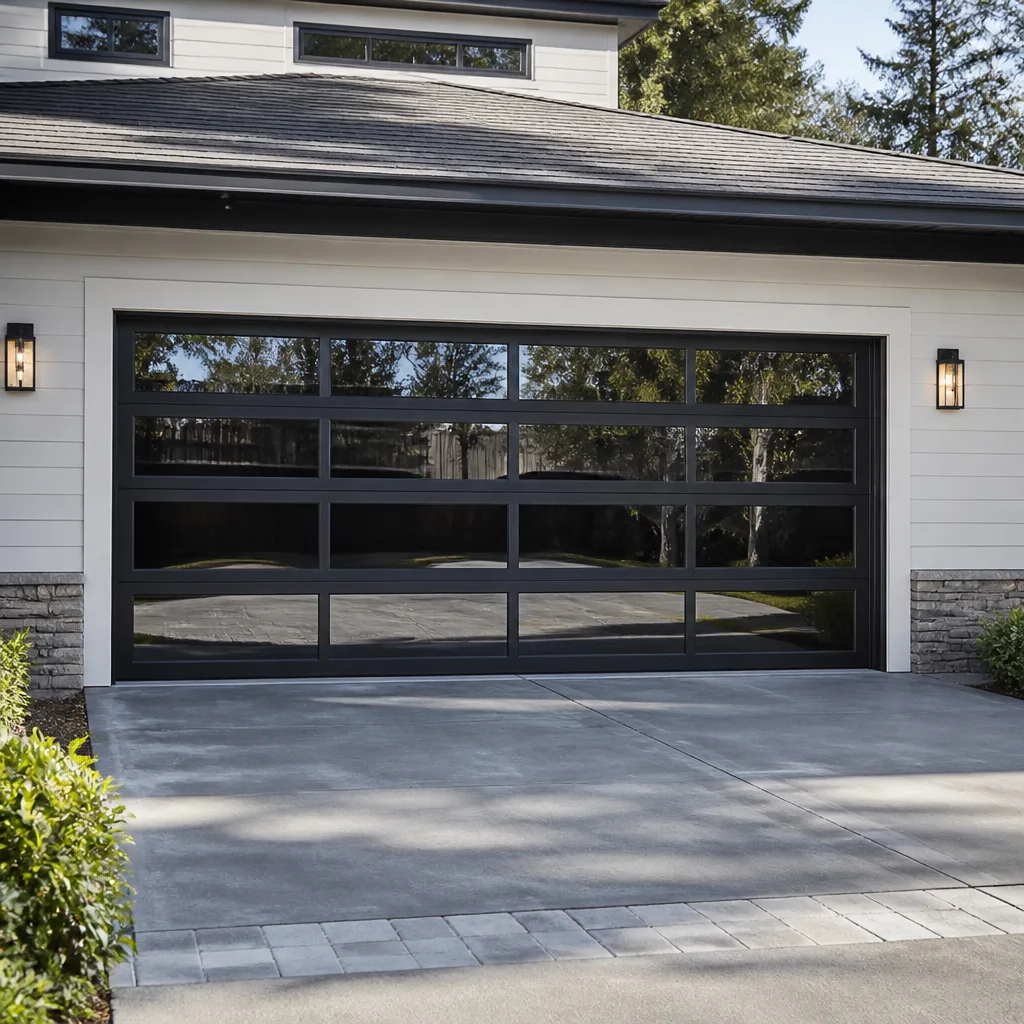 Full-view glass
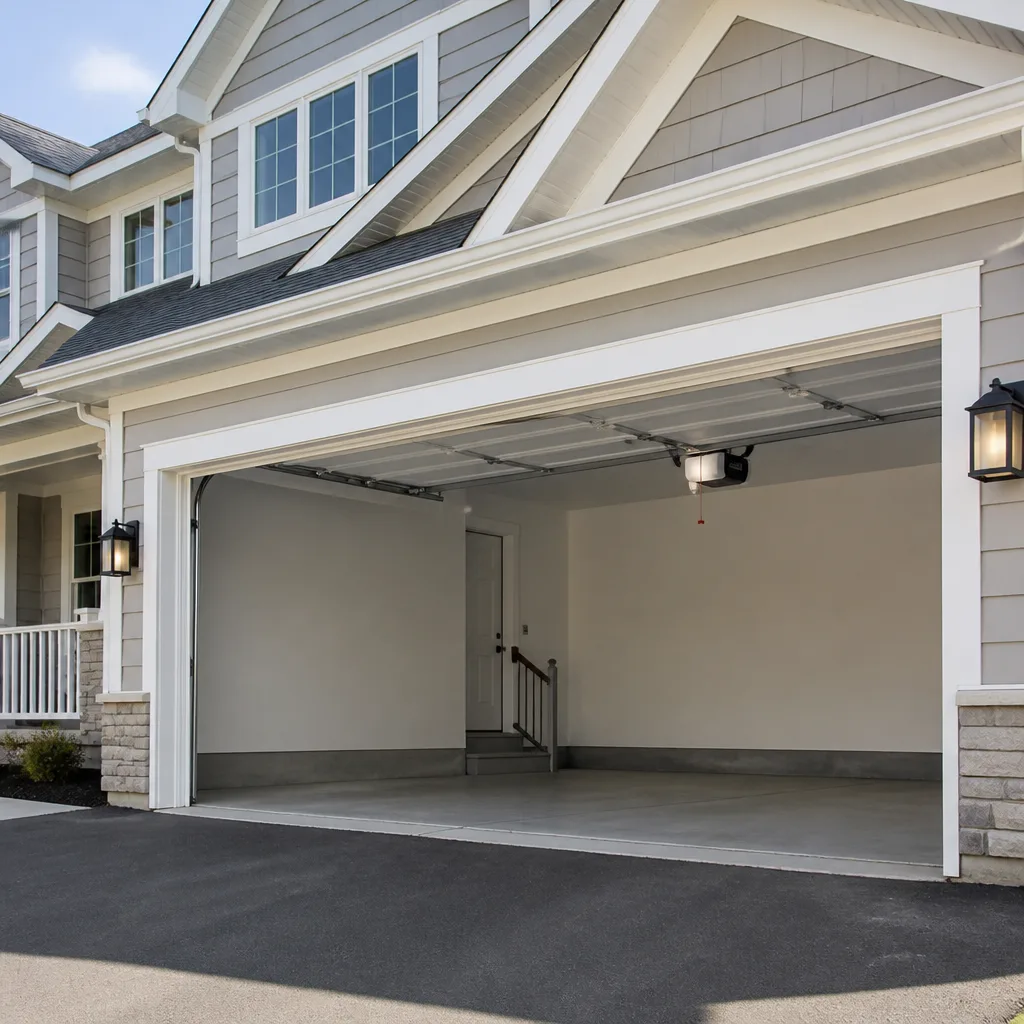 LiftMaster openers
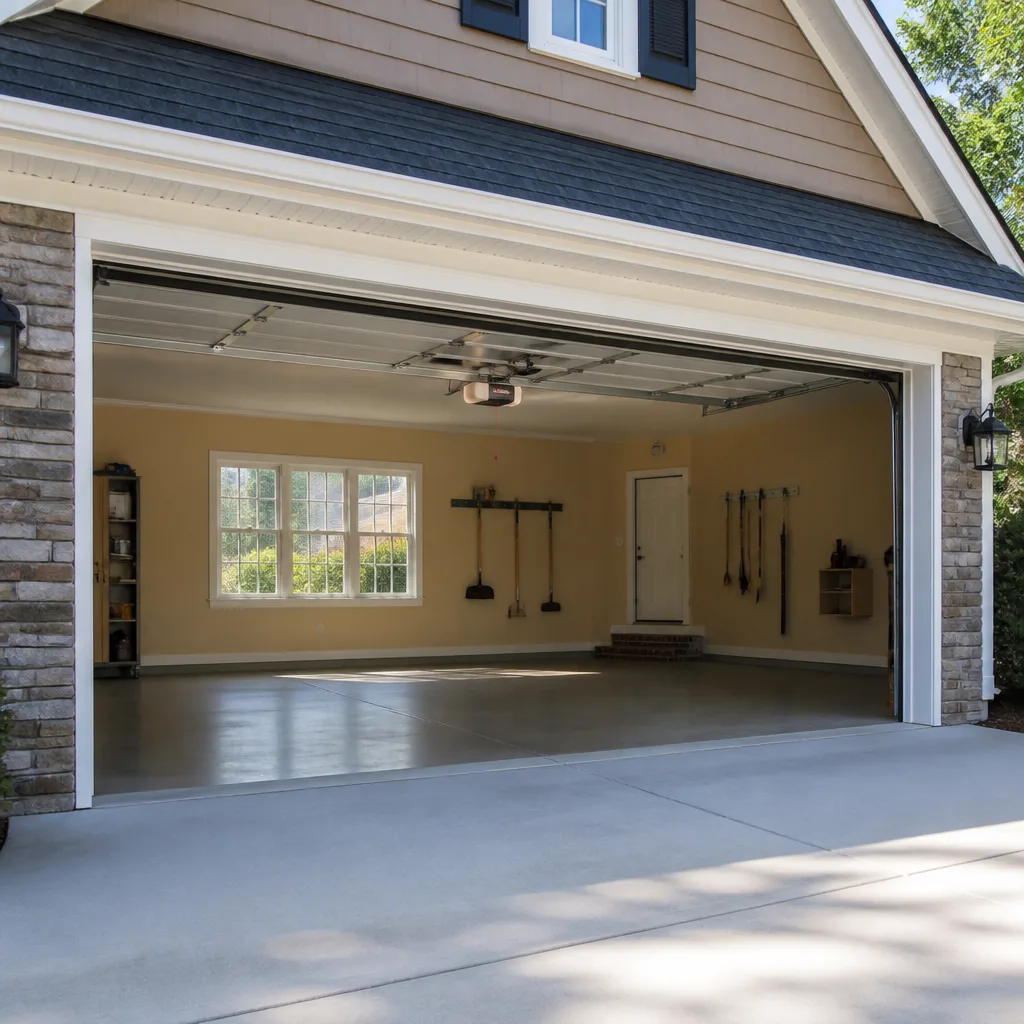 Chamberlain openers
Full 25-point door and opener safety check with every visit - springs, cables, rollers, tracks, and your LiftMaster or Chamberlain opener included
You get a price before we start. It does not change when the truck arrives.
Get your free estimateDIY vs Professional Garage Door: The Sarasota Homeowner’s Decision Guide
Here’s the counterintuitive reality most Sarasota homeowners discover too late: the question isn’t whether you’re handy enough to work on your garage door. It’s whether Florida law will let you. A homeowner can legally replace their own torsion springs this afternoon, but the same homeowner who swaps out a full door without a permit and wind-load inspection has just created a title encumbrance that could block their home’s sale. This guide walks through exactly which garage door tasks you can safely handle, which ones carry risk you should understand before touching a wrench, and which ones Florida statute puts firmly off-limits regardless of skill. For Garage Door Permits, Codes & Inspections in FL: What You Need to Know, see our dedicated resource. If you own a home in Sarasota County, the decisions below will save you money, protect your property, and keep you on the right side of code enforcement.
Quick Answer
In Sarasota, DIY garage door work splits into three categories: routine maintenance is yours to handle, repair work like spring replacement is legally permissible but carries serious injury risk if you don’t understand the mechanics, and full door installation or replacement requires a permit and wind-load certification that effectively makes it professional-only. Most homeowners should handle lubrication and balance checks themselves, call a professional for springs, cables, and opener diagnostics, and never attempt full door replacement without a licensed contractor. We’ve seen too many title searches go sideways to pretend otherwise.
Styles & brands we work with
Table of Contents
- What Florida Law Actually Says About DIY Garage Door Work
- Spring Replacement: The Real Risk Calculus
- Wind-Load Compliance: Why Skill Can’t Substitute for Certification
- The Hidden Cost of DIY Failure in Sarasota’s Climate
- The Sarasota Garage Door Task Matrix: Maintain, Repair, or Call
- Opener Diagnostics: When the Problem Isn’t Mechanical
- How to Do the DIY-Permitted Tasks Correctly
What Florida Law Actually Says About DIY Garage Door Work
Florida statutes draw a line that most “DIY vs pro” articles ignore completely. Under Florida Building Code and Sarasota County ordinances, a homeowner may perform certain maintenance and repair tasks on their own residence without a contractor’s license. The key phrase is “repair and maintenance.” Replacing a broken spring, swapping out rollers, adjusting track alignment, replacing an opener circuit board, installing a new remote system: these fall under repair. A homeowner in Sarasota has the legal right to do them.
But full door installation or replacement is different. The Florida Building Code requires that any new garage door installation in a wind-borne debris region, which includes all of Sarasota County, must meet specific wind-load standards. The door itself needs a product approval number demonstrating compliance with Florida’s High Velocity Hurricane Zone (HVHZ) requirements or the applicable wind speed rating for your specific location. Someone has to certify that the installed door meets these standards, and that certification requires a licensed contractor pulling a permit. No amount of YouTube research changes that.
We say this without gatekeeping: we’d rather see a skilled homeowner handle their own spring replacement safely than pay us for something they can genuinely do. Our Garage Door Emergency Preparedness Guide for Sarasota Homes covers what to do when springs fail unexpectedly. But when a full door replacement happens without a permit, the consequences surface at the worst possible moment. During a title search before a sale. During an insurance claim after a storm. During a code enforcement inspection after a neighbor files a complaint. The unpermitted door becomes an encumbrance. The seller either pays to bring it into compliance retroactively, which usually costs more than doing it right the first time, or the deal falls through.
The practical takeaway for Sarasota homeowners: understand which side of the line your project falls on before you start. Repair tasks are yours. Replacement is not.
Spring Replacement: The Real Risk Calculus
Torsion spring replacement carries a reputation as the most dangerous DIY job in a home, and the reputation is earned, but most articles never explain the actual mechanics of the risk. You’re not dealing with a generic “high-tension spring.” You’re dealing with a spring wound under enough torque to lift a 150 to 300 pound door hundreds of times per day. When a torsion spring breaks while under tension, it releases that stored energy in an instant. A winding bar that slips during the winding or unwinding process becomes a projectile moving at speeds that can break bone, pierce soft tissue, or worse. We’ve seen the aftermath. It’s not pretty.
So does that mean no homeowner should ever attempt it? Not exactly. The honest answer is that risk level depends heavily on experience and specific knowledge, not general handiness. If you’ve never worked with torsion systems before, if you don’t understand what winding bars are, if you don’t know how to count quarter-turns on a spring and match the door’s weight to the spring’s wire size and inside diameter, you’re not ready. A general “I’m good with tools” confidence is the most dangerous attribute a person can bring to this job. The wrong spring installed by someone who doesn’t know better will either fail in weeks or make the door impossible to balance, which wrecks the opener and warps the panels over time.
Safety caveat we always give: if you’re uncertain about any step of spring replacement, stop. A garage door spring under tension is one of the few household components where a genuine mistake can be fatal. We train our technicians on specific door models from Raynor, LiftMaster, and Chamberlain systems, and the training exists because the variables are real: wire gauge, spring length, inside diameter, wind direction, and the number of turns required for your door’s specific weight and track height. If those terms mean nothing to you, call someone who knows them.
Wind-Load Compliance: Why Skill Can’t Substitute for Certification
Here’s the part of the DIY conversation that almost no one writes about, and it’s the most important factor for Sarasota specifically. Florida’s wind-load requirements don’t care how skilled you are. They care about documentation. A garage door that meets Miami-Dade HVHZ standards has a product approval number. The installation has a permit. The inspection verifies that the approved product was installed according to the manufacturer’s wind-load specifications, which include specific requirements for track gauge, jamb bracket spacing, and reinforcement strut placement depending on your door’s size and your home’s location relative to the coast.
You cannot replicate this with a well-executed DIY installation. Even if your door is installed perfectly, with every bolt torqued and every panel aligned, the absence of a permit and product approval certification means the installation doesn’t legally exist as compliant. For insurance purposes, it’s the same as no protection at all. In Sarasota, where hurricane preparedness is not theoretical, that distinction matters. An unpermitted, uncertified door performs exactly as well as a certified one in everyday use, but it fails catastrophically as an asset when the storm actually comes. Before any major project, check our Garage Door Cost Breakdown: The Sarasota Homeowner’s Reference for 2026 to budget properly. The day after a hurricane is not when you want to discover your unpermitted door is also uninsurable.
The professional requirement here is not about protecting our trade. It’s about the code structure that Florida homeowners live under. We install doors from manufacturers like Amarr and Clopay that carry Miami-Dade product approvals, and we handle the permit and inspection process as part of the job. That paperwork isn’t a nice-to-have. It’s the only part of the installation that matters when the title changes hands.
The Hidden Cost of DIY Failure in Sarasota’s Climate
Garage doors fail differently in Sarasota than they do in Ohio or Arizona. The humidity and salt air create a set of conditions that punish small mistakes in ways that don’t show up in generic DIY tutorials. Here’s what we mean:
A door that’s slightly out of balance, off by maybe half an inch of travel on one side, won’t cause immediate problems. The opener compensates for a while. But in Sarasota’s humidity, that misalignment causes the door to sit unevenly in the opening, which means the bottom seal makes uneven contact with the concrete. Humid air infiltrates the garage through the gap. Panels absorb moisture unevenly. Wood doors warp. Steel doors with minor scratches in the paint start rusting at the scratch points where salt-laden air gets under the finish. What started as a minor alignment issue becomes a warped, rusted, structurally compromised door within two or three seasons.
Springs are even more vulnerable. A torsion spring that’s over-tightened or under-tightened, even by a small margin, puts asymmetric load on the spring coils. In Sarasota’s coastal air, the microscopic stress lines created by that imbalance become corrosion starting points. The spring that should last 10,000 cycles might fail in 3,000. That’s the difference between replacing a spring once a decade and replacing it every few years. And a spring that breaks unexpectedly while the door is open can send the door crashing down, which is a separate dangerous failure mode most people never think about.
The takeaway: your margin for error in Sarasota is smaller than in most climates. A sloppy DIY job in a dry climate might limp along for years. The same job in Sarasota starts corroding, warping, and failing within months. This isn’t about scaring you off. It’s about accurate risk assessment. If you’re going to do the work yourself, do it precisely.
The Sarasota Garage Door Task Matrix: Maintain, Repair, or Call
Instead of a binary “DIY or don’t,” think in three categories. Here’s the full matrix, based on what’s legal, what’s genuinely safe with appropriate knowledge, and what’s a bad idea regardless of skill level.
- Maintain yourself (all Sarasota homeowners should do these): Lubricating rollers, hinges, and springs with a silicone-based lubricant every six months. Tightening visible bolts and brackets on the track. Cleaning the photo-eye sensors at the bottom of the door tracks. Testing the auto-reverse safety feature monthly. Checking that the door is balanced by disconnecting the opener and manually lifting the door halfway: it should stay in place. Tightening loose hinge bolts. Replacing weatherstripping along the bottom of the door.
- Repair yourself with appropriate knowledge (legal, but know your limits): Replacing a broken torsion spring if you understand spring sizing and winding. Replacing worn rollers. Adjusting track alignment. Replacing a snapped lift cable if the spring is unwound first. Replacing a wall control panel or remote. Adjusting the up/down travel limits on an opener. Replacing the opener’s drive belt or chain. Any of these are legal for Sarasota homeowners, but each has a failsafe knowledge requirement. If you’re not sure what you’re adjusting, you’re adjusting the wrong thing.
- Never attempt regardless of skill (professional-only, full stop): Full door replacement requiring a permit and wind-load certification. Any installation in a new opening that requires structural modifications. Door replacement in a coastal barrier island home where HVHZ requirements are stricter. Any repair that involves welding or structural track replacement. Panel replacement on a wind-rated door where the replacement panel must match the original product approval. These tasks either require a licensed contractor by law, or they carry a liability profile that no informed homeowner should accept. And full door installation in Sarasota County without a permit is a future title defect, not a DIY victory.
Opener Diagnostics: When the Problem Isn’t Mechanical
Here’s a scenario we see regularly enough in Sarasota to write about it at length: the door mechanism is fine, but the opener isn’t working. The motor hums but nothing moves. Or the motor runs fine but the door reverses immediately. Or the opener makes no sound at all when the remote is pressed. These are opener problems, not door problems, and the diagnostic path is very different from what most DIY articles cover.
The first step is always to identify whether the issue is the opener’s logic board, the drive mechanism, or the safety sensor circuit. Many opener failures, particularly on newer Chamberlain, LiftMaster, or Genie units, are entirely electronic. The motor is fine. The drive is fine. The circuit board is confused. On models with MyQ or Aladdin Connect smart-home integration, the problem might be in the Wi-Fi module or a firmware issue that requires a reset sequence specific to that brand’s hardware. This is where brand-agnostic expertise matters, because a Chamberlain reset sequence is not the same as a Genie reset sequence, and applying the wrong one can leave your opener in a state where it won’t respond to remotes at all.
The honest DIY boundary on openers: if the diagnosis is mechanical, like a stripped drive gear or a snapped belt, many homeowners can handle the replacement with the right part and a service manual. If the diagnosis is electronic, particularly on smart-home-integrated openers, the probability of an incorrect self-diagnosis goes way up. We service openers across eight major brands, from LiftMaster to Raynor, and the single most common service call we get after a DIY attempt is “the opener worked before I tried to fix it.” If you’re not certain about the diagnosis, an opener repair is cheaper than replacing an opener you didn’t need to replace. We’d rather see you get the full life out of the unit you have than sell you a new one. Call us at (855) 341-5769. We’ll walk through the symptoms and tell you whether it’s worth a service call before we ever schedule anything.
How to Do the DIY-Permitted Tasks Correctly
For the Sarasota homeowner who wants to handle their own maintenance and minor repairs, here’s how to do it right. Not the generic advice, but the specifics that matter in this climate and with these door types.
Lubrication, done correctly: Use a white lithium grease or silicone spray, never WD-40. Apply to the torsion spring coils, the roller bearings, the hinge pivot points, and the opener rail or screw drive. Do this in spring and fall. In Sarasota’s coastal humidity, the interval matters more than the product. If you live within a mile of the water, consider every four months instead of every six. After lubricating, run the door through a full cycle and wipe any drips from the track. Lubricant on the track is worse than no lubricant at all.
Balance check, done correctly: Disconnect the opener using the emergency release cord. Manually lift the door to waist height. A balanced door stays at waist height without support. If it drifts upward, the springs are over-tightened. If it falls, the springs are either under-tightened or worn out. Don’t adjust the springs if you don’t know what you’re doing. Use this check as diagnostic information, not as an invitation to start winding.
Photo-eye sensor, cleaned correctly: The sensors are the small boxes mounted near the floor on either side of the door opening. Wipe the lenses with a dry, soft cloth. Check that the small indicator light on each sensor is lit and steady. A blinking light typically means misalignment, which you can correct by loosening the mounting bracket and aiming the sensor directly at its counterpart across the door opening. Take 30 seconds to line them up properly and most “the door won’t close” problems disappear.
Supporting the decision you make: At Platinum Garage Door Service home, we’re comfortable with Sarasota homeowners handling these maintenance tasks. The more informed you are, the better the questions you’ll ask when a real repair is needed, and the more productive that conversation will be. If you’re ever uncertain whether a specific repair falls in the “maintain yourself” or “call a professional” category, our Garage Door Repair in Sarasota team will give you an honest assessment by phone. If it’s something you can safely handle, we’ll tell you. If it’s not, we’ll tell you that too. We’re brand-agnostic on this: the right answer is the answer that keeps your door functional and your house saleable, not the answer that books a service call.
Common Mistakes to Avoid
- Replacing a spring without identifying the correct spring first. A spring’s wire diameter, inside diameter, length, and wind direction all need to match the door. Buying “a spring for a 16×7 door” is like buying “a tire for a truck.” The wrong spring either won’t lift the door or will over-lift it, and both failures cause damage throughout the system.
- Attempting a full door replacement without checking Sarasota County’s permit requirements. We’ve covered this above, but it bears repeating: unpermitted door replacement is a title defect waiting to surface. Don’t create one.
- Lubricating the track instead of the rollers. The door rollers ride on the track, but the track itself should be dry. Lubricant on the track attracts dust and debris, which turns to grit, which accelerates roller wear. Lubricate the roller bearings, not the rail.
- Using the emergency release cord while the door is open. The emergency release is for use when the door is closed, so the door doesn’t crash down. If you pull it while the door is open, you release the connection that holds the door up. With a broken spring, the door falls. Even with good springs, a door that’s released while open can drop fast enough to hurt someone.
- Ignoring an unbalanced door because “it still opens and closes.” The opener is compensating for the imbalance, and that compensation is destroying the opener. An opener that’s pulling against an over-tightened spring or lifting a door that an under-tightened spring can’t assist with will burn out its motor or strip its drive gear far earlier than it should. Balance problems are never self-correcting.
- Mixing opener brands during a DIY replacement. If you replace a Chamberlain opener with a Genie, the rail, the mounting brackets, and the safety sensor wiring will all need to be redone. If you’re not prepared to reinstall the entire system, stick with the same brand. This is where knowing the brand list matters: LiftMaster, Chamberlain, Genie, Raynor, and the rest each have different rail profiles and mounting systems. The brackets that fit one won’t necessarily fit another.
See the difference
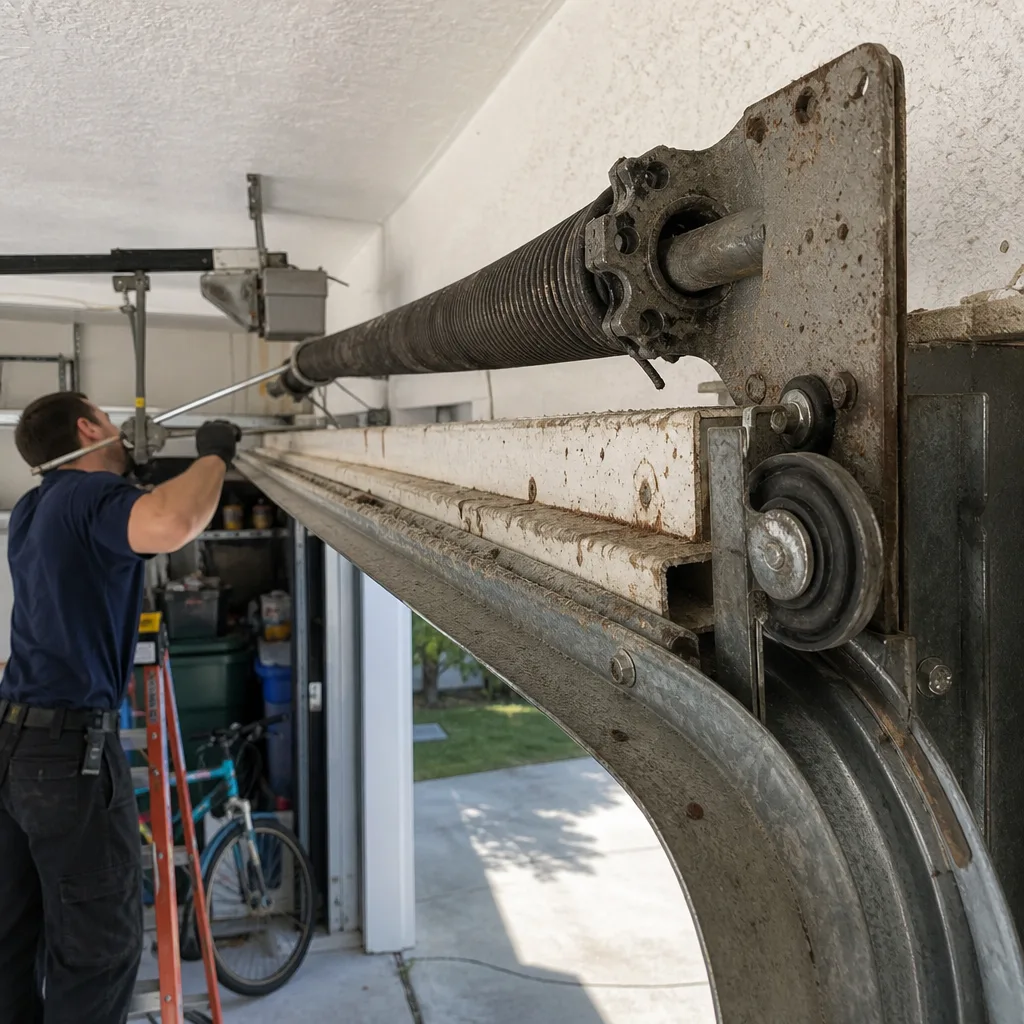 Before
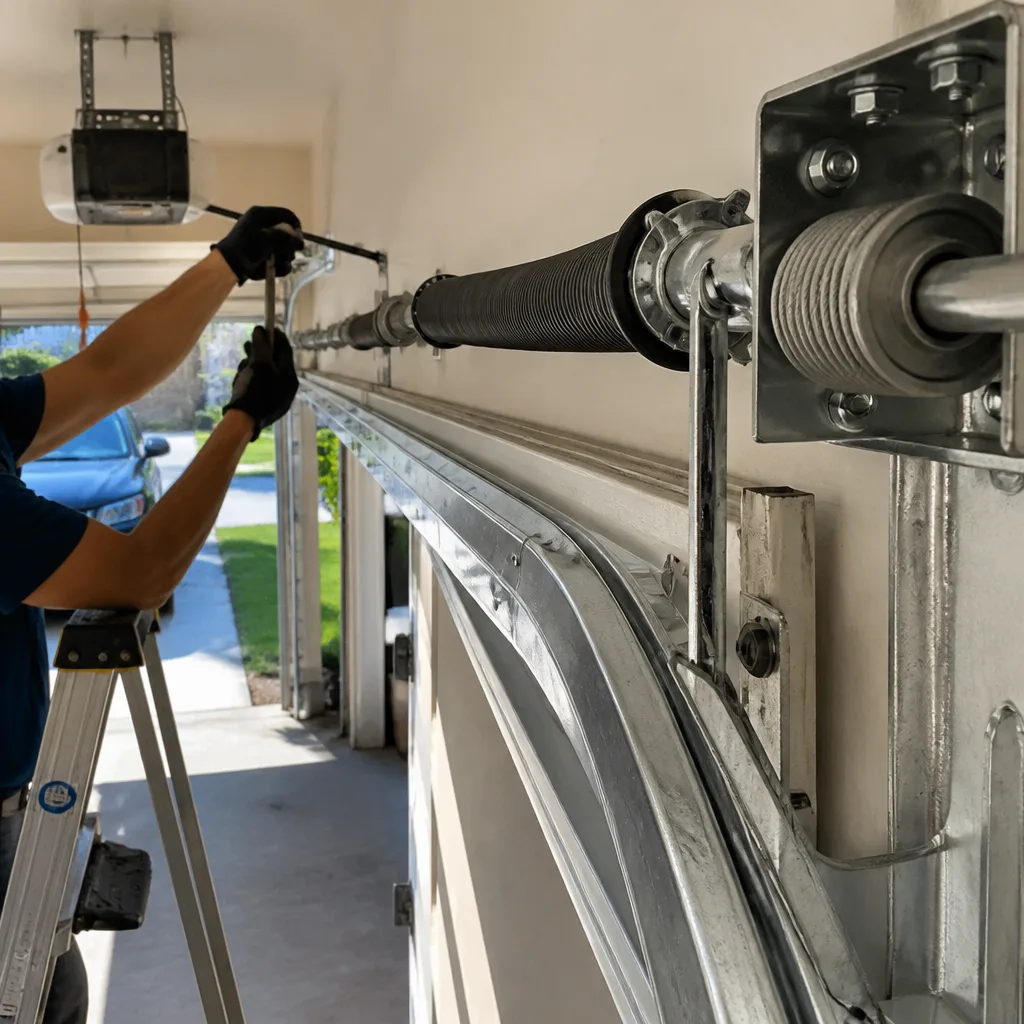 After
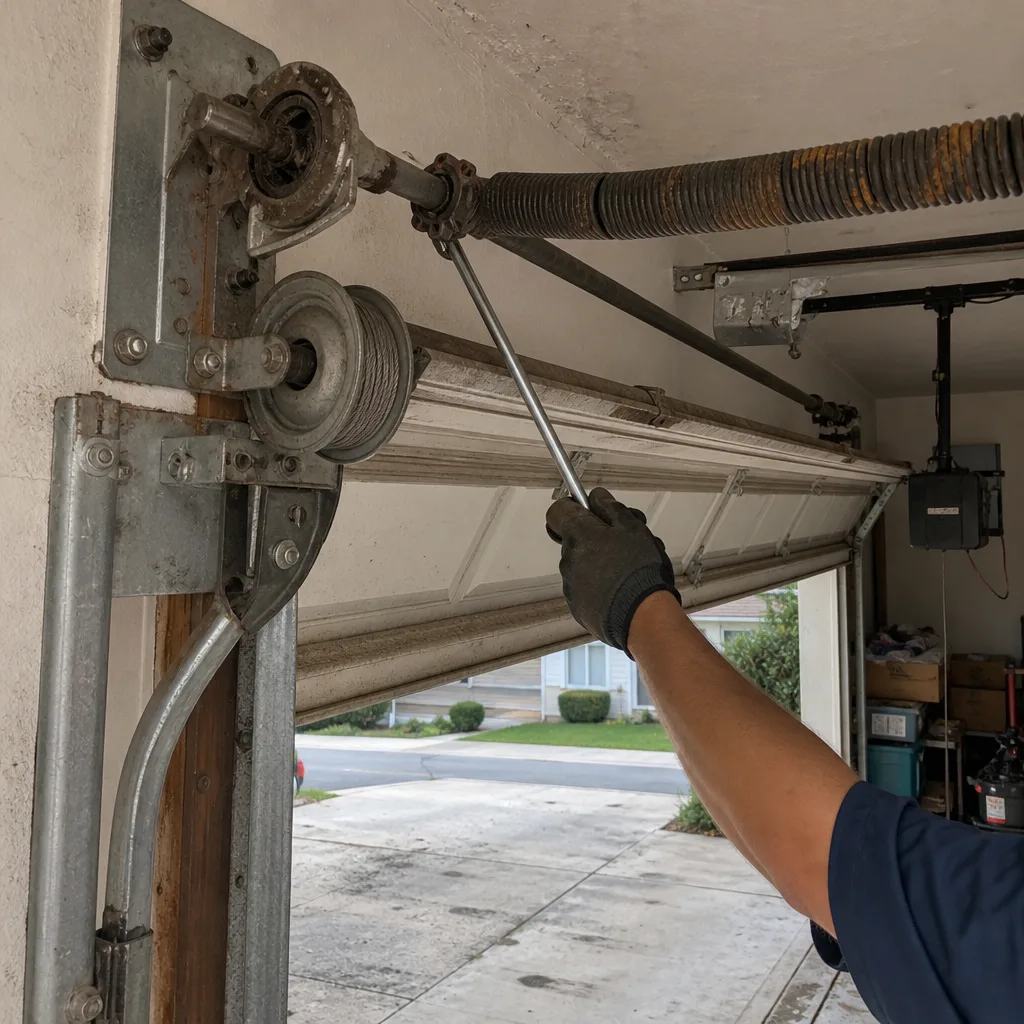 Before
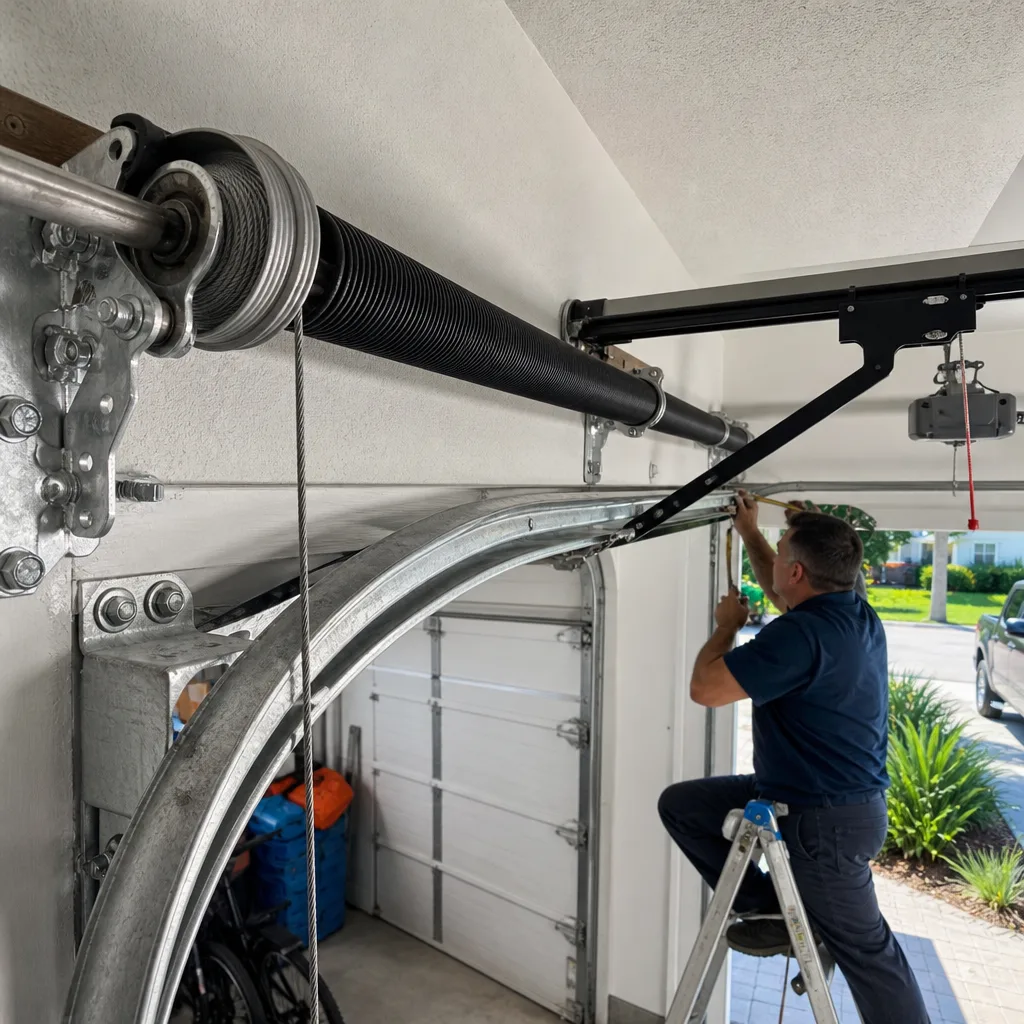 After
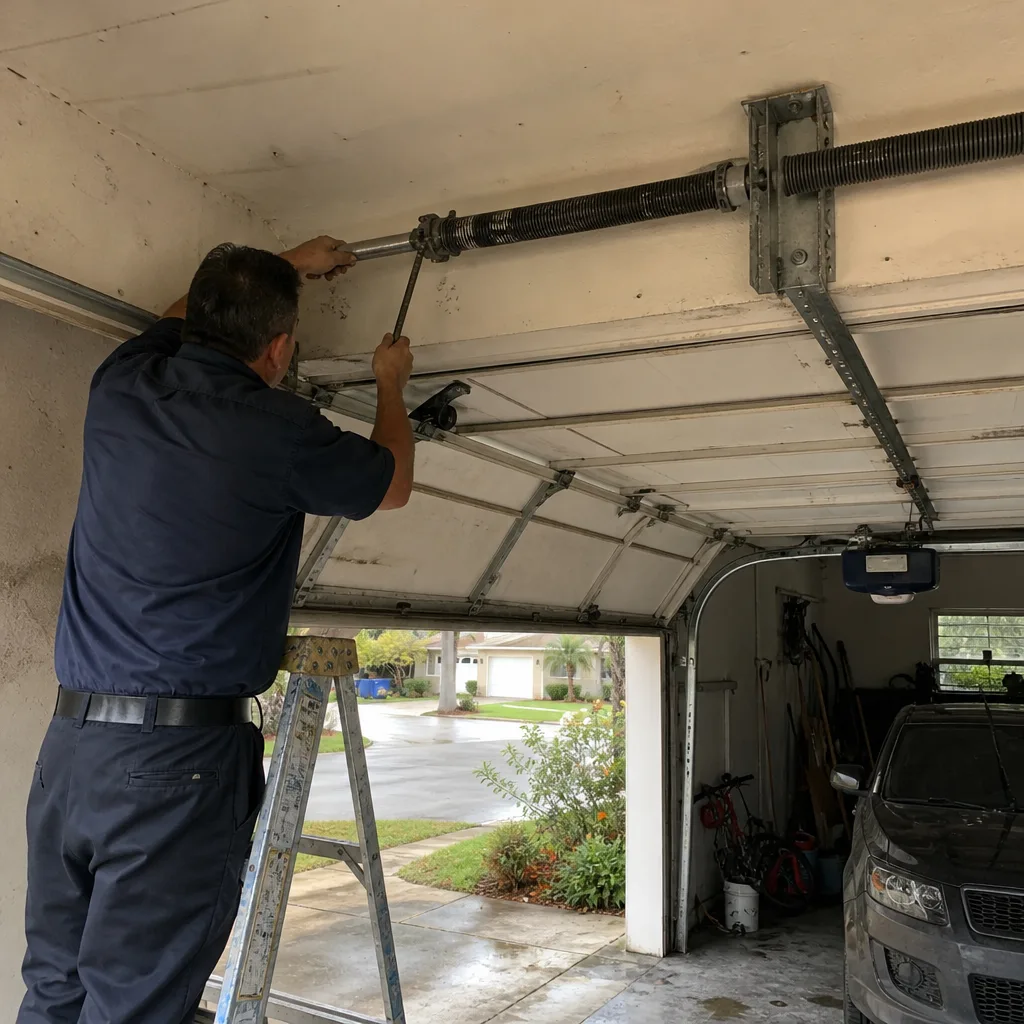 Before
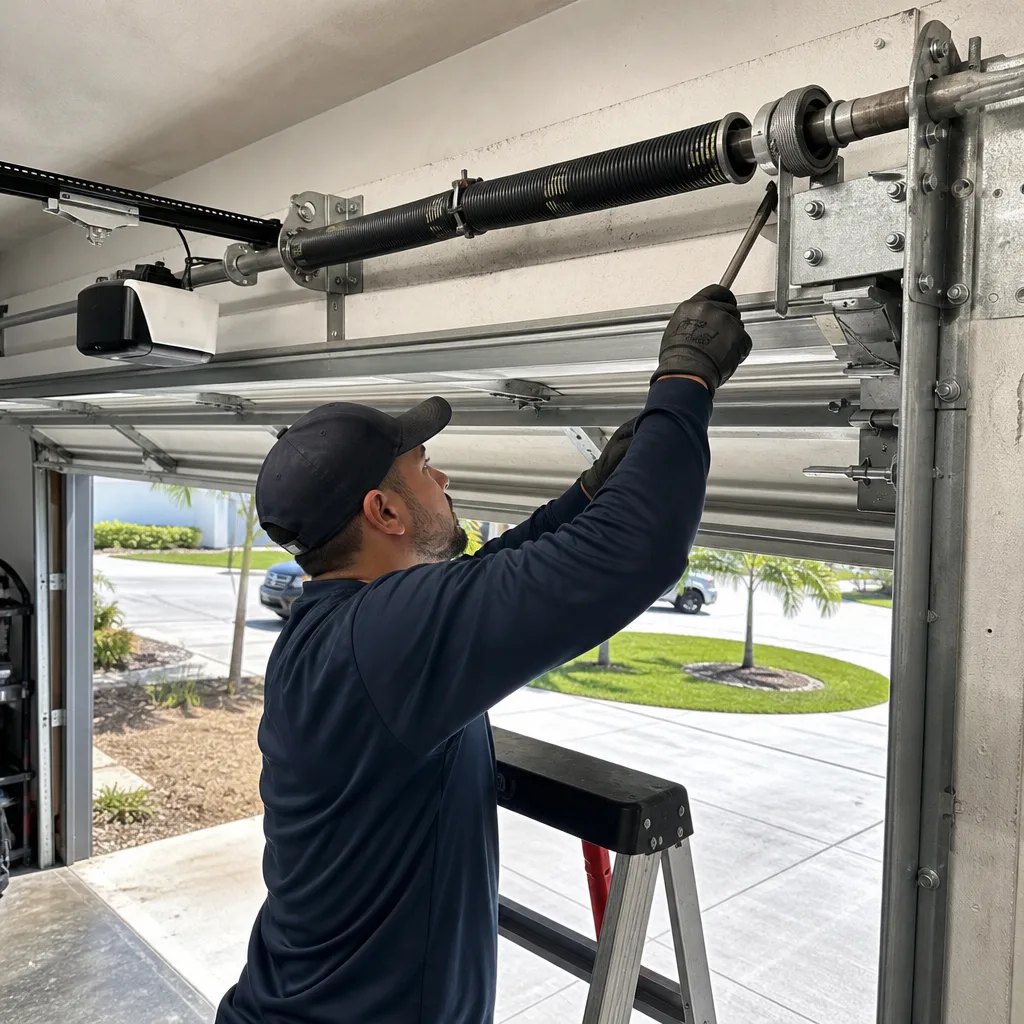 After
When to Call a Professional
Call a professional when the repair involves a torsion spring you don’t fully understand, any cable that’s under tension, a full door replacement, an opener with electronic or smart-home integration issues you can’t diagnose, or any work that needs a permit. Call a professional when the door has come off its tracks, when a panel is dented beyond cosmetic damage, or when the door makes sounds you’ve never heard before. We’ve seen homeowners in Sarasota turn a $200 spring replacement into a $1,400 opener replacement plus a new door panel, and that progression usually happens because a small problem was allowed to become a big one. If you’re not sure, the phone call is free. Garage Door Opener Repair in Sarasota and Garage Door Installation in Sarasota both start with an assessment. Platinum Garage Door Service offers free estimates in Sarasota: call (855) 341-5769.
Frequently Asked Questions
No. Full garage door replacement in Sarasota County requires a permit and wind-load certification under Florida Building Code. The installation must be performed by a licensed contractor who can pull the permit and schedule the inspection. Repair tasks like spring replacement, roller replacement, and opener repairs are legally permissible for homeowners to perform on their own residence, but full door replacement is not a DIY-legal project.
Professional garage door repair in Sarasota typically ranges from $150 to $400 depending on the specific repair. Spring replacement normally falls between $180 and $340 including parts and labor. Opener-related repairs range from $120 for minor fixes to $450 for circuit board or drive mechanism replacement. Every legitimate Sarasota company quotes the price before work begins. Call (855) 341-5769 for an exact quote; estimates are free.
A homeowner who understands torsion spring mechanics, including spring sizing, winding direction, and the specific quarter-turn count required for their door’s weight and track configuration, can replace springs safely. A homeowner without that specific knowledge should not attempt it. The danger is real: a slipped winding bar under tension becomes a projectile moving fast enough to cause serious or fatal injury. This is not a “watch one YouTube video and try it” project.
No. Opener replacement is classified as repair work and does not require a permit in Sarasota County. The work involves low-voltage wiring and mechanical mounting, both of which are homeowner-legal for owner-occupied residences. If the opener is part of a new door installation, the permit will come with the door permit.
We service and install products from LiftMaster, Chamberlain, Genie, Clopay, Amarr, Wayne Dalton, Craftsman, and Raynor. Our technicians are trained to diagnose the system in front of them, not steer toward a single brand. If your existing door or opener is repairable, we’ll repair it. We don’t sell replacements for repairable systems.
Every four to six months. Sarasota’s coastal humidity accelerates corrosion on spring coils and roller bearings, so homes within a mile of the water should lubricate every four months. Homes further inland can go to six months. Use a silicone-based lubricant or white lithium grease on springs, hinges, and roller bearings. Skip lubricating the track itself.
The Bottom Line
The DIY versus professional garage door conversation in Sarasota isn’t really about skill. It’s about three things: what Florida law permits, what your specific level of mechanical knowledge can safely handle, and what the Sarasota climate will do to any mistakes you make. Maintain your door yourself; every homeowner should. Repair your door yourself if you genuinely understand the system you’re working on. Never attempt full replacement, wind-load-certified work, or any spring repair you’re not certain about. The free estimate at the other end of the phone is cheaper than any of the bad outcomes. Call (855) 341-5769.
Written by the team at Platinum Garage Door Service, serving Sarasota since 2015.