Last updated October 30, 2026
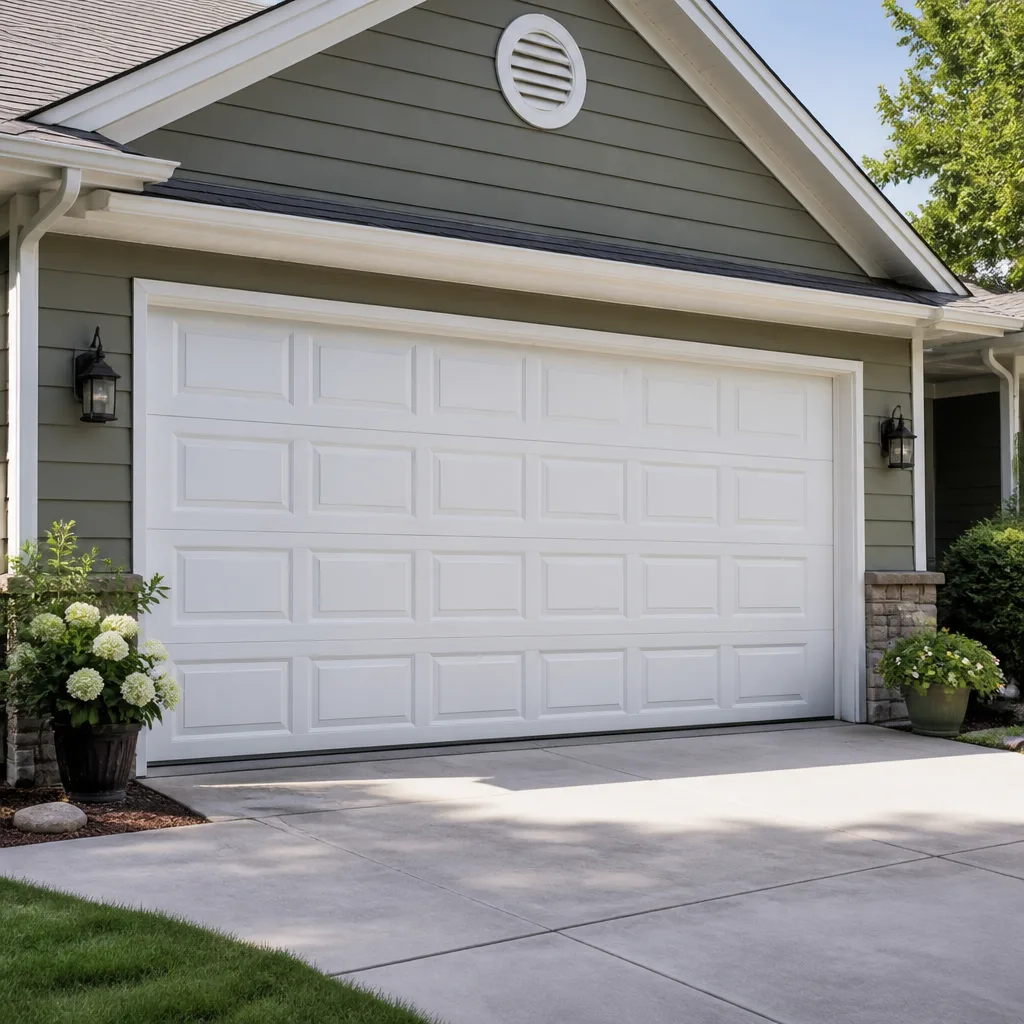 Raised-panel steel
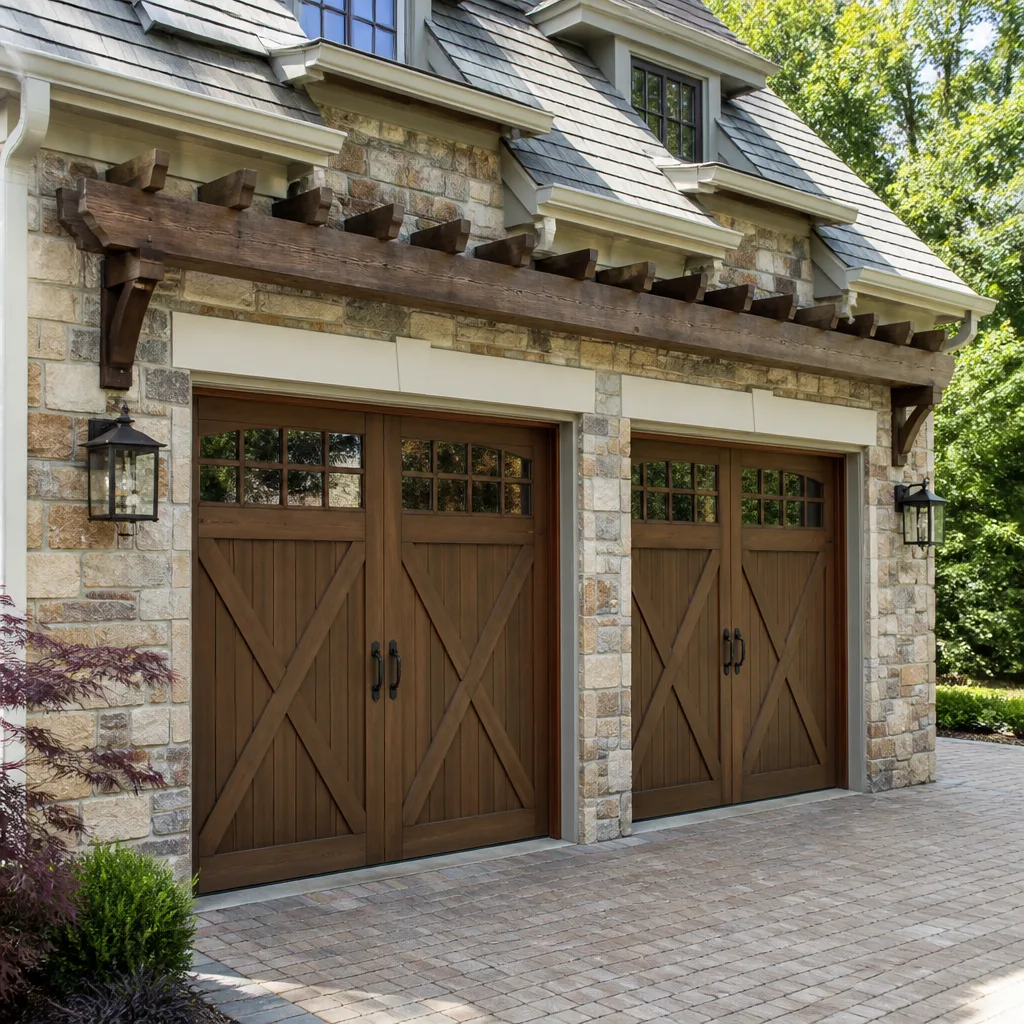 Carriage house
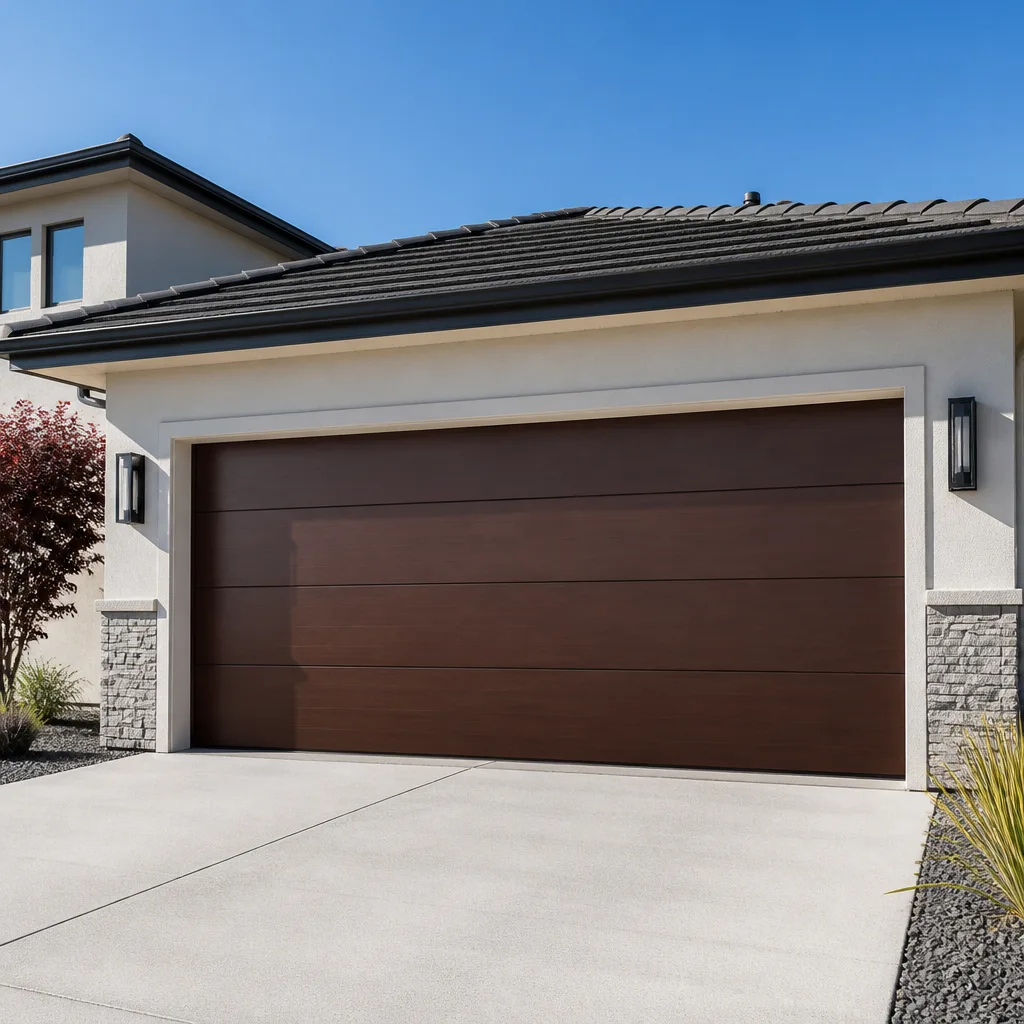 Modern flush
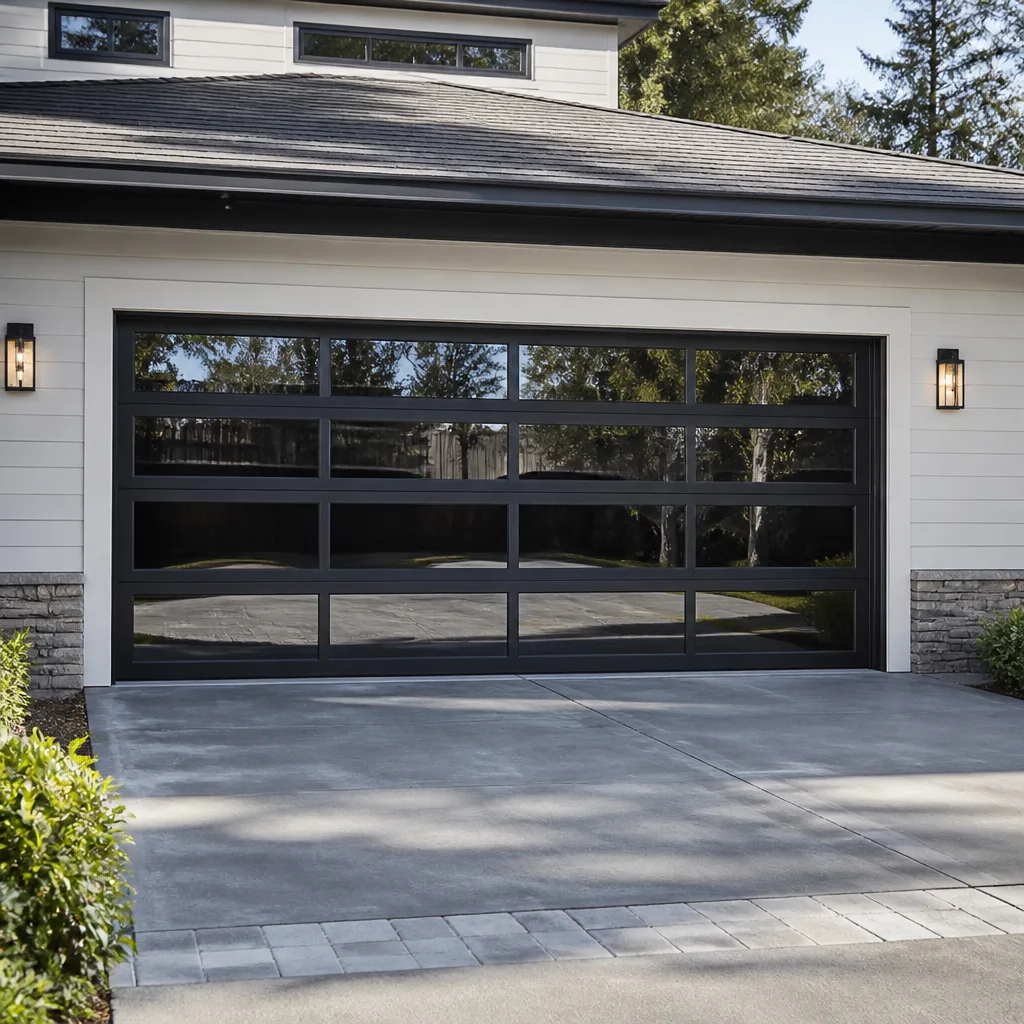 Full-view glass
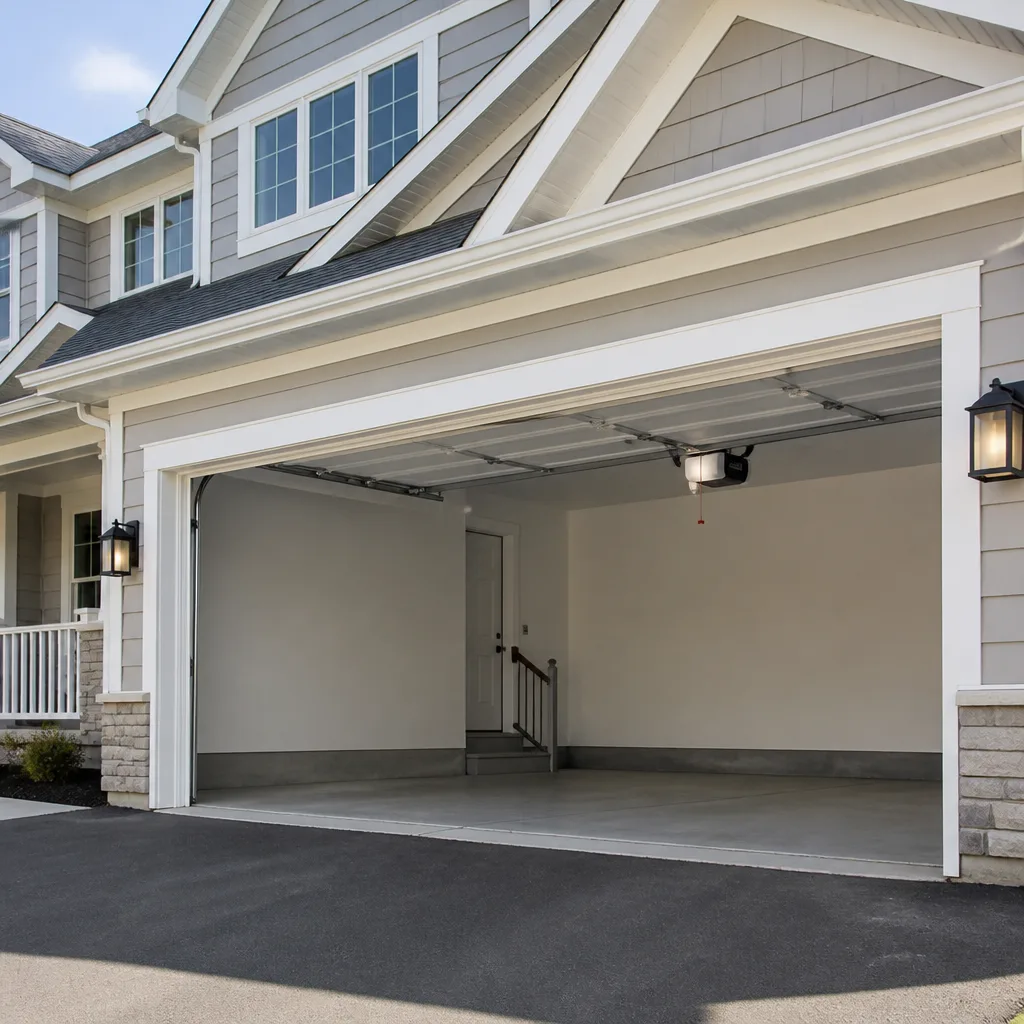 LiftMaster openers
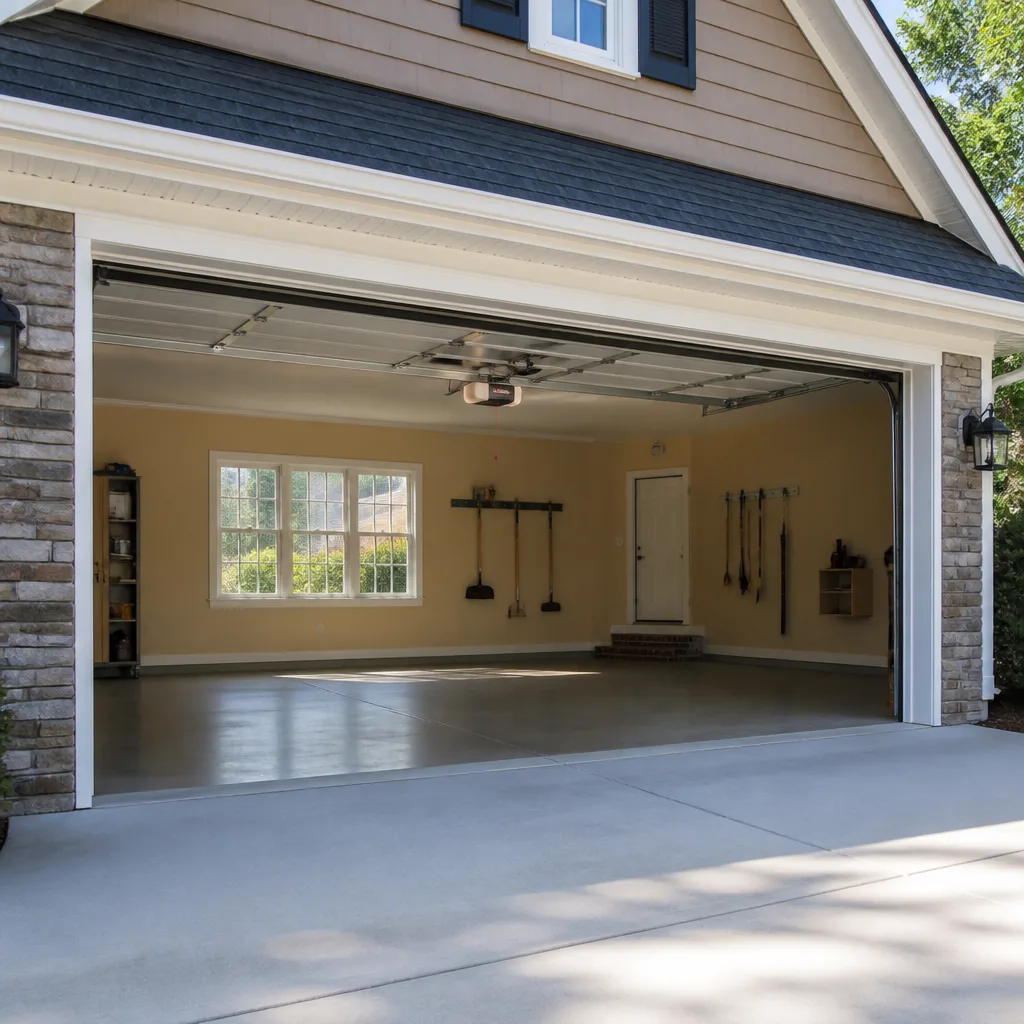 Chamberlain openers
Full 25-point door and opener safety check with every visit - springs, cables, rollers, tracks, and your LiftMaster or Chamberlain opener included
You get a price before we start. It does not change when the truck arrives.
Get your free estimateThe Complete Guide to Garage Door in Sarasota
Here’s the counterintuitive truth about garage doors in Sarasota: most of what you’ll read online was written for climates that never deal with salt spray, 140 mph wind gusts, or 90% humidity for six months straight. A door that performs beautifully in Atlanta will corrode, warp, or fail a wind-load inspection here within a few years. This guide maps every major decision, from materials to openers to HOA compliance, against the specific conditions we deal with in Sarasota every week, and you can find more guides & resources on our blog. By the time you finish, you’ll know exactly which choices save money long-term and which ones quietly cost thousands.
Quick Answer
The right garage door for a Sarasota home needs three things: corrosion-resistant hardware rated for salt air, a design that meets Florida Building Code wind-load requirements for Sarasota County, and an insulation value that blocks thermal gain rather than retaining heat. Expect to pay $1,600 to $4,800 installed for a mid-range to premium door, with material choice driven primarily by your distance from the Gulf rather than aesthetics alone.
Styles & brands we work with
Table of Contents
- What Salt Air Actually Does to Your Garage Door
- Florida Building Code Wind-Load Requirements in Sarasota
- Best Garage Door Materials for Sarasota Homes
- Why R-Value Means Something Different in Sarasota
- Garage Door Openers: What Works in This Climate
- HOA Restrictions and How They Affect Your Door Choice
- Repair vs. Replace: The Sarasota Calculation
- What Garage Door Work Actually Costs in Sarasota
What Salt Air Actually Does to Your Garage Door
If you live within a mile of the Gulf, your garage door hardware is aging faster than the same components would in an inland home. Salt aerosol doesn’t just sit on surfaces, it becomes airborne in the humidity and works its way into spring coils, roller bearings, track brackets, and opener chains. The result is corrosion that weakens load-bearing parts long before any visible rust appears on the door face.
In Siesta Key, Lido Key, and Longboat Key homes, we routinely see torsion springs snap after five to seven years when the same spring would last ten to twelve years in Lakewood Ranch or Palmer Ranch. That’s not a product defect. It’s chemistry. Salt plus moisture plus steel equals oxidation, and in a high-tension system like a garage door spring, that oxidation creates stress fractures that eventually fail.
What actually holds up within a mile of the coast:
- Galvanized or zinc-coated torsion springs resist salt corrosion measurably better than standard oil-tempered springs. Oil-tempered springs are the industry default and they’re fine inland, but coastal Sarasota homes benefit from a galvanized upgrade.
- Nylon rollers with sealed bearings outperform steel rollers in salty environments. The nylon body doesn’t rust, and sealed bearings keep salt-laden moisture out of the ball bearings where it causes grinding and jamming.
- Powder-coated or anodized aluminum tracks hold up better than bare steel. Aluminum itself won’t rust, and the coating prevents the white, chalky oxidation aluminum develops in prolonged salt exposure.
- Stainless steel cables and brackets are worth the modest upcharge for any home within sight of the water. Standard galvanized cables corrode at the crimp points first, and a snapped cable throws the door out of alignment immediately.
What does not hold up well: uncoated spring hardware from big-box door kits, cheap import rollers with open bearings, and anything made from unsealed mild steel. If your door’s hardware was installed before 2018 by a production builder, there’s a strong chance it’s already well into its corrosion cycle.
Florida Building Code Wind-Load Requirements in Sarasota
Here’s what most garage door guides never tell you: in Sarasota County, your garage door is classified as a structural component of your home’s wind-resistance system. When the door fails during a hurricane, the wind pressure differential changes and the roof can lift off. That’s why the Florida Building Code treats garage doors as a critical structural element, not a convenience feature.
Sarasota County falls within a wind-borne debris region, which means any new garage door installed on a home built after 2002 must meet wind-load requirements specific to your home’s design pressure rating. For most Sarasota residences, that means a minimum wind-load rating of 130 to 150 mph depending on the home’s location, roof height, and surrounding terrain. Homes on barrier islands, including Siesta Key and Casey Key, face the highest design pressures in the county.
What this eliminates outright:
- Non-rated single-layer steel doors from big-box retailers. These are the most affordable doors on the market, and they fail structural inspection immediately. They won’t pass permit review in Sarasota County.
- Lightweight aluminum-frame doors without internal reinforcement. Popular for their clean look and low cost, but many cheap models carry no wind-load certification at all.
- Some all-glass and full-view doors without a certified impact-rated glazing system. Impact glazing is expensive, and not every glass door manufacturer certifies for 150 mph zones.
When you’re shopping, ask the dealer for the product approval number from the Florida Department of Business and Professional Regulation. That number confirms the specific door model has been tested and approved for your wind zone. Any reputable installer in Sarasota will have this documentation on file. If they can’t produce it, walk away.
If you’re replacing a door on an older Sarasota home, the code may still require the new door to meet current wind-load standards even if the house was built before the requirement existed. Your installer will know. This is one reason why garage door installation in Sarasota costs more than it does in inland Florida markets: the wind-rated doors and hardware simply cost more to manufacture and certify.
Best Garage Door Materials for Sarasota Homes
Generic buying advice will tell you wood doors are beautiful but high-maintenance, steel is affordable but dents, and aluminum is lightweight but less insulated. That advice is directionally correct but misses the Sarasota specifics: moisture absorption, salt adhesion, and UV degradation all shift the math in ways that don’t exist in other markets.
Here’s the material breakdown mapped to this climate:
Steel Doors
Steel remains the most common choice in Sarasota because it offers the best wind-load performance per dollar. But the gauge matters. Most homes in newer developments like Lakewood Ranch and the newer phases of Palmer Ranch have builders-grade 27-gauge steel doors with thin insulation and basic hardware. These doors are fine structurally but they’ll need spring and roller replacement sooner than premium doors. For a door that lasts in Sarasota’s humidity, look for 24-gauge or 22-gauge steel with a thermal break. The thermal break prevents the inner and outer steel skins from touching, which reduces condensation inside the door itself. Condensation is the mechanism that rusts steel doors from the inside out in humid coastal climates.
Aluminum Doors
Aluminum performs well against salt air because it doesn’t rust the way steel does. That’s why so many waterfront homes in Gulf Gate and South Gate make the switch. The tradeoff is dent resistance. Aluminum is softer than steel and shows impact damage more readily. Many aluminum doors in Sarasota are also full-view or glass-panel designs, which require impact-rated glazing to meet wind code. Those doors start around $2,800 and go up quickly with the glazing package.
Vinyl Doors
Vinyl is the sleeper material for coastal Sarasota. It’s completely immune to rust, doesn’t dent easily, and holds up against salt spray without any special coating. The downside is the limited style selection and a slightly higher price than entry-level steel. For a maintenance-free door within half a mile of the water, vinyl is genuinely worth considering. Keep in mind that vinyl doors carry wind-load certifications too, and you should still verify the product approval number.
Wood Doors
Wood doors remain the aesthetic standard for custom homes in neighborhoods like Cherokee Park and along the bayfront. But in Sarasota heat and humidity, solid wood doors require a maintenance schedule most homeowners underestimate: sanding and refinishing every 18 to 24 months, with particular attention to the bottom panel where irrigation overspray and splashing rain cause rot. If you love the wood look but want lower maintenance, consider a wood-look steel or fiberglass composite door. These give you the aesthetic without the upkeep, and many are certified for high-wind zones. We work on all of it, and our general advice is this: choose the material that matches your distance from the salt, then pick the finish you like.
Why R-Value Means Something Different in Sarasota
In Michigan or Minnesota, R-value is about keeping heat inside. People pay extra for a well-insulated garage door so the garage stays warm in January and the heating bill stays low. In Sarasota, the problem is inverted. Your garage door faces the afternoon sun, often for six or more hours a day, and that solar load turns an uninsulated garage into an oven that radiates heat into your home’s living spaces.
Thermal gain, not heat retention, is the issue here. That changes how you should evaluate insulation ratings.
An R-value of 6 to 9 may sound low compared to the R-14 or R-18 doors marketed in northern states, but in our climate, an R-6 to R-9 door with a radiant barrier makes a dramatic difference. The radiant barrier reflects solar energy away from the door surface before it even penetrates the panel. For attached garages in Sarasota, this matters most when the garage shares a wall with a bedroom or living room, which is common in newer construction throughout eastern Sarasota.
What works in practice:
- Polystyrene insulation (R-6 to R-9) provides solid thermal separation and comes standard in most mid-range doors.
- Polyurethane insulation (R-12 to R-18) bonds to the steel skin, increases panel rigidity, and offers better wind-load performance. It’s the right choice for garages with living space above or adjacent, common in the newer developments south of Fruitville Road.
- Radiant barrier or reflective insulation can reduce heat transfer measurably on west-facing doors, which take the brunt of the Sarasota afternoon sun.
One more Sarasota-specific factor: the humidity itself. Poorly insulated doors develop condensation on the interior face during the summer, and that moisture drips onto whatever you store below. If you keep tools, holiday décor, or anything paper-based in the garage, insulation becomes practical, not just an energy decision.
Garage Door Openers: What Works in This Climate
Smart openers have changed what a garage door system can do, and the technology now matters as much as the door itself. The leading systems include LiftMaster with MyQ, Chamberlain’s connected openers, and Genie’s Aladdin Connect platform. These aren’t gimmicks, they’re practical tools for Sarasota homeowners who want to monitor and control the largest opening in their home from a phone.
The right opener for a Sarasota home needs to handle three things this climate throws at it:
- Humidity and corrosion inside the motor housing. Cheap openers with exposed circuit boards fail sooner here because moisture works its way in during the humid months. Belt-drive and screw-drive models with sealed housings last longer.
- DC motors with soft-start and soft-stop. These run cooler and smoother than traditional AC motors, which matters when the opener cycles four to six times a day in the summer heat.
- Battery backup. This is a Sarasota essential, not a luxury. Hurricane season means power outages, and a garage door without backup power is a garage door that doesn’t open when you need it.
The opener brands we service most often are LiftMaster, Chamberlain, and Genie, and they each bring different strengths. LiftMaster’s MyQ integration is the most widely adopted in Sarasota’s newer communities and gives you true remote monitoring. Chamberlain, which shares manufacturing with LiftMaster, offers similar performance at a more accessible price. Genie’s Aladdin Connect has improved significantly and integrates well with Alexa and Google Home setups.
If your opener is a Craftsman chain-drive model from the early 2000s, it’s likely running on borrowed time in this climate. Chain drives are louder than belt drives, but more importantly, the chain stretches and the sprocket wears faster in humid salt air, especially near the coast. We repair them when they’re repairable, and we’ll tell you when they’re not. The phrase we use with customers is simple: repair first, replace only when necessary. If your opener is a chain-drive Craftsman near the water, that calculus shifts toward replacement sooner than it would inland.
HOA Restrictions and How They Affect Your Door Choice
Sarasota has one of the highest concentrations of HOA-governed communities in Florida outside of the major metro areas. From Palmer Ranch to Lakewood Ranch’s Sarasota side, deed restrictions often dictate what your garage door can look like. Ignore this and you’ll be replacing a brand-new door at your own expense.
Before you spend a dollar, pull your community’s architectural review guidelines. They typically address:
- Approved door styles: Many Sarasota HOAs require carriage-house or decorative insert styles over plain raised-panel designs.
- Color palettes: White and neutral tones dominate, but some communities restrict specific shades. Get the approved color list before you order.
- Window configurations: Some HOAs prohibit windows entirely for security reasons, while others require a specific glass tint or pattern.
- Material restrictions: A few upscale Sarasota communities prohibit vinyl doors or require steel construction.
- Opener visibility: Certain deed restrictions limit where the opener motor can be placed or require belt-drive units for noise control.
The process matters too. Most Sarasota HOAs require architectural committee approval before installation, with a review window of two to four weeks. If you order a custom door before approval and the committee rejects it, you’re stuck with a door you can’t use. This is a mistake we see every year in all HOAs, from the oldest enclaves to the newest. A qualified local installer knows which communities have the most rigid approval processes and can help you navigate the paperwork.
Repair vs. Replace: The Sarasota Calculation
Every homeowner eventually faces this question: do I fix the door I have, or replace it? The generic answer is that repair is cheaper in the short term and replacement is better in the long term. That’s not wrong, but in Sarasota, the salt and wind add variables that shift the decision.
Here’s how we help Sarasota homeowners think through it:
- How old is the door and what’s it made of? A 20-year-old steel door near the water with rust at the bottom panels and worn hardware is a candidate for replacement. The panel replacement, hardware upgrade, and spring work often total 60-70% of a new door’s cost.
- Does the door meet current wind-load requirements? Older doors installed before 2002 often don’t. If your door failed during the last serious storm or you know it was installed without a wind-load certification, replacement may be the only code-compliant option.
- Is the opener still supported? Openers from the early 2000s may not have replacement parts available. A door that works mechanically but can’t be opened electronically isn’t much of a door.
- What’s the actual cost difference for your situation? A $250 spring replacement on a door that’s otherwise sound is almost always worth doing. A $700 panel replacement plus $200 in rollers plus $300 in track work on a door with a failing opener may not be.
Our position on this aligns with the way we work across all brands: we don’t push replacement when a repair makes sense. That’s one of the advantages of a brand-agnostic approach. A single-brand dealer has a structural incentive to recommend replacement, because that’s where their margin lives. We service and install LiftMaster, Chamberlain, Genie, Clopay, and others, so we’ll repair a Clopay door with a Genie opener just as readily as we’ll install a new combination when that’s the honest call.
The garage door repair in Sarasota decision usually comes down to total remaining service life, not immediate cost. A $400 repair that buys you three more years is a good investment. A $400 repair that buys six months is not.
What Garage Door Work Actually Costs in Sarasota
Price transparency is rare in this industry, so here are the ranges we work within for Sarasota. These are total installed prices including labor and standard hardware, but not including permit fees where applicable:
Repair pricing:
- Torsion spring replacement: $180 to $340 per door, depending on spring type and coastal vs. inland hardware. Galvanized coastal springs run at the higher end.
- Roller replacement: $90 to $180 for a full set of 10-12 rollers, with nylon sealed-bearing rollers at the top of the range.
- Cable replacement: $150 to $240, often done as a pair. A snapped cable on one side has usually stretched the other.
- Opener motor replacement: $280 to $520 including installation, with belt-drive and battery-backup models at the higher end.
- Track adjustment or realignment: $120 to $220 for standard repairs.
New door pricing (installed):
- Entry-level steel, wind-rated, single-car: $1,600 to $2,200
- Mid-range steel or aluminum, insulated, double-car: $2,200 to $3,400
- Premium composite or custom full-view with impact glazing: $3,400 to $6,000+
New opener pricing (installed):
- Standard chain-drive: $280 to $400
- Belt-drive with smart-home integration: $380 to $650
- Premium smart opener with battery backup and camera: $600 to $850
These ranges reflect the Sarasota market specifically and the hardware this climate requires. If a quote comes in dramatically below these numbers, ask whether the door is wind-load certified for Sarasota County or whether the springs are galvanized for coastal use. Cheap quotes in this market usually mean standard inland-grade hardware that will need replacement sooner.
For opener repair specifically, the cost depends more on the brand and the complexity of the issue. Smart openers with Wi-Fi modules and MyQ or Aladdin Connect integration require diagnostic work that legacy openers don’t. We cover that in depth in our garage door opener repair in Sarasota guide, but the short version is this: expect $120 to $280 for most opener repairs, with logic board replacements on premium models occasionally running higher.
Common Mistakes to Avoid
- Buying a non-wind-rated door from a big-box retailer and hiring a handyman to install it. This fails Sarasota County inspection and leaves your home structurally vulnerable. The door will likely need to be replaced entirely.
- Choosing a door based on the photo online rather than the material spec. A beautiful steel door in a catalog photo may be 27-gauge with no thermal break, which means condensation and interior rust within a few Sarasota summers.
- Ignoring HOA review until after the door arrives. We’ve seen custom doors ordered for Palmer Ranch and Lakewood Ranch that sat in a garage for months because the architectural committee demanded a different color.
- Skipping the battery backup on a new opener. Every hurricane-season power outage in Sarasota is a reminder that a garage door is also a structural access point. Battery backup is inexpensive insurance.
- Replacing the door but keeping 20-year-old hardware. New doors with old tracks, springs, and rollers perform worse and wear faster. Replace the complete system when you replace the door.
- Using standard oil-tempered springs within a mile of the Gulf. They’ll snap early. Galvanized springs cost $40 to $60 more and last measurably longer in salt air.
- Assuming insulation doesn’t matter in Florida. Thermal gain from a west-facing Sarasota garage door can add real heat load to your home. Insulation here is about keeping heat out, not in.
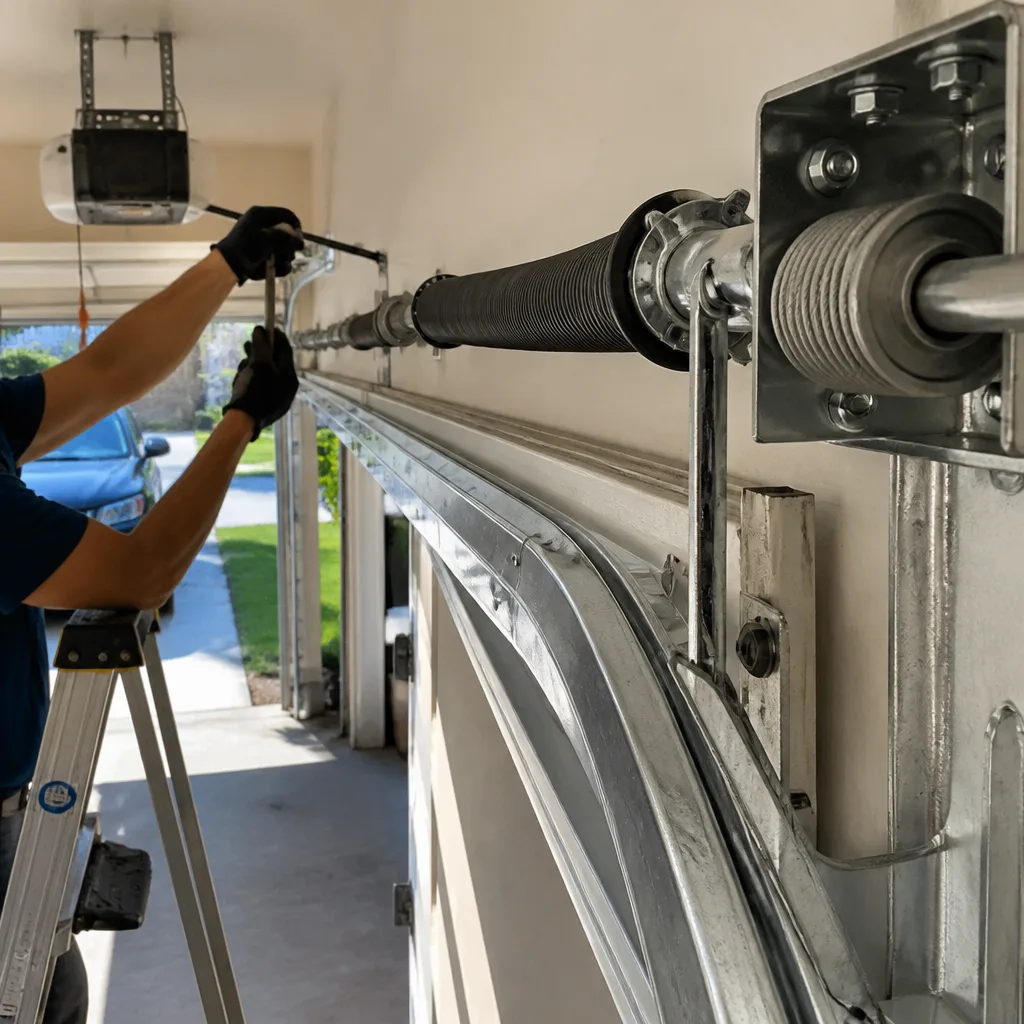
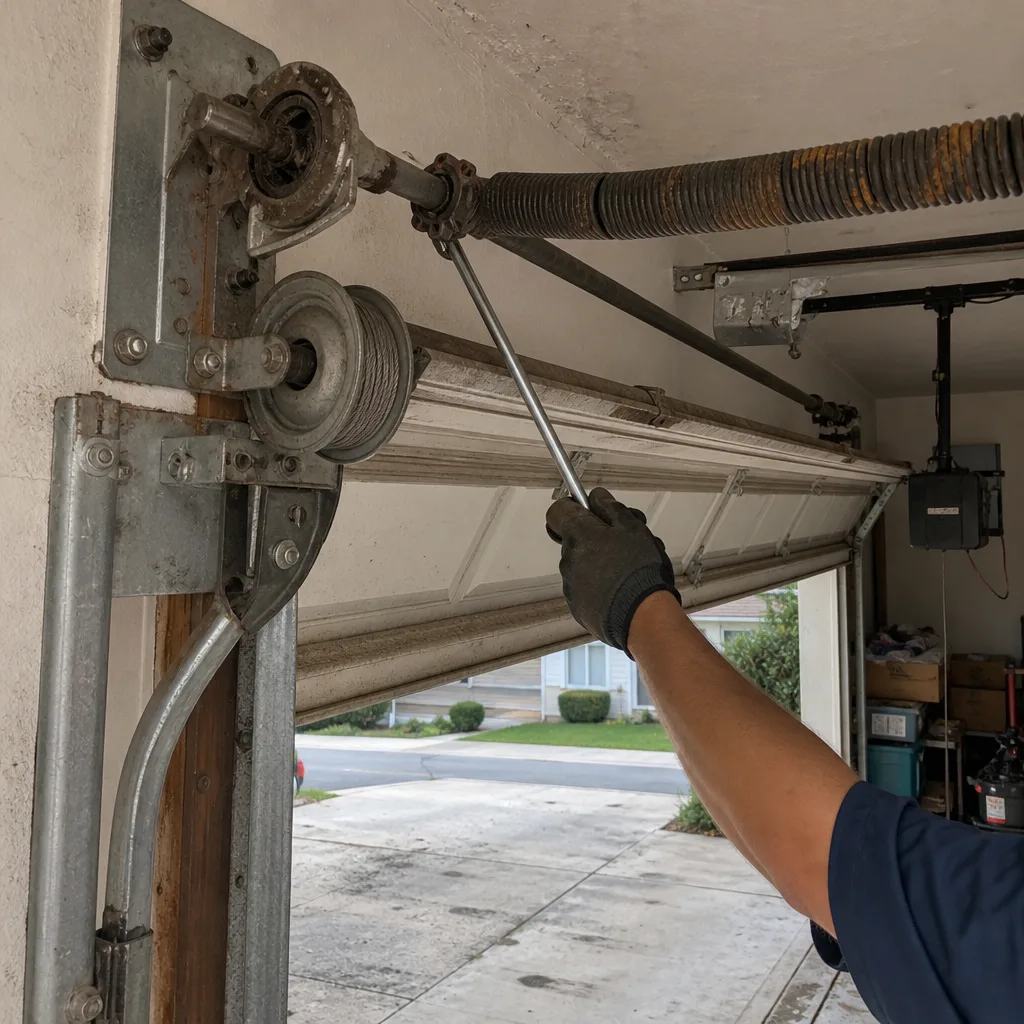
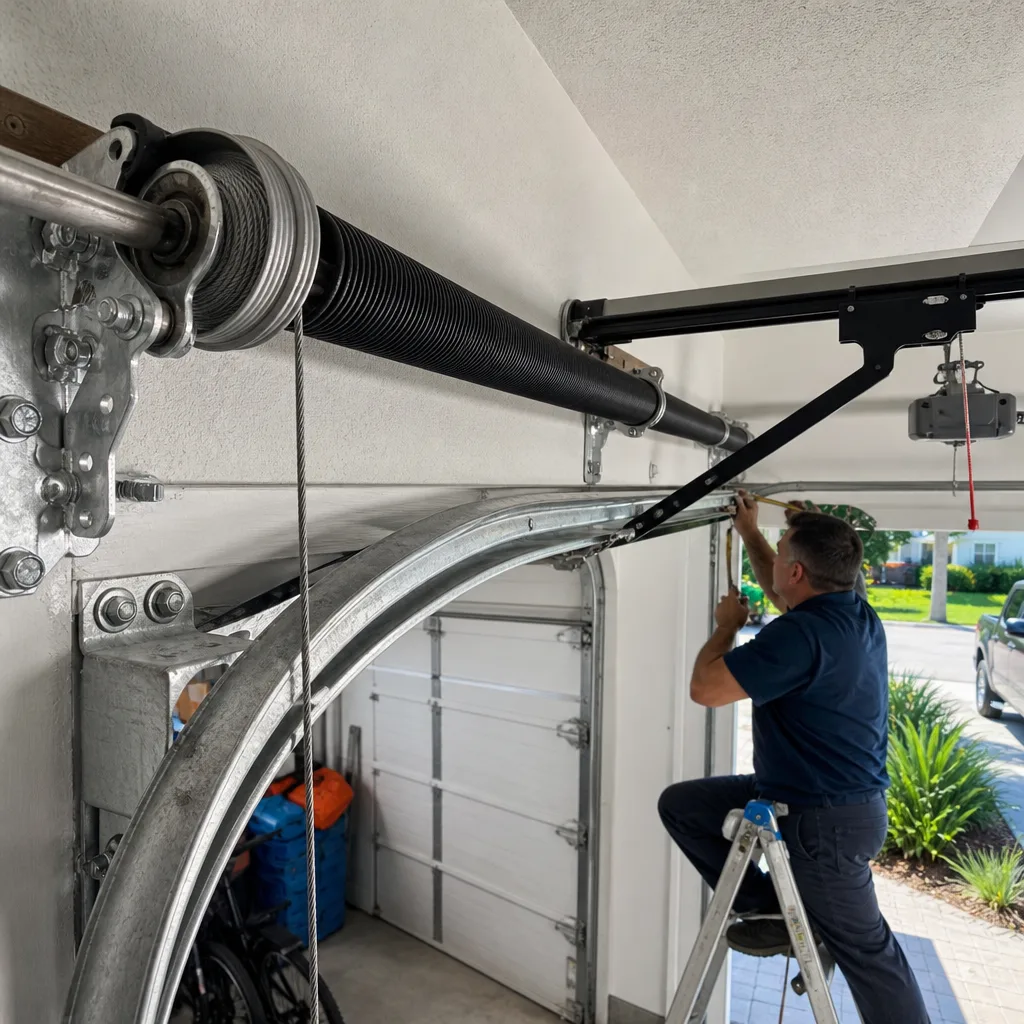
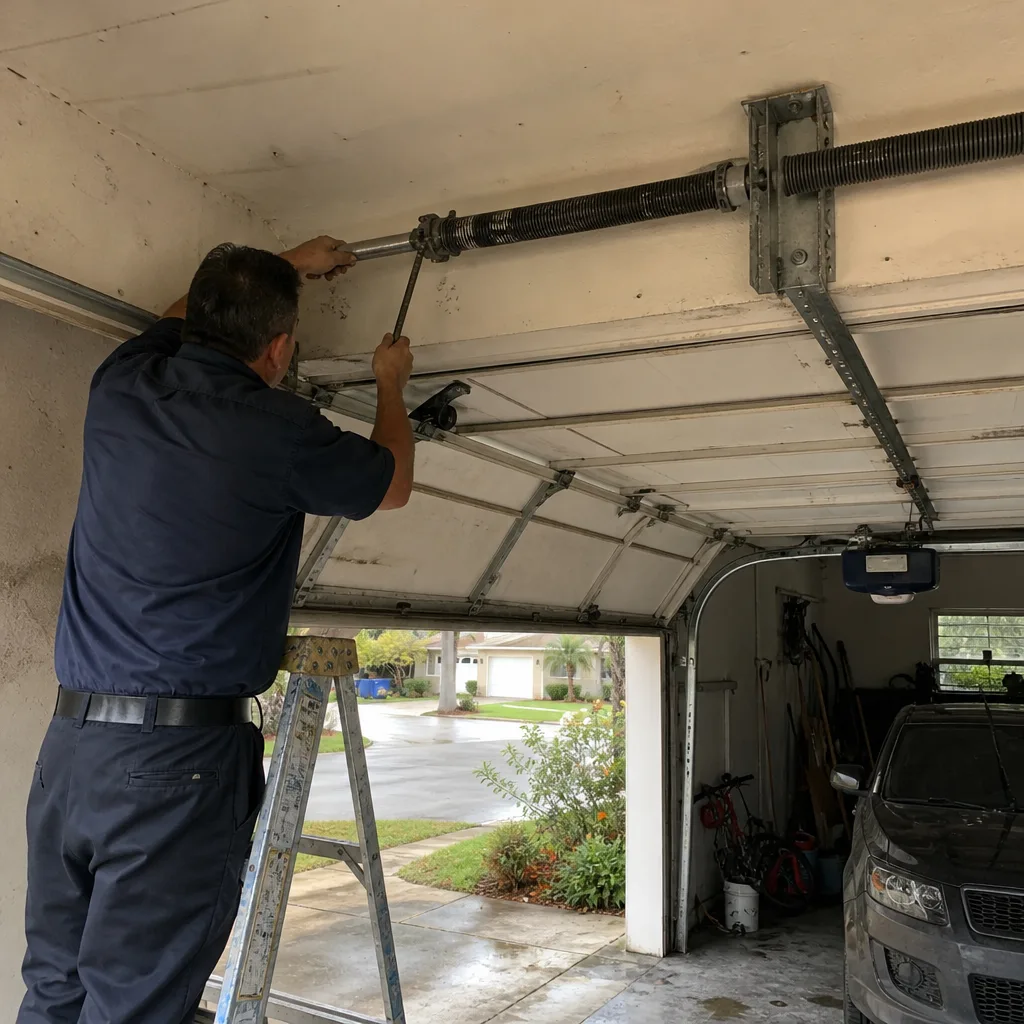
See the difference
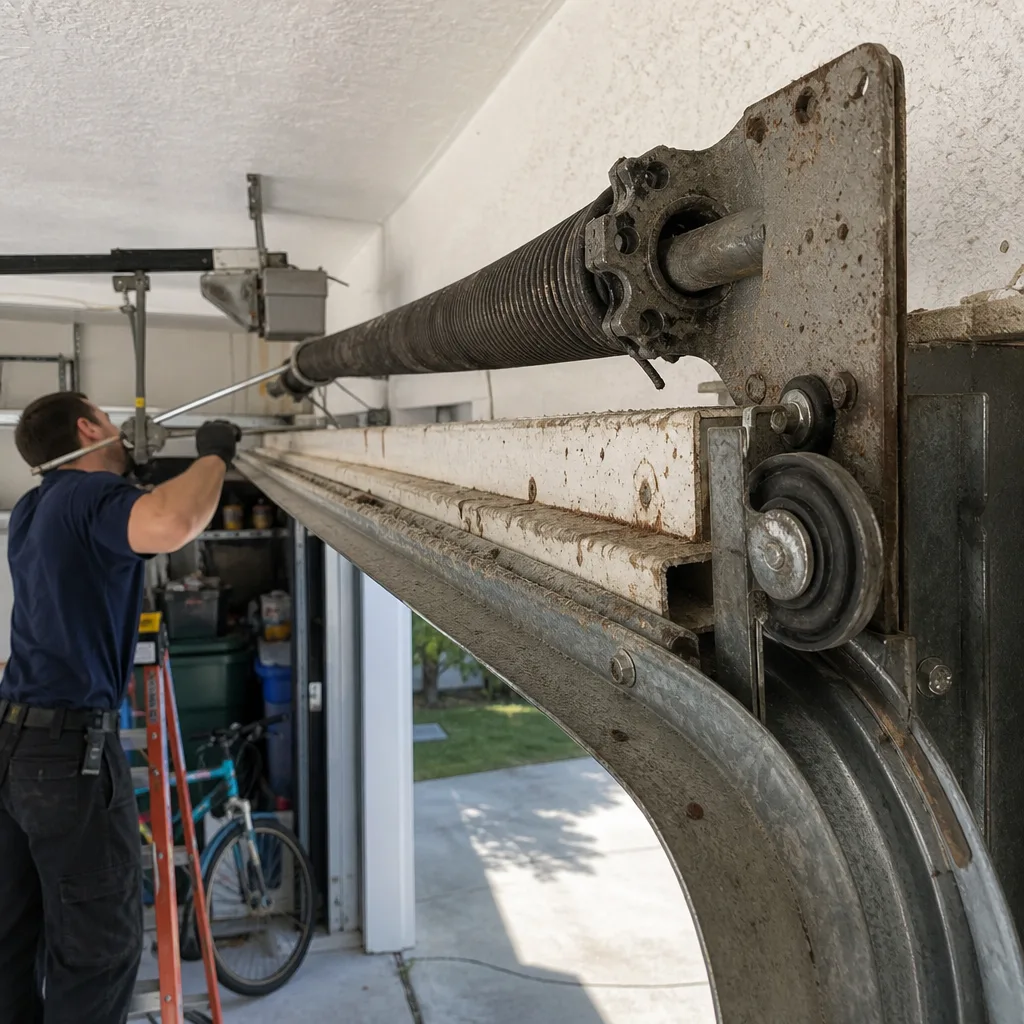 Before
 After
 Before
 After
 Before
 After
When to Call a Professional
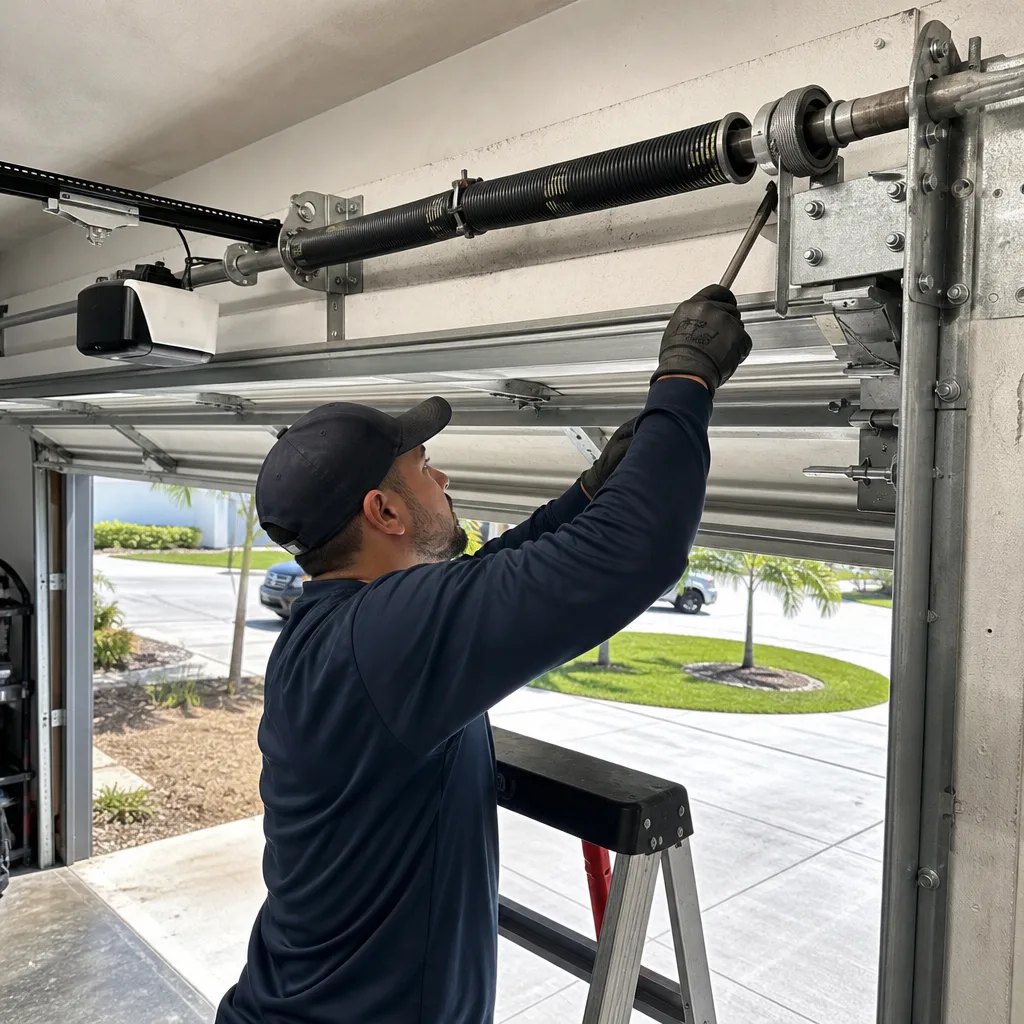
Garage door systems involve high-tension springs, cables, and tracks that store enormous kinetic energy. A torsion spring under tension contains enough force to cause serious injury if it releases unexpectedly. For any repair involving springs, cables, or track realignment, call a trained technician rather than attempting the work yourself. Even simple adjustments on a door that’s off-balance carry risk. Same for opener motor replacement that involves electrical work. If your door jerks, sags on one side, makes grinding noises, or won’t stay open, it’s time to stop using it and call someone who works with these systems daily. The Platinum Garage Door Service home team handles every aspect of Sarasota garage door work, from spring and cable repair to complete system replacement. Call (855) 341-5769 for a free estimate. Every job is diagnosed first, quoted in writing, and the price is agreed before any work starts.
Frequently Asked Questions
A new wind-rated garage door in Sarasota typically costs $1,600 to $4,800 installed, depending on material, insulation level, and whether the home is in a coastal zone requiring upgraded hardware. Mid-range insulated steel doors fall in the $2,200 to $3,400 range for a double-car door. Call (855) 341-5769 for a specific quote on your home.
Salt aerosol is measurable up to three miles inland in Sarasota, but the heaviest corrosion occurs within one mile of the Gulf. Homes on the barrier islands, including Siesta Key, Lido Key, and Casey Key, should use galvanized springs, sealed-bearing nylon rollers, and stainless steel cables as standard hardware.
Most torsion spring replacements can be completed same day in Sarasota, and our trucks carry the common spring sizes for the brands we service. Coastal homes may need galvanized springs, which is worth a quick conversation before we arrive so the right spring is on the truck. Call (855) 341-5769 and we’ll confirm the details.
Most Florida homeowners policies cover garage door damage from named storms, subject to your hurricane deductible, which is typically 2% to 5% of your dwelling coverage. We can provide the detailed documentation and repair estimates your claims adjuster will need. That paperwork matters more in Sarasota than in most markets because of the volume of storm claims local adjusters process.
In most HOA-governed Sarasota communities, yes. Architectural review committees can restrict door style, color, window configuration, and material. Always get written approval before ordering a door. We help customers through this process regularly and can often tell you which communities have the quickest and slowest approval timelines.
A quality belt-drive opener from LiftMaster, Chamberlain, or Genie lasts 10 to 15 years in this climate with proper maintenance. Entry-level chain-drive units often fail sooner, especially near the coast where salt and humidity work into the motor housing and chain assembly. Battery backups add about $100 to $150 to the installed cost and are worth every dollar during hurricane season.
The Bottom Line
A garage door in Sarasota is a structural component, a climate-hardware challenge, and a HOA-governed decision all at once. The right choice depends on your distance from the Gulf, your community’s deed restrictions, and whether your home needs a wind-rated replacement or a targeted repair. Salt air corrodes hardware faster here, humidity changes how insulation works, and Florida Building Code eliminates the cheapest options entirely. For storm-season planning, read our Garage Door Emergency Preparedness Guide for Sarasota Homes. We work on your brand, not just ours, which means the recommendation you get is based on the system in front of us, not the one we prefer to sell. From the spring to the smartphone app, one call covers it all. Call (855) 341-5769 for a free estimate on any garage door work in Sarasota.
Written by the team at Platinum Garage Door Service, serving Sarasota since 2015.